5 Tips to Keep Cats Out of Your Garden
To keep cats out of your garden, start by creating physical barriers like gravel, chicken wire, or coarse mulch.
These materials make digging uncomfortable and discourage cats from entering your garden space.
You can also use natural scents such as citrus peels or strong-smelling herbs like rosemary to repel them.
Cats really don’t like these smells, so it’s an easy way to keep them away without causing harm.
Another helpful tip is to set up a designated outdoor toilet area using sand.
This humane approach redirects their behavior and keeps them from using your garden as their bathroom.
Be sure to regularly maintain these solutions so they stay effective.
It also helps to collaborate with neighbors to protect a larger area together.
Keep these strategies in mind, and you’ll discover even more ways to protect your garden effectively.
With a little effort, your garden can stay cat-free and flourishing!
Key Takeaways
- Use physical barriers like gravel, chicken wire, or bamboo sticks to prevent cats from digging in your garden soil. These work really well to keep them out of trouble.
- Scatter fresh citrus peels or plant strong-smelling herbs like rosemary and lavender to repel cats naturally. Cats usually don’t like those scents, so it’s a simple trick to try.
- Create a designated outdoor cat toilet with sand or catnip to redirect cats away from your garden. Giving them their own spot can make a big difference.
- Regularly maintain garden areas by removing soft soil spots and refreshing deterrents to discourage cat visits. Keeping things tidy helps a lot.
- Collaborate with neighbors to manage outdoor cats through community efforts and Trap-Neuter-Return programs. Working together makes the job easier for everyone.
Why Cats Target Your Garden and How to Stop Them
Because cats naturally seek soft, loose soil for digging and littering, your garden often becomes their preferred spot. To keep cats away, you need to address their behavior while making your garden less inviting.
Start by placing physical barriers like gravel or chicken wire to discourage digging. You can also use strong scents, such as citrus peels, since cats dislike these smells and will avoid areas where they’re scattered.
Another effective method is creating an alternative toilet area filled with sand or catnip to redirect cats from your garden beds. Remember, regular maintenance is key—refresh citrus peels and adjust barriers as needed.
Natural Scents and Simple Barriers to Keep Cats Out
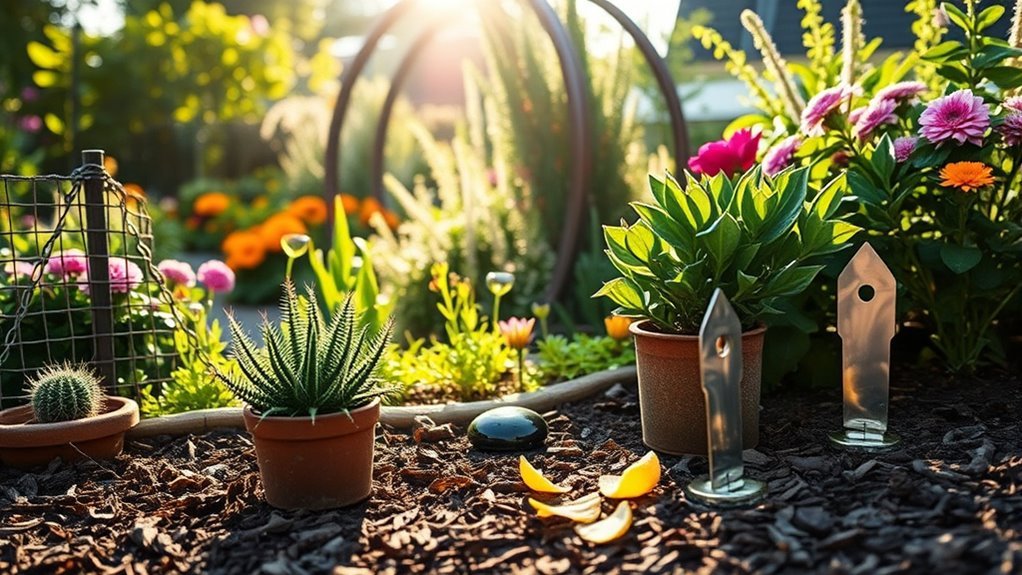
While cats are drawn to your garden for its soft soil, you can use natural scents and simple barriers to make it less appealing. Scatter fresh citrus peels around your plants—the sharp smell repels cats, but replace them often to stay effective.
Use fresh citrus peels to naturally repel cats from your garden’s soft soil, replacing them regularly for best results.
Plant strong-smelling herbs like rosemary, thyme, or lavender, which cats avoid because of their pungent scents. You might also try coleus canina, known as the “scaredy cat plant,” for its unpleasant odor.
To prevent digging, install physical barriers such as chicken wire or lay coarse mulch over soil. Another effective method is inserting bamboo sticks about nine per square foot; these create an uncomfortable surface without harming your plants.
Removing cat scat promptly will also discourage cats from returning, as they often avoid areas marked by other cats. So, keep your garden clean, and those curious kitties will think twice before visiting!
Outdoor Cat Toilets: A Humane Alternative
Keeping your garden free of cat disturbances doesn’t just rely on scents and barriers—you can also guide cats toward a designated spot that meets their needs.
Outdoor cat toilets offer a clean alternative by providing a specific area filled with sand or catnip, encouraging cats to use it instead of your garden. This humane solution helps manage populations and reduces unwanted littering.
To set up an effective outdoor cat toilet:
- Choose a designated area that’s quiet and accessible.
- Use a litter box or contained space filled with sand or catnip.
- Maintain it regularly by cleaning and replenishing the material.
Motion-Activated and Ultrasonic Cat Deterrents
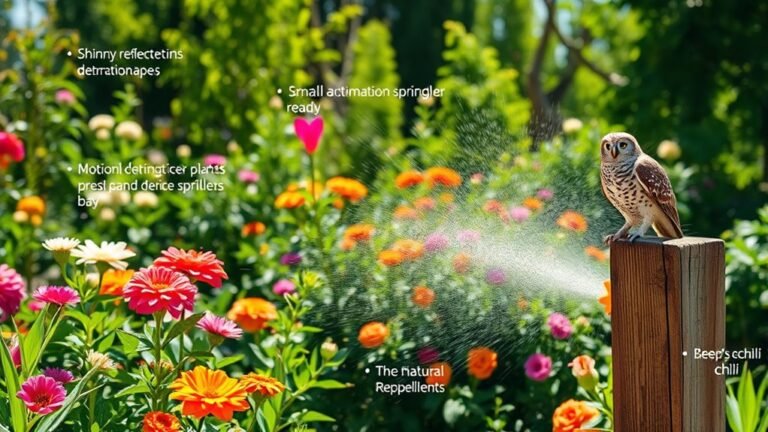
If you want a hassle-free way to protect your garden, motion-activated and ultrasonic cat deterrents offer effective solutions that startle cats without causing harm. Motion-activated sprinklers detect movement and release a quick burst of water, discouraging cats from entering your garden.
Ultrasonic cat repellents emit high-frequency sounds that only cats hear, keeping them at bay silently. Both types serve as reliable animal repellent tools with customizable sensitivity levels, so you can adjust settings to suit your garden’s needs and avoid triggering harmless wildlife.
These devices cover ample areas, making them ideal for larger spaces. Plus, their ease of use means you can set them up quickly and enjoy ongoing garden protection with minimal maintenance.
All in all, they help you keep cats away without stress or hassle.
Talk to Neighbors About Managing Cats in Your Community
When you talk openly with your neighbors about how outdoor cats affect your garden, you can build understanding and work together on effective solutions. Managing unwelcome cats is easier when the whole community collaborates.
Here’s how you can keep cats from causing trouble around your garden:
- Organize community meetings to discuss cat management and share strategies everyone can use.
- Encourage participation in Trap-Neuter-Return (TNR) programs to reduce feral cat populations humanely.
- Share tips on responsible cat ownership, like keeping cats indoors or using enclosed outdoor spaces.
Frequently Asked Questions
How Do I Stop Neighbour’s Cats in My Garden?
You can stop neighbor’s cats by using citrus peels, planting rosemary or lavender, setting up a designated litter area, installing motion-activated sprinklers, and talking with your neighbors about humane solutions like Trap-Neuter-Return programs.
What Is the 3-3-3 Rule for Cats?
You might worry your new cat won’t adjust quickly, but the 3-3-3 rule breaks it down: three days of stress, three weeks exploring, and three months to feel fully comfortable in their new home and routine.
What Smell Do Cats Absolutely Hate?
Cats absolutely hate citrus smells like lemon and orange, as well as strong scents like vinegar, rue, lavender, rosemary, peppermint, and eucalyptus. You’ll notice they avoid areas where these odors are present because they irritate their sensitive noses.
What Is a Silent Killer for Cats?
Silent killers for cats are toxins like rodenticides and certain plants; they lurk like shadows, unseen but deadly. You must stay vigilant, protecting your cat from these hidden dangers before harm finds them.
Conclusion
You might’ve heard that sprinkling citrus peels keeps cats away, but the real key is understanding why they’re drawn to your garden in the first place.
By combining natural scents, humane barriers, and even talking with neighbors, you can protect your plants without harming the cats.
Remember, it’s not about chasing them off but creating an environment they’ll naturally avoid.
With these tips, your garden can thrive peacefully for everyone.
Keeping cats out of your garden doesn’t have to be a battle. Using natural scents like citrus, setting up gentle barriers, and communicating with your neighbors can make a big difference. The goal is to create a safe space for your plants while respecting the cats that roam nearby. When you focus on humane and thoughtful methods, your garden stays healthy, and the cats stay happy. So, with these simple strategies, you can enjoy a beautiful, cat-free garden that thrives all season long.