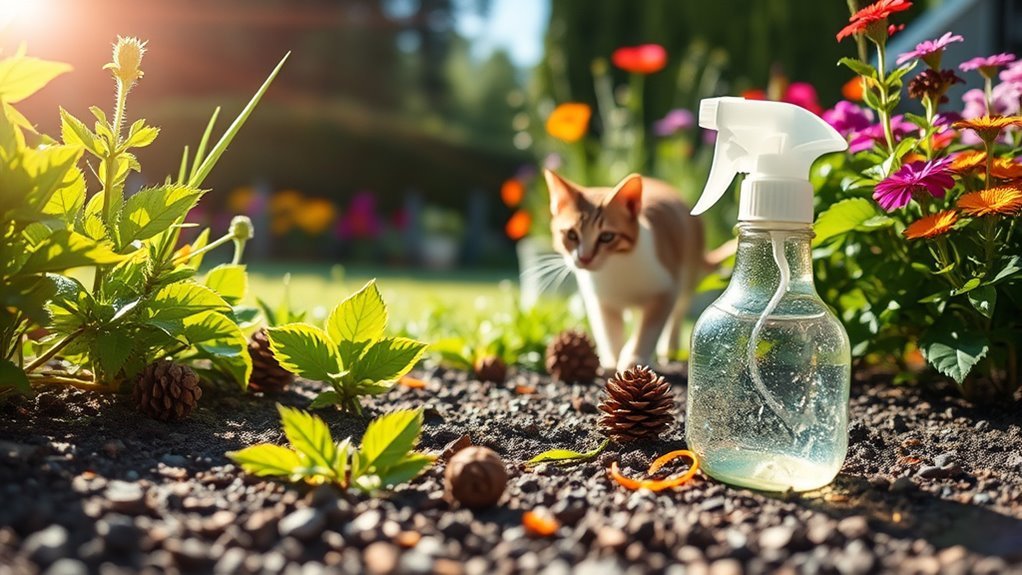
5 Tips to Stop Cats Coming Into Your Garden
You can stop cats from invading your garden by using natural scents like citrus peels or planting cat-repellent herbs such as rosemary and lavender. These smells are great at keeping curious cats away without harming them.
Another effective way is to set up physical barriers like chicken wire or prickly bushes. These block their access and make your garden less inviting for them.
Offering a designated outdoor cat toilet filled with sand can also help. Cats prefer having a specific place to go, so this keeps them away from your plants.
Motion-activated sprinklers and ultrasonic devices are handy tools to gently discourage visits. They startle cats without causing any harm, making your garden less appealing.
Plus, coordinating with neighbors helps reduce overall cat intrusion. When everyone works together, it’s easier to keep cats out of your shared outdoor spaces.
Explore these tips to protect your garden effectively.
Key Takeaways
- Use natural deterrents like citrus peels, Coleus canina, and strong-smelling herbs to repel cats from your garden. These scents are unpleasant to cats, so they tend to avoid areas where they detect them.
- Install physical barriers such as chicken wire, garden netting, or prickly bushes to block cat entry and prevent digging. It’s a simple way to keep your garden safe without harming the animals.
- Set up a designated outdoor cat toilet with sand or catnip to provide cats an acceptable area away from your garden. This gives them a spot to do their business without bothering your plants.
- Employ motion-activated sprinklers and ultrasonic devices to humanely deter cats with water sprays or high-frequency sounds. These methods startle cats gently and encourage them to stay away.
- Coordinate with neighbors on responsible pet management and share deterrent methods for a community-wide reduction in garden visits. Working together makes it easier to keep cats out of all your yards.
Use Natural Scents and Plants That Repel Garden Cats
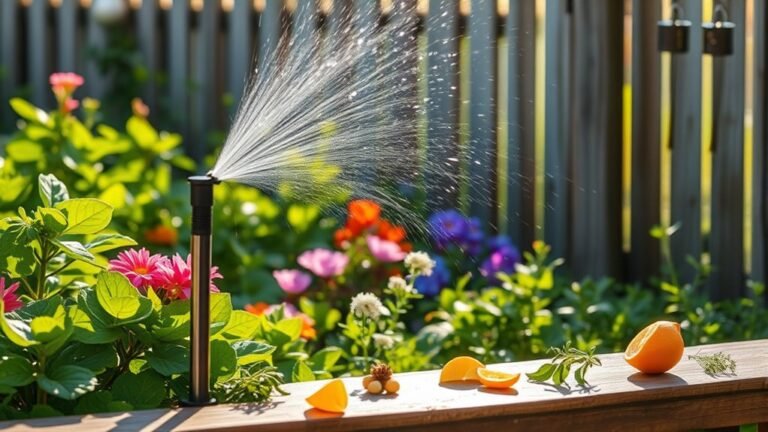
If you want to keep cats out of your garden without harsh chemicals, using natural scents and plants is a smart approach. Scatter citrus peels, especially from oranges and lemons, around your garden—they contain limonene, which cats dislike.
Just remember to replace them regularly to maintain their effectiveness. Plant coleus canina, known as the “scaredy cat plant,” since its odor is particularly unpleasant to cats and works well as a deterrent.
Incorporate strong-smelling herbs like rosemary, thyme, mint, and lavender into your garden; their pungent aromas not only enhance your garden’s scent but also repel cats naturally.
Build Physical Barriers to Keep Cats Out of Your Garden
Physical barriers provide an effective way to keep cats out of your garden while protecting your plants. To build physical barriers, start by installing chicken wire with the sharp edges rolled under to stop cats from digging into your garden beds.
You can also use garden netting or fencing around the perimeter to block cat access without sacrificing sunlight or rain. Creating an uncomfortable surface is another smart tactic. For example, embed wooden chopsticks or bamboo sticks closely together in the soil, or place plastic carpet runners with spikes facing up, lightly covered with soil, to discourage cats from walking or digging.
Additionally, planting prickly bushes can naturally deter cats. These methods help you protect your garden while keeping cats safely out.
Set Up a Designated Outdoor Cat Toilet as an Alternative
One effective way to keep cats out of your garden is to set up a designated outdoor cat toilet filled with sand or catnip. This encourages cats to use a specific spot rather than digging in your plants.
Place the designated outdoor cat toilet away from busy garden areas to give cats privacy and reduce disturbances. For small gardens, one toilet usually works, but larger spaces might need multiple spots to better manage cat behavior.
Be sure to clean and refresh the sand regularly to prevent odors and keep the area appealing. By providing this alternative, you can effectively encourage cats to relieve themselves in an acceptable place.
This helps you manage cat behavior while protecting your garden from unwanted damage. It’s a simple solution that can make a big difference!
Try Motion-Activated Sprinklers and Ultrasonic Devices
Two highly effective tools to keep cats out of your garden are motion-activated sprinklers and ultrasonic devices. Motion-activated sprinklers detect movement and spray water, startling cats without causing any harm.
Ultrasonic devices emit high-frequency sounds that cats dislike but humans can’t hear. Both options are safe for pets and wildlife, so you’re using a humane way to keep cats away.
For the best results, place sprinklers near entry points. Position ultrasonic devices to cover the paths cats are most likely to take.
Make sure to test and maintain these devices regularly to keep them working efficiently.
| Device | How It Works | Placement Tips |
|---|---|---|
| Motion-Activated Sprinklers | Spray water when motion is detected | Near garden entry points |
| Ultrasonic Devices | Emit high-frequency sound | Cover common cat intrusion areas |
| Benefits | Humane, safe for pets and wildlife | Easy to install and maintain |
Coordinate With Neighbors to Reduce Cat Intrusions
Although it might seem like a solo effort, coordinating with your neighbors can greatly reduce cat intrusions in your garden. Start by discussing how outdoor cats affect your gardens and local wildlife, building a shared understanding in your community.
Encourage neighbors to join forums or meetings focused on responsible pet ownership and local cat management strategies. You can coordinate a feeding schedule for outdoor cats to minimize scavenging and discourage them from wandering into gardens.
Invite neighbors to forums on pet care and coordinate feeding times to keep cats out of gardens.
Collaborate on community initiatives like Trap-Neuter-Return (TNR) programs to manage feral cats effectively. Sharing successful deterrent methods and experiences helps create a unified, community-wide approach to keeping cats at bay.
Together, you can make a stronger impact than working alone. It’s all about teamwork!
Frequently Asked Questions
What Can I Put Down to Stop Cats From Coming in My Garden?
You can scatter citrus peels, lay crushed eggshells or pine cones, and plant strong herbs like rosemary. Installing motion-activated sprinklers or ultrasonic repellents also keeps cats away by making your garden less inviting and uncomfortable.
What Is the 3-3-3 Rule for Cats?
Think of it as a gentle dance: the 3-3-3 rule means you’ll give your cat three days to settle, three weeks to explore, and three months to truly feel at home and show their personality.
What Smell Do Cats Absolutely Hate?
Cats absolutely hate the smell of citrus, like oranges and lemons. You’ll also find they despise strong scents like vinegar, rue, lavender, eucalyptus, and rosemary. Use these smells, and you’ll keep cats away effectively.
How to Prevent Cats From Going Into Your Garden?
Did you know 60% of cats avoid citrus scents? You can prevent cats from entering your garden by planting rosemary, using citrus peels, installing motion-activated sprinklers, and setting physical barriers like chicken wire or pine cones to deter them effectively.
Conclusion
By planting natural scents and building barriers, you’re planting seeds of peace in your garden sanctuary. Setting up an outdoor cat toilet offers cats a new path, like a gentle invitation to respect your space.
Motion-activated sprinklers act as vigilant guardians, gently reminding cats to stay away without harm. And teaming up with neighbors? That weaves a stronger fence of community care.
Together, these steps transform your garden into a safe haven where both you and wandering cats can peacefully coexist under the same sky. With these simple tips to stop cats coming into your garden, you create harmony and protect your plants while respecting the animals. It’s all about balance—keeping your garden cat-free and your outdoor space enjoyable for everyone.