5 Effective Tips to Keep Cats Away From Your Garden
To keep cats away from your garden, start by keeping it clean—remove debris, food scraps, and trim overgrown plants to eliminate cozy spots. Using natural repellents like coffee grounds, citrus peels, or vinegar spray can create scents cats dislike, making your garden less inviting. Plant cat-resistant herbs such as lavender and rosemary, or use thorny plants for a natural barrier.
Adding physical barriers like mesh fencing or prickly mats helps prevent cats from entering. You can also consider motion-activated sprinklers or ultrasonic devices for additional protection. Follow these steps, and you can discover more effective strategies ahead.
Keep Your Garden Clean to Deter Cats
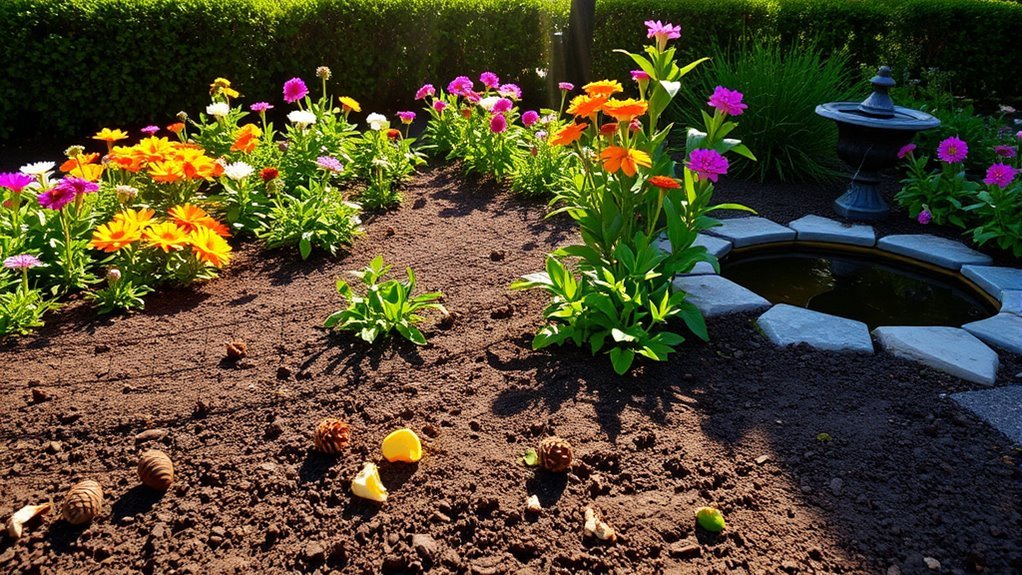
Although cats are curious by nature, you can discourage them from visiting your garden by keeping it clean and tidy. Start by removing any debris, fallen leaves, or clutter where cats might hide or feel comfortable.
Keep your garden clean and clutter-free to discourage curious cats from making it their hideout.
Clear away open compost piles or food scraps, as these can attract not only cats but other animals.
Regularly rake the soil and keep garden beds free of loose mulch or straw that cats might use as a litter spot.
Confirm garbage bins are securely closed so cats can’t rummage through them.
You should also trim overgrown bushes and grass to eliminate cozy spots for cats to lurk.
Use Natural Cat Repellents

Keeping your garden clean is a great start, but sometimes you need extra help to keep cats at bay. Natural cat repellents offer a safe and effective way to discourage them without harming your plants or pets.
Here are some easy options you can try:
- Sprinkle coffee grounds around your garden to create an unpleasant scent.
- Use citrus peels, like orange or lemon, which cats dislike.
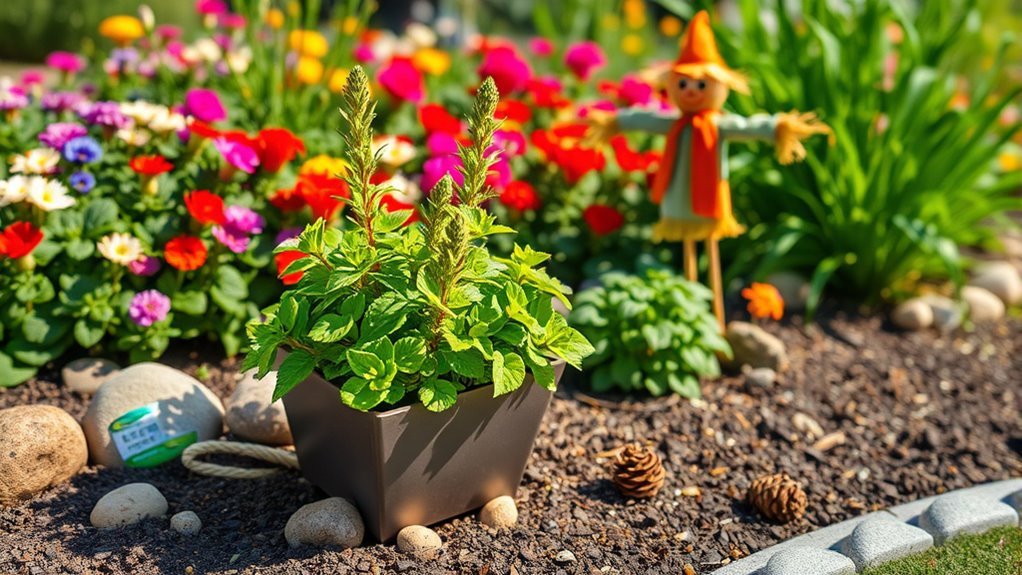
- Plant herbs such as rue, lavender, or rosemary near flower beds.
- Spray diluted vinegar on areas where cats frequent.
- Place crushed pepper or garlic powder in spots they avoid.
These natural repellents work by targeting cats’ sensitive noses, making your garden less inviting.
Rotate or combine methods for better results and reapply after rain.
Choose Cat-Resistant Plants
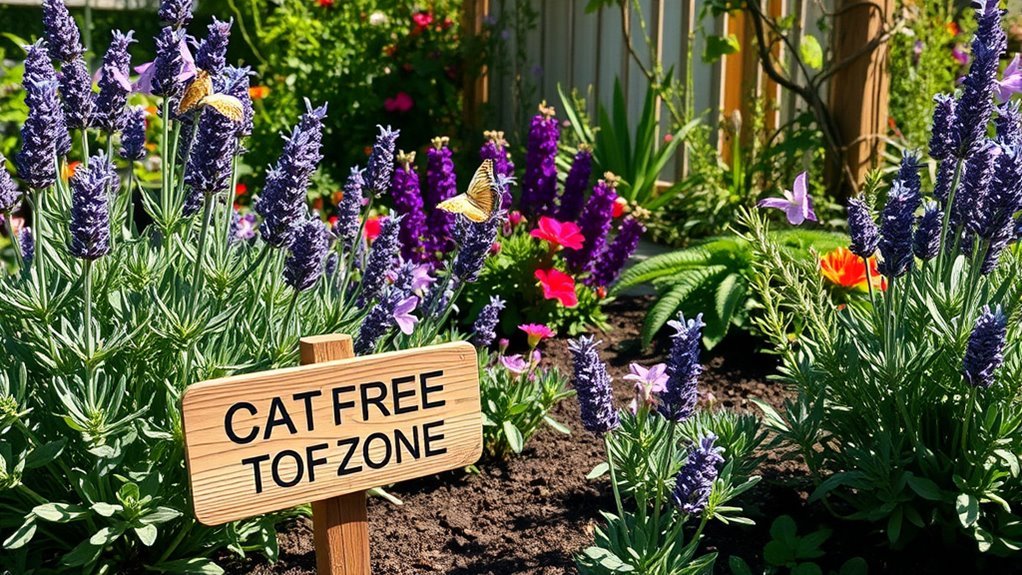
Why not make your garden naturally unappealing to cats by choosing the right plants? You can select species that cats typically avoid, reducing their interest in your garden.
Plants like lavender, rosemary, and rue emit scents that cats find unpleasant.
Similarly, thorny or textured plants such as holly or cactus can discourage cats from settling in your garden beds.
Incorporate herbs like thyme and pennyroyal, which are known to repel cats without harming them.
By planting these cat-resistant varieties, you create a natural barrier that keeps cats at bay.
Not only will your garden look beautiful, but it’ll also stay cat-free without the need for harsh chemicals or constant intervention.
Choosing the right plants is a simple, effective step toward protecting your garden.
Create Physical Barriers
If you want to stop cats from entering your garden, installing physical barriers can be one of the most effective solutions. These barriers create a clear boundary that discourages cats from trespassing.
You can use various materials and methods tailored to your garden’s layout and style.
Consider these options:
- Place chicken wire or mesh fencing around garden beds.
- Use garden stakes with plastic netting to cover soil.
- Install prickly mats or plastic spikes where cats tend to walk.
- Surround plants with thorny branches or pine cones.
- Build a low fence or border that’s difficult for cats to jump over.
Try Motion-Activated Devices to Keep Cats Away
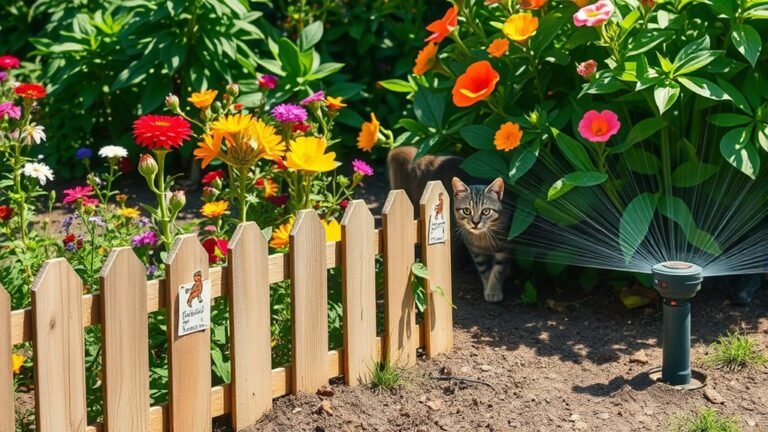
Though cats are curious creatures, they often avoid sudden movements or unexpected noises. You can use this to your advantage by installing motion-activated devices in your garden.
These devices detect movement and respond with a burst of water, a sudden sound, or a flashing light, which startles cats and discourages them from returning.
Set up motion-activated sprinklers or ultrasonic repellents near areas where cats frequent. They’re safe, humane, and don’t harm the animals.
Plus, these devices work automatically, so you won’t have to intervene constantly.
Just make sure to position them strategically for maximum coverage.
Frequently Asked Questions
Can Feeding Cats Near My Garden Keep Them Away?
Feeding cats near your garden usually won’t keep them away; it might even attract them more.
Instead, try using deterrents like citrus peels, motion-activated sprinklers, or planting cat-repellent herbs to protect your plants effectively.
Do Ultrasonic Devices Harm Cats or Other Wildlife?
Imagine a high-pitched whisper only animals hear—ultrasonic devices don’t physically harm cats or wildlife, but they can cause stress or discomfort.
You’ll want to use them cautiously to avoid upsetting your garden’s natural balance.
How Do I Safely Relocate Stray Cats From My Yard?
You can safely relocate stray cats by contacting a local animal shelter or rescue group for assistance. Use humane traps, provide food and water, and avoid handling them directly to reduce stress and guarantee their safety.
This approach ensures the cats are treated with care and minimizes potential harm. Always check local regulations regarding stray animal relocation to stay compliant.
Are There Specific Times Cats Are More Likely to Visit Gardens?
Yes, cats are more likely to visit gardens during dawn and dusk when they’re most active hunting or exploring.
You’ll notice increased activity in these cooler, quieter times, so plan your garden protection accordingly.
Can Certain Garden Layouts Naturally Discourage Cats?
You can design your garden like a fortress, using dense, prickly plants or uneven surfaces to naturally discourage cats. These layouts make your space less inviting, so cats will think twice before wandering in and exploring.
Conclusion
By keeping your garden clean and using natural repellents, you can turn your outdoor space into a no-go zone for curious cats. Planting cat-resistant greenery and setting up physical barriers act like invisible walls, protecting your plants.
Motion-activated devices add an extra layer of defense, making your garden a fortress. With these tips, you’ll keep cats at bay and watch your garden flourish. Using these effective tips to keep cats away from your garden ensures a healthy, thriving outdoor space free from feline disturbances.