How to Turf a Garden in 7 Essential Steps
To turf your garden in seven essential steps, start by clearing and preparing the soil, ensuring it’s level and drains well. Choosing the right turf suited to your climate, soil, and lawn use is crucial for a healthy garden. Accurate measurement of your area is important, so order a bit extra turf for fitting.
Lay the turf in staggered rows, pressing it down firmly to create a solid base. Water immediately after laying and maintain consistent watering during the first weeks to help roots establish. Watch for common issues and adjust care as needed—you’ll find helpful tips to make your lawn thrive.
Get Your Garden Ready for Turfing
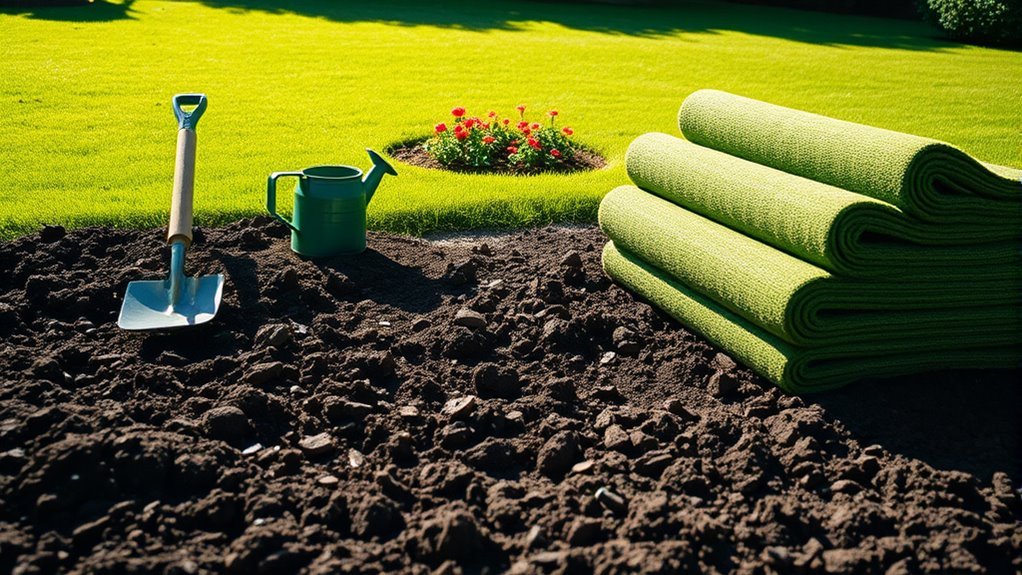
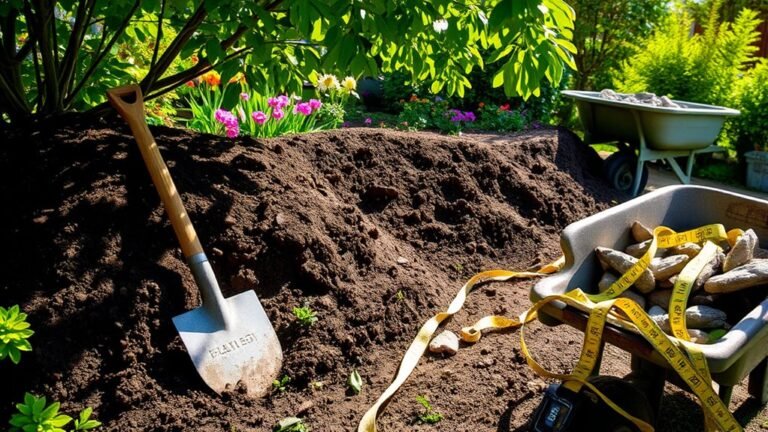
How do you prepare your garden for turfing? Start by clearing the area completely. Remove any existing grass, weeds, rocks, and debris to create a clean slate.
Next, dig or rotovate the soil to a depth of about 15 cm, loosening it thoroughly. This helps roots establish quickly.
Dig or rotovate soil 15 cm deep to loosen it, promoting strong root growth.
Once the soil is loose, rake it smooth and level to avoid lumps or dips.
Check drainage by watering the soil; if it pools, you might need to improve drainage with sand or organic matter.
Finally, lightly firm the soil with a roller or by walking over it, but don’t compact it too much.
Your garden is now ready for turfing, ensuring your new lawn will grow healthy and strong.
Choose the Right Turf for Your Garden
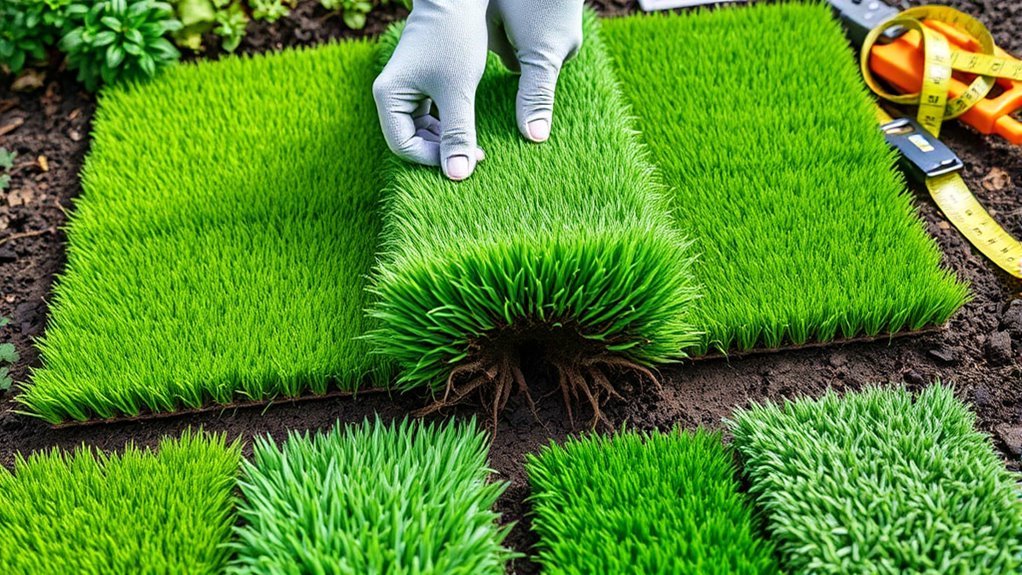
Although selecting the right turf might seem straightforward, choosing a variety suited to your garden’s climate, soil, and usage is essential for a healthy lawn. First, consider your climate—warm-season grasses like Bermuda thrive in hot, sunny areas, while cool-season grasses such as fescue perform better in cooler, shaded spots.
Next, evaluate your soil type; some turf varieties tolerate clay or sandy soils better than others. Also, think about how you’ll use the lawn. If you have kids or pets, durable, wear-resistant turf works best.
Finally, check for maintenance needs; some grasses require more watering or mowing than others. By matching turf type to your garden’s conditions and your lifestyle, you’ll set the foundation for a lush, long-lasting lawn.
How to Measure and Order Your Turf
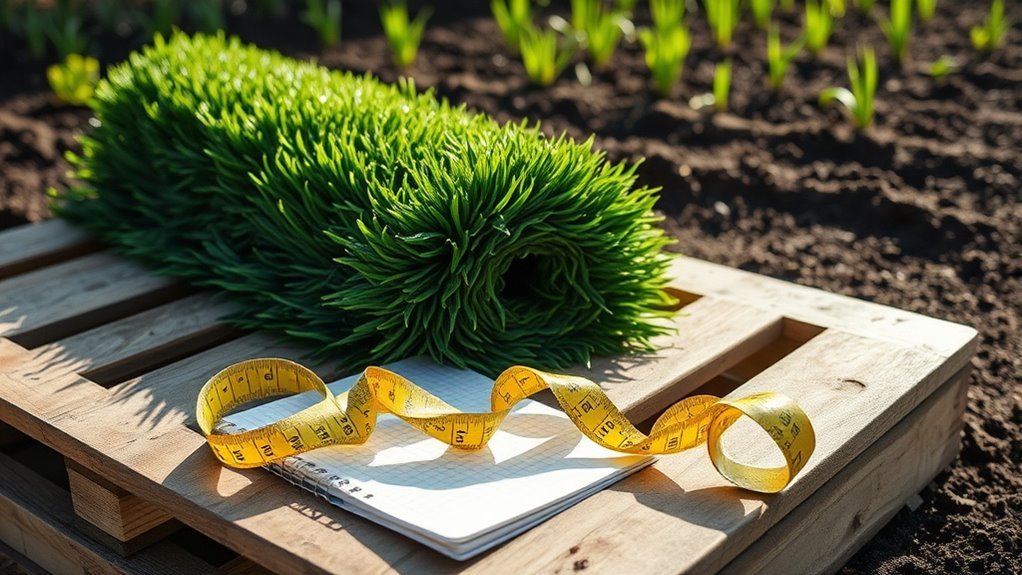
Once you’ve chosen the right turf for your garden, the next step is to accurately measure your lawn area to know how much turf you’ll need to order.
Start by dividing your garden into simple shapes like rectangles, squares, or circles. Measure the length and width of each section using a tape measure, then calculate the area by multiplying those dimensions.
For circular areas, use the formula π × radius². Add all the areas together to get the total square meters or square feet.
Always order about 5-10% extra turf to account for cutting and fitting around edges.
Finally, check with your supplier about delivery times and turf freshness to assure your new lawn stays in perfect condition from delivery to installation.
How to Lay Turf Step by Step
Before you start laying your turf, make sure the soil is properly prepared by removing any weeds, debris, and stones. A smooth, even surface ensures your new lawn takes root well.
Properly prepare soil by clearing weeds, debris, and stones for a smooth surface that helps your lawn thrive.
Here’s how to lay your turf step by step:
- Start at a straight edge: Lay the first row of turf along a straight boundary, like a path or fence, to keep it neat.
- Stagger the joints: Position the next row so the seams don’t line up, like brickwork, for stability and a natural look.
- Press down firmly: Use your hands or a roller to press each piece, ensuring good contact with the soil underneath.
- Trim excess turf: Cut any pieces to fit edges or curves carefully with a sharp knife.
These steps help your turf settle evenly and look great from day one.
Water Your New Lawn Properly After Laying
Right after laying your turf, you’ll need to follow a careful watering schedule to help it settle. Keep the soil consistently moist without soaking it.
Watch for signs of overwatering like soggy patches or yellowing grass.
Managing moisture properly guarantees your new lawn takes root and thrives.
Initial Watering Schedule
Although laying turf lays the foundation, watering it correctly in the first few weeks plays a crucial role in helping your new lawn establish strong roots.
To get it right, follow this initial watering schedule:
- Water immediately after laying to moisten the soil beneath the turf.
- For the first week, water daily in the early morning and late afternoon, ensuring the soil stays damp but not waterlogged.
- In weeks two and three, reduce watering to every other day, focusing on deeper watering to encourage root growth.
- By week four, water twice a week, adjusting based on weather and soil moisture.
Stick to this schedule, and your turf will set well, ready to thrive in your garden.
Moisture Maintenance Tips
Keeping your new lawn properly watered after the initial weeks is key to maintaining healthy growth and preventing stress. You should water deeply but less frequently to encourage roots to grow downward. Aim to soak the soil to about 6 inches deep each time.
Early morning watering is best because it reduces evaporation and fungal risks. Adjust your watering based on weather conditions—water more during hot, dry spells and less when it’s cooler or rainy. Use a sprinkler or irrigation system that distributes water evenly to avoid dry patches.
Check the soil moisture regularly by feeling it; it should stay consistently moist but not soggy. Following these tips helps your turf establish a strong root system and stay lush through the growing season.
Signs of Overwatering
If you water your new lawn too much, you’ll start noticing signs that the grass isn’t happy. Overwatering can suffocate roots and promote disease, so spotting these signs early helps you adjust your watering routine.
- Yellowing Grass – Too much water washes away nutrients, causing the grass to yellow and weaken.
- Soggy Soil – If the soil feels constantly wet or muddy, it’s a clear sign you’re overwatering.
- Fungal Growth – Mold or mildew patches on the lawn indicate excess moisture creating a breeding ground for fungi.
- Puddles Forming – Standing water after watering shows poor drainage and overwatering, potentially drowning roots.
Watch for these signs to keep your turf healthy and thriving.
Maintain Your New Turf During the First Weeks
Since your new turf is delicate during the first weeks, you’ll need to water it carefully to help the roots establish without causing damage. Water your turf daily, preferably early in the morning, ensuring the soil beneath stays moist but not soggy. Avoid heavy watering that can drown roots or cause fungal issues.
Keep foot traffic to a minimum to prevent soil compaction and turf damage.
Mowing should wait until the grass reaches about 3 inches tall; then cut only the top third to avoid stressing the grass.
Check regularly for any dry patches and adjust watering accordingly.
Quick Fixes for Common Turfing Problems
When your turf shows signs of stress or damage, acting quickly can prevent small issues from becoming bigger problems.
Here’s how you can fix common turfing problems:
- Brown Patches: Check for pests or fungal infections. Remove affected turf and replace it with fresh sod.
- Uneven Surface: Fill low spots with soil and gently roll to level the area.
- Thinning Grass: Overseed thin areas and water regularly to encourage growth.
- Weeds: Pull weeds manually or apply a selective herbicide that won’t harm your turf.
Frequently Asked Questions
Can I Lay Turf in Winter or Only in Warmer Months?
You can lay turf in winter, but it’s trickier because cold, wet soil slows root establishment.
If you decide to turf then, choose milder days, avoid frozen ground, and keep the turf moist for better results.
How Long Does It Take for Turf to Fully Establish?
It usually takes about 2 to 3 weeks for turf to establish enough for light use, but full rooting and strength develop over 8 to 12 weeks.
You’ll need to keep it well-watered and avoid heavy traffic.
What Tools Do I Need for Turf Installation?
You’ll need a spade, rake, lawn roller, hose, and sharp knife—tools that, coincidentally, also prepare you mentally, helping you shape more than just soil but your garden’s future success.
Can I Walk on New Turf Immediately After Laying?
You shouldn’t walk on new turf immediately after laying it. Give it at least 24 to 48 hours to settle and root properly.
Walking too soon can damage the grass and affect its growth.
How Do I Prevent Weeds in My New Lawn?
Want to keep weeds out of your new lawn? You’ll want to lay a weed membrane beneath the turf, water regularly, and mow at the right height.
Don’t forget to spot-treat any weeds quickly for best results.
Conclusion
Turfing your garden might seem intimidating, but with these seven essential steps, you’re well on your way to a lush, green paradise. Imagine stepping onto soft, vibrant grass every day—that dream can be your reality.
Just remember, patience and care are your best friends during this process. So, roll up your sleeves and get ready to transform your outdoor space into the oasis you deserve.
Your perfect lawn is only a step away! By following these key turfing tips, you can create a beautiful garden that will thrive for years to come.