How to Bury My Dog in My Garden Legally
To bury your dog legally in your garden, it is essential to understand local regulations and guidelines for pet burial. Checking local laws will guarantee that on-site burial is allowed and help you follow specific rules, such as minimum depth and distance from water sources.
Choose a quiet, well-draining spot away from utilities to ensure safety and environmental protection. Dig at least 3 feet deep, and prepare your dog’s body respectfully using biodegradable materials.
Mark the grave with a meaningful memorial and keep records of the burial. Notify authorities if required. Following these steps will help you honor your pet safely and properly, with further details guiding you through the process.
Check Local Laws and Regulations on Burying Your Dog

Before you begin planning your dog’s burial, you’ll need to check your local laws and regulations carefully. Every area has different rules about pet burials, and you don’t want to face fines or legal trouble.
Start by visiting your city or county website or calling local animal control or public health departments.
Begin by checking your city or county website or contacting local animal control or health departments.
They’ll tell you if burying a pet on your property is permitted and what restrictions apply. Some places require a minimum depth for the grave or a certain distance from water sources and property lines.
You might also learn about necessary permits or paperwork.
Knowing these rules upfront helps you plan respectfully and legally. Taking this step ensures you honor your pet while staying compliant with local laws.
Can You Bury Your Dog on Your Property?
You might wonder if you can bury your dog right in your own garden. It usually depends on local burial regulations, property size, and health and safety rules that you need to follow.
Understanding these factors will help you decide if on-site burial is an option for you.
Local Burial Regulations
Although many people wish to bury their dog in their garden, local laws often set specific rules about whether and how you can do so. You’ll need to check your city or county regulations before proceeding.
Some areas allow pet burial but require certain conditions, like minimum burial depth or distance from water sources and property lines.
Others might prohibit it altogether to protect public health or the environment. You can usually find these rules on your local government’s website or by contacting animal control or zoning offices.
Following these regulations helps you avoid fines and ensures a respectful, safe resting place for your pet.
Always document your compliance with local laws as you plan your dog’s garden burial.
Property Size Requirements
When considering burying your dog on your property, the size of your land plays an essential role in determining if it’s allowed. Many local regulations require a minimum property size to permit pet burials, often around one acre or more.
If your property is smaller, you might face restrictions or need special permission. This guarantees there’s enough space to avoid contamination of water sources and maintain neighborly boundaries.
Before you dig, check your city or county’s specific rules about minimum lot size for pet burials. If your land is too small, you may need to explore alternative options like pet cemeteries or cremation.
Understanding these size requirements helps you comply with the law and respect your community’s standards.
Health And Safety Rules
Meeting property size requirements is just one part of legally burying your dog at home. You must also follow health and safety rules to prevent contamination and protect public health.
First, bury your dog at least three feet deep to avoid scavengers digging up the remains.
Keep the burial site away from water sources like wells, streams, or drainage systems to prevent groundwater contamination.
Use a biodegradable coffin or wrap the body in natural materials to guarantee proper decomposition.
Avoid burying dogs that died from infectious diseases or poisoning, as this can pose health risks.
Finally, check local regulations, as some areas require notifying authorities or prohibit pet burial altogether.
Following these rules keeps you compliant and protects your family and neighbors.
How Deep Should You Bury Your Dog?
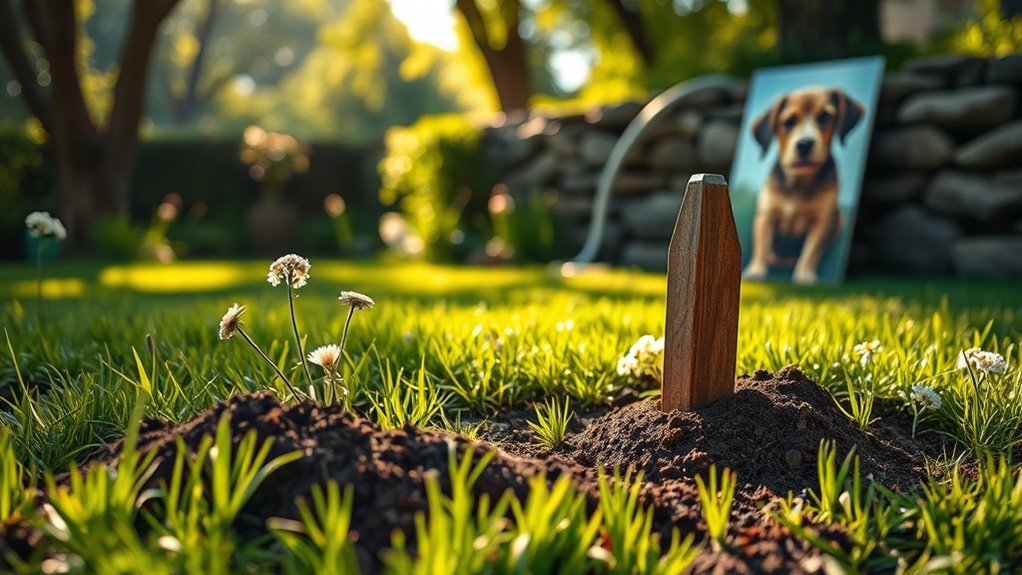
Since burying your dog in your garden requires following specific guidelines, you need to dig a hole deep enough to prevent other animals from disturbing the grave.
Burying your dog at home means digging deep enough to keep the grave safe from other animals.
Generally, the depth depends on your dog’s size and local regulations. Here’s a simple guide:
- Small dogs (under 20 lbs): Dig at least 2 feet deep.
- Medium dogs (20-50 lbs): Aim for 3 feet deep.
- Large dogs (over 50 lbs): You’ll need 3 to 4 feet deep.
- Always add an extra 6-12 inches of soil on top to secure the grave.
This depth protects the remains from scavengers and natural elements.
Make sure to check your local laws for any specific depth requirements before you start digging.
Choose a Spot in Your Garden for Burying Your Dog
After determining the right depth for your dog’s burial, the next step is picking the perfect spot in your garden. Choose a location that’s away from water sources like wells, ponds, or underground pipes to prevent contamination. Make certain the spot is accessible but private, so you can visit without disturbing neighbors.
Avoid areas with heavy foot traffic or where you plan future gardening projects. Consider the soil type—well-draining soil makes digging easier and helps preserve the grave.
If local laws require a minimum distance from property lines or structures, measure carefully to comply.
Mark the spot discreetly, perhaps with a small stone or plant, to honor your pet’s resting place. Taking these steps ensures a respectful, safe burial in your garden.
Prepare Your Dog’s Body and Burial Materials
Before you begin the burial, you’ll want to prepare your dog’s body carefully to guarantee a dignified and sanitary process. Handling the body with care honors your pet and helps you avoid health risks. Follow these steps:
- Clean your dog’s body gently with water and a mild cloth to remove dirt or debris.
- Wrap your dog in a biodegradable material like cotton or linen to allow natural decomposition.
- Gather burial materials such as gloves, a shovel, and a suitable container if required by local laws.
- Consider placing a favorite toy or blanket with your dog to provide comfort and a personal touch.
Dig the Grave Safely and Respectfully
Before you start digging, make sure you check your local burial laws to stay within legal limits.
Pick a spot in your garden that’s suitable and won’t interfere with underground utilities or neighbors.
Then, prepare the grave carefully to honor your dog’s memory and keep the process safe.
Check Local Burial Laws
Although you may feel enthusiastic to lay your dog to rest quickly, you need to check local laws to confirm your garden burial is legal. Regulations vary widely, and ignoring them could lead to fines or forced exhumation.
Here’s how to guarantee you comply:
- Contact your city or county office for specific pet burial rules.
- Verify if there are restrictions on the size or depth of the grave.
- Ask whether you need a permit or to notify any local authorities.
- Check if burial is prohibited near water sources, property lines, or public areas.
Following these steps helps you bury your dog safely and respectfully, honoring your pet while staying within the law.
Choose Appropriate Burial Site
When choosing where to bury your dog, pick a spot that’s both safe and respectful. Avoid areas near water sources, wells, or your home’s foundation to prevent contamination or structural issues.
Choose a quiet, shaded spot that won’t be disturbed by foot traffic or gardening activities.
Make sure the burial site complies with local regulations you’ve already checked.
Consider the depth to protect your dog from scavengers and prevent odors from surfacing.
Select ground that’s easy to dig but stable enough to support the grave.
Avoid rocky or overly wet soil.
Finally, respect your dog’s memory by choosing a peaceful area where you can visit and remember them without disturbance.
This thoughtful choice makes the burial meaningful and legal.
Prepare The Grave Properly
Once you’ve selected the perfect spot, it’s time to prepare the grave with care and respect. Digging the grave safely guarantees you honor your dog’s memory while complying with local guidelines. Follow these steps:
- Check for utilities: Before you dig, call utility services to avoid hitting underground cables or pipes.
- Dig deep enough: Make the grave at least 3 feet deep to prevent other animals from disturbing it.
- Use proper tools: Employ a sturdy shovel and wear gloves to protect yourself and make digging easier.
- Handle soil respectfully: Place the removed soil aside neatly for refilling, avoiding damage to the surrounding area.
How to Mark or Memorialize Your Dog’s Grave
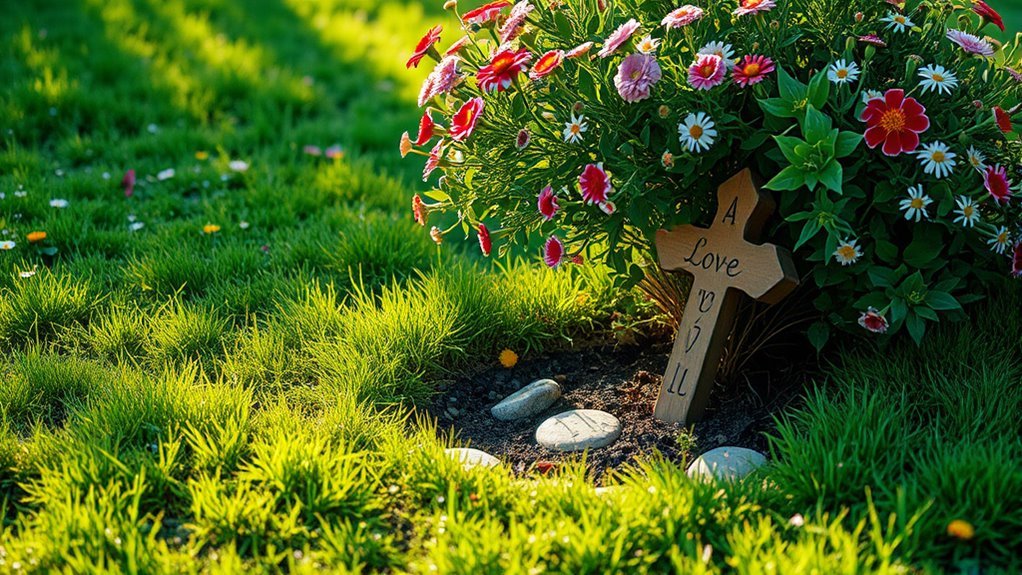
To honor your dog’s memory, you’ll want to choose a meaningful way to mark their grave that feels personal and respectful. You can place a small headstone or a decorative plaque engraved with their name and dates.
Some people prefer planting a favorite flower or a tree nearby, symbolizing life and remembrance.
You might also consider a garden ornament, like a statue or a wind chime, which adds a gentle, living tribute.
Another thoughtful option is to create a painted rock marker with your dog’s name or a special message.
Whatever you pick, make sure it fits the space and your personal style, helping you visit the spot with love and peace whenever you want to remember your loyal friend.
Follow Environmental and Health Safety Rules
Honoring your dog’s memory with a special marker is a meaningful step, but it’s equally important to follow environmental and health safety rules when burying your pet in your garden. To keep things safe and respectful, remember these key points:
- Bury your dog at least 3 feet deep to prevent scavengers from disturbing the site.
- Choose a spot away from water sources like wells or streams to avoid contamination.
- Avoid using chemicals or embalming fluids on your pet’s body, as they can harm the soil and groundwater.
- Check local regulations for restrictions on pet burial to ensure you’re compliant with health codes.
Notify Authorities After Burying Your Dog (If Required)
Although many areas don’t require you to notify authorities after burying your dog in your garden, some local laws do, so you should check your municipality’s rules before proceeding. If notification is required, you might need to inform the local health department or animal control office.
This step guarantees your burial complies with public health standards and prevents legal issues.
Keep any paperwork or confirmation you receive as proof. Even if your area doesn’t mandate notification, it’s wise to document your dog’s burial details, like date and location, for future reference.
Staying informed and following local guidelines shows respect for community regulations and helps you avoid potential fines or complications.
Always prioritize clarity and responsibility when handling your pet’s final resting place.
Frequently Asked Questions
Can I Bury My Dog With Their Favorite Toys or Blanket?
Yes, you can bury your dog with their favorite toys or blanket. Including personal items is a comforting way to honor them, as long as local regulations allow burial on your property.
How Long Does It Take for a Dog’s Body to Decompose in Soil?
Your dog’s body usually returns to the earth within several months to a year, depending on soil conditions and burial depth.
You’ll notice nature gently reclaiming your pet as time quietly weaves its magic underground.
Are There Any Alternatives to Burial for Pet Remains?
Yes, you can choose cremation, which returns ashes you can keep or scatter.
Another option is pet memorial services or composting, a natural alternative that turns remains into soil, helping you honor your pet sustainably.
Can I Hold a Small Ceremony or Gathering at the Burial Site?
You might worry about disturbing neighbors, but you can absolutely hold a small ceremony at the burial site.
It’s a meaningful way to honor your dog’s memory and find comfort with loved ones nearby.
What Should I Do if I Want to Move My Dog’s Grave Later?
If you want to move your dog’s grave later, you’ll need to check local laws first.
Carefully exhume the remains, handle them respectfully, and re-bury them in the new location, following any legal requirements.
Conclusion
Burying your dog in your garden is a final act of love, much like planting a seed that grows into a lasting memory. By checking local laws, choosing the right spot, and following safety rules, you honor your companion with respect and care.
Remember, this resting place will be your own little sanctuary—where the past and present meet, and your dog’s spirit quietly lingers. Following these legal guidelines ensures you can bury your dog in your garden legally, providing peace of mind and a meaningful tribute.