7 Effective Tips to Get Rid of Foxes in Your Garden
To get rid of foxes in your garden, start by removing food sources like pet bowls and fallen fruit, and secure your trash cans. Foxes are often attracted to easy meals, so cutting off their food supply is key.
Next, tidy up overgrown shrubs and clear debris to eliminate hiding spots. When foxes have fewer places to hide, they’re less likely to stick around.
Use scent-based deterrents such as garlic or chili powder, which can make your garden less inviting.
You might also want to install fox-proof fences that are at least 6 feet tall with buried mesh to keep them out.
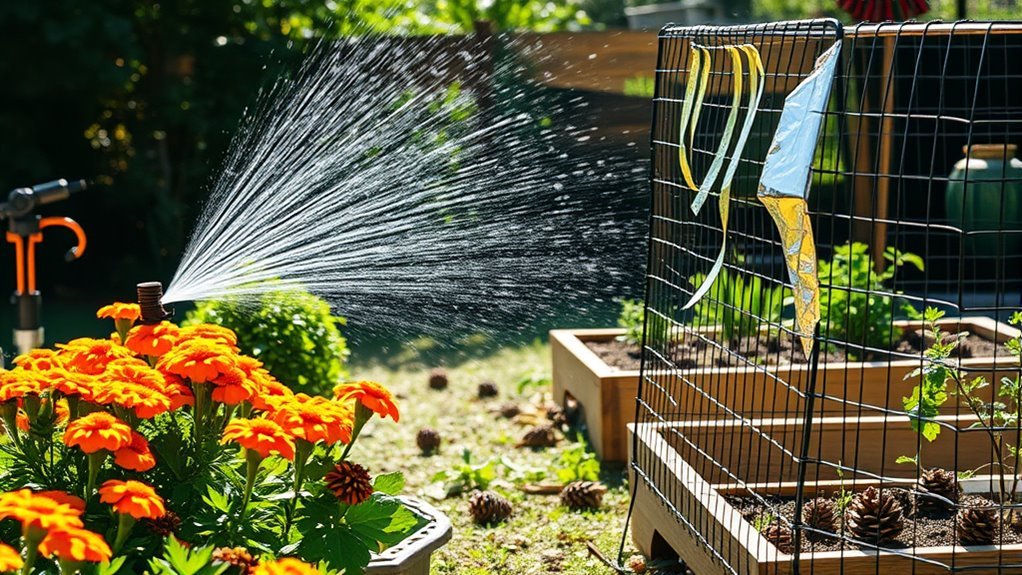
Motion-activated sprinklers are another great way to scare foxes away without harming them.
Adding prickly plants creates a natural barrier that foxes don’t like to cross.
Keep these tips in mind, and you’ll uncover even more effective strategies ahead to protect your garden from unwanted fox visitors.
Key Takeaways
- Secure trash cans and remove outdoor pet food to eliminate food sources that attract foxes. This simple step can make a big difference in keeping them away.
- Trim shrubs, clear debris, and seal potential dens to remove fox hiding spots in your garden. It’s all about making your space less inviting for them.
- Use natural scent deterrents like chili powder and garlic. Just remember to replace them regularly to keep foxes from coming back.
- Install a 6-8 foot fox-proof fence with buried wire mesh and coyote rollers. This helps prevent foxes from sneaking into your garden.
- Set up motion-activated sprinklers or lights to scare foxes off. They’ll think twice about returning once startled.
Remove Food Sources to Deter Foxes
Because foxes are often drawn to easy food sources, removing these from your garden is essential to keep them away. Start by securing your trash cans with tight-fitting lids or animal-proof containers to block foxes from scavenging food scraps.
Also, remove pet food bowls from outdoor areas and clean up fallen fruits or seeds promptly, as these attract foxes. Keep compost piles covered and avoid adding meat or dairy, which can lure foxes in.
Try to minimize excess birdseed on the ground by using squirrel-proof feeders to reduce available food. Taking these steps will help you remove food sources effectively and deter foxes from visiting your garden repeatedly.
Tidy Up Your Garden to Remove Fox Hideouts
Once you’ve removed food sources that attract foxes, the next step is to eliminate the places they use for shelter. To tidy up your garden and remove fox hideouts, start by trimming overgrown shrubs and trees. This reduces the dense cover foxes rely on for hiding.
Clear away debris piles like fallen branches or leaves that provide cozy shelters. Also, seal off crawl spaces, under decks, and any potential den sites to prevent foxes from settling near your home. Removing clutter and maintaining a neat garden really discourages foxes looking for safe havens.
You can also install fences or barriers around vulnerable areas to limit their access. Taking these steps will effectively tidy up your garden and remove fox hideouts. This way, you’ll help prevent foxes from making your yard their territory.
Use Scent-Based Fox Deterrents
Using natural scents like chili powder, garlic, and citrus peels can help keep foxes away from your garden. Place these deterrents strategically around areas foxes frequent.
Remember to replace them regularly, especially after rain. Combining different scents can create a stronger barrier that foxes won’t want to cross.
It’s a simple trick, but it really works! Just keep an eye on those spots and refresh the scents as needed.
Natural Repellent Ingredients
Although foxes have a keen sense of smell, you can take advantage of their sensitivity by placing strong-scented natural repellents in your garden. Natural repellent ingredients like chili powder and garlic create an intense aroma foxes dislike, helping keep foxes away from your space.
Citrus peelings from oranges and lemons also work well, as their sharp scent deters foxes from approaching areas where you grow food sources. Vinegar’s pungent odor adds another layer of protection by making your garden uninviting.
While some use coyote urine as a deterrent, its effectiveness varies and requires frequent reapplication. By strategically using these natural scents, you create an environment foxes want to avoid, reducing the chances they’ll raid your garden or nearby food sources.
Placement And Reapplication
To keep foxes away effectively, you’ll need to place scent-based deterrents like chili powder, garlic, and citrus peelings strategically around your garden. Focus the placement near garden borders, compost bins, and pet food areas—spots foxes find attractive.
Since foxes can get used to smells, regularly adjust where you place these deterrents to maintain their effectiveness. Rain and heavy winds can wash away scents, so reapplication is crucial to deter foxes continuously.
Replace citrus peelings often, as their scent fades quickly. Keep monitoring how well your deterrents work, and don’t hesitate to move or refresh them to guarantee your garden stays fox-free.
Proper placement and timely reapplication are key to keeping these unwanted visitors at bay.
Install Fox-Proof Fences and Barriers
Secure your garden by installing a fox-proof fence that stands at least 6 to 8 feet tall to keep foxes from jumping over. Use galvanized wire mesh buried 12 inches underground to stop foxes from digging beneath the fence.
Make sure the grid diameter doesn’t exceed 3 inches to prevent smaller foxes from squeezing through. In urban areas, where foxes are clever and persistent, adding coyote rollers along the top can further deter climbing attempts.
Keeping foxes away means regularly inspecting your fence for gaps or damage and repairing them promptly. By maintaining a sturdy and secure barrier, you effectively reduce the chances of foxes entering your garden. This way, you protect your plants and pets with minimal hassle.
Use Motion-Activated Devices to Scare Foxes Away
Install motion-activated devices like sprinklers, lights, or ultrasonic emitters to startle foxes and discourage them from entering your garden. These devices detect movement and activate sudden bursts of water, light, or high-pitched sounds that foxes find unpleasant but humans usually don’t notice.
Using motion-activated devices is a smart way to keep foxes away without harming them. To keep them working well, try changing the location or type of device regularly so foxes don’t get used to them.
You can also boost results by combining these devices with other deterrents, like scent repellents. By adding motion-activated devices to your garden defense, you create an environment foxes want to avoid, helping you keep your garden safe and fox-free.
Plant Prickly Vegetation as Barriers
Combining motion-activated devices with natural barriers can boost your garden’s defense against foxes. Planting prickly vegetation, like holly or rose bushes, creates effective barriers that act as a strong deterrent.
These thorny plants form dense thickets, making it tough for foxes to move through or access your garden. Position prickly vegetation strategically around entry points and areas foxes find tempting to maximize their impact.
Not only do these barriers discourage foxes, but they also add beauty to your landscape. To keep them functional as a deterrent, maintain your prickly plants regularly, ensuring they stay thick and thorny.
Signs You Need Professional Fox Control
When foxes keep coming back to your garden despite your efforts to scare them off, it’s a clear sign you might need professional help. Seeing them repeatedly or spotting dens and digging means foxes are making your yard their home.
Damage to your plants or missing small pets shows they’re actively foraging nearby, which can be a real safety concern. And if you notice aggressive behavior or persistent fox urine smells that just won’t go away, it’s definitely time to act.
Trying to get rid of a fox on your own often isn’t enough. It’s best to contact your local animal control agency for expert advice and safe removal methods.
Professionals have the right tools and know-how to handle stubborn fox problems effectively. That way, your garden and family stay safe and protected.
Frequently Asked Questions
How Do You Permanently Get Rid of Foxes?
You permanently get rid of foxes by installing tall, secure fences with buried mesh, removing all food sources, using scent and motion deterrents, and if needed, calling professionals to handle severe infestations effectively and safely.
What Happens to Foxes in October?
Did you know foxes increase their food intake by up to 25% in October? You’ll notice they get more active, caching food, marking territory, and preparing for winter while their young start weaning.
What Do Foxes Hate the Most in the Garden?
Foxes hate strong scents the most in your garden. You’ll want to use garlic, chili powder, and citrus peelings since they repel foxes effectively. Adding prickly plants also makes your garden less inviting for them.
Do Foxes Come Back to the Same Place at Night?
Yes, foxes often come back to the same place at night if they find food or shelter there. You’ll need to consistently use deterrents to make your garden less inviting and break their routine.
Conclusion
By following these simple tips, you’ll make your garden less inviting to foxes and protect your space effectively. Remember, removing food sources and tidying up are your first lines of defense.
Don’t hesitate to use modern gadgets like motion-activated devices or classic methods like prickly plants—think of it as a medieval moat for your garden! If foxes keep showing up, it’s time to call in professional help to keep your yard safe and serene.
Getting rid of foxes in your garden doesn’t have to be a struggle. With a few smart strategies, you can create a fox-free zone that feels secure and peaceful. Keep your garden tidy, remove anything that might attract foxes, and use deterrents to discourage their visits. And if the problem persists, professionals can offer targeted solutions to protect your garden effectively. Remember, consistent effort is key to keeping foxes out and enjoying your outdoor space without worry.