7 Tips to Keep Cats Out of Your Garden
You can keep cats out of your garden by understanding their behavior—they love soft soil and shelter. Knowing this helps you figure out where they’re likely to dig or hide.
Using natural scents like citrus peels and herbs can be really effective to repel them without causing harm.
Setting up physical barriers such as chicken wire or scat mats is another great way to keep cats away from your plants. You might want to create a separate litter area to redirect cats, giving them their own spot to hang out.
Trying motion-activated deterrents can also work well—they provide humane surprises that discourage cats from sticking around.
Just be sure to avoid harmful repellents that could hurt your furry visitors.
And hey, don’t forget to collaborate with neighbors for lasting results. When everyone’s on the same page, your garden gets the best protection.
Explore these tips further to protect your garden effectively!
Key Takeaways
- Use natural scents like citrus peels, rosemary, and peppermint to create an unappealing environment for cats. These smells can really help keep them away without any harm.
- Install physical barriers such as chicken wire, plastic mats, or bamboo sticks to block cats from accessing garden soil. It’s a simple way to make your garden less inviting.
- Set up a designated cat litter area with sand or peat moss away from the garden to redirect cats. This gives them a spot to go that’s not in your plants.
- Employ motion-activated water deterrents to humanely startle and discourage cats from entering the garden. It’s effective and keeps things peaceful.
- Collaborate with neighbors and maintain consistent deterrent methods for long-term, community-supported garden protection. When everyone’s on board, it works even better!
Understand Why Cats Invade Your Garden
Why do cats keep invading your garden? It’s mainly because gardens offer the perfect environment for cats to dig and bury their waste. You might not realize it, but the soft soil is irresistible to them.
Plus, your garden provides shelter and hiding spots that cats find safe for resting. If you want to keep cats away, understanding these reasons is key.
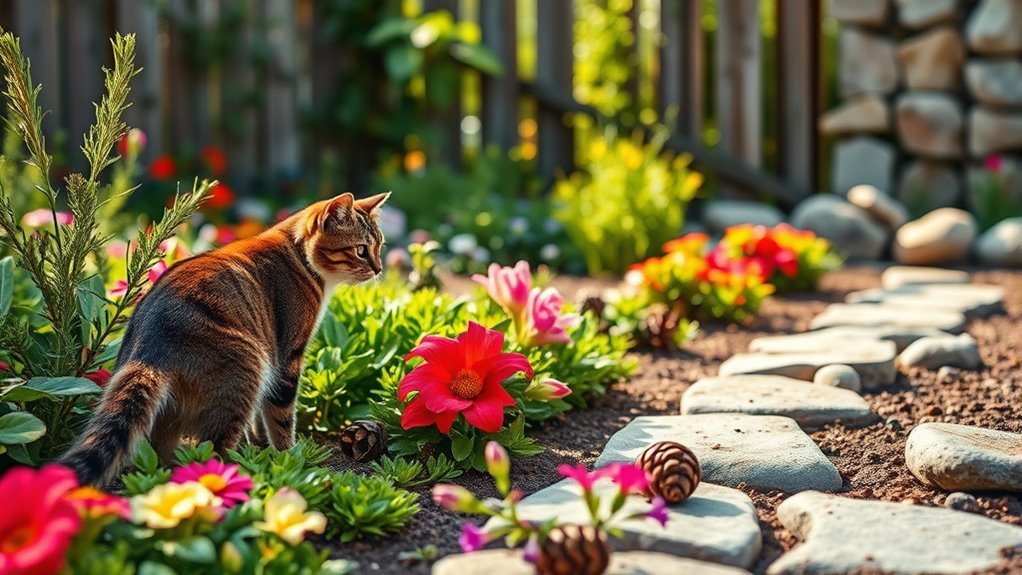
Gardens offer cozy hiding spots, making them perfect safe havens for cats to rest peacefully.
Cats also see gardens as part of their territory and tend to mark it by digging and leaving their scat. Sometimes, the presence of birds or rodents attracts them as potential prey.
Unattended gardens build up scents that invite exploration. Knowing these facts helps you take effective steps to keep cats away from your garden.
Use Natural Scents to Repel Cats From Your Garden
You can keep cats away by using natural scents like citrus peels, which cats really dislike and need to be replaced often.
Planting strong-smelling herbs such as rosemary, thyme, or mint also helps create an unpleasant environment for them.
Additionally, spraying essential oils like peppermint around your garden adds another layer of protection against feline visitors.
Citrus Peels Effectiveness
Although cats are drawn to many garden spaces, the strong scent of citrus peels, especially from oranges and lemons, can keep them away effectively. By placing fresh citrus peels around your plants, you create a natural barrier that cats find unappealing.
To keep the cats from coming back, replace the peels every few days since their scent fades and rain can wash it away. You can also sprinkle dried citrus peel or use citrus-scented oils for longer-lasting protection.
Using your garden to spread these natural scents not only repels cats but also deters other pests, giving your plants extra defense. So, incorporating citrus peels is a simple, eco-friendly way to keep cats out without harsh chemicals or traps.
Herbs That Repel
When you want to keep cats out of your garden naturally, planting certain herbs can make a big difference. These herbs repel cats with their strong, unappealing scents, offering a safe and effective deterrent.
Here are three great options to contemplate:
- Rosemary and Lavender – Their robust aromas cats dislike make them perfect for garden borders.
- Mint – This herb’s powerful scent repels cats and its fast growth forms a natural barrier.
- Thyme – Aside from its culinary uses, thyme’s pungent smell helps keep cats away.
Essential Oils Use
Since cats dislike strong, pungent scents, using essential oils like peppermint, citronella, and lavender can effectively keep them away from your garden. To repel cats safely, dilute essential oils with water before application to avoid harming your plants.
Spray this mixture around your garden’s perimeter to create a natural barrier that discourages cats from entering. Remember, you’ll need to reapply the essential oils after rain or watering to maintain their effectiveness.
Before widespread application, test a small area first to confirm your garden’s flora isn’t adversely affected. By using essential oils thoughtfully, you can protect your garden without resorting to harsh chemicals. This way, you keep it cat-free with natural, pleasant scents.
Set Up Physical Barriers to Keep Cats Out
You can keep cats out by choosing the right materials like chicken wire or plastic carpet runners that make your garden less inviting.
Focus on placing barriers strategically around garden beds, making sure edges are buried or surfaces are uncomfortable for cats.
With careful setup, these physical barriers will protect your plants without harming the cats.
Effective Barrier Materials
To keep cats out of your garden, setting up effective physical barriers is one of the best strategies you can use. Choosing the right materials guarantees your garden stays cat-free without harming them.
Here are three effective barrier materials to evaluate:
- Chicken Wire: Lay chicken wire flat with the sharp edges rolled under to create an uncomfortable surface that discourages digging.
- Plastic Scat Mats: Place these mats with flexible spikes facing up; they deter cats gently but effectively.
- Bamboo Sticks: Insert bamboo sticks densely—about nine per square foot—to block cats from accessing soil while allowing your plants room to grow.
Using these materials strategically will help protect your garden from unwanted feline visitors. It’s a simple way to keep your plants safe and your garden peaceful.
Strategic Barrier Placement
Selecting the right barrier materials is just the start; how and where you place them makes all the difference in keeping cats out of your garden. Lay chicken wire flat or slightly buried to deter digging.
Position scat mats or plastic spikes around garden beds and pathways, focusing on entry points cats frequent. Use rough textures like coarse mulch or decorative river rocks across exposed soil to discourage cats from settling.
Consider embedding plastic carpet runners with spikes facing up near vulnerable areas for added discomfort. Installing lattice fencing or solid boundary fences at least six feet high further blocks access.
Set Up an Alternate Garden Litter Area to Redirect Cats
Although cats naturally seek out soft, loose soil for their bathroom needs, you can redirect their behavior by setting up a designated litter area in your garden. Create a small container filled with sand or peat moss to serve as a litter box, enticing cats away from your plants.
Make sure to maintain this area regularly to prevent odors and encourage continued use. Place the litter box strategically, away from your main garden, to maximize its effectiveness.
Maintain the litter area regularly and place it away from your main garden to ensure success.
Here’s how to set it up:
- Fill a container with peat moss or sand to mimic a natural litter box.
- Clean it frequently to avoid smells that might deter cats.
- Position it away from your garden beds and consider adding catnip to attract cats.
Using an animal repellent elsewhere can complement this method and help keep your plants safe.
Use Motion-Activated Deterrents to Startle Cats Away
When cats wander into your garden, motion-activated deterrents can quickly startle them away by releasing a sudden spray of water. These humane devices detect movement up to 30 feet away and activate instantly, surprising cats without causing harm.
They’re designed to keep unwanted visitors out, and motion-activated sprinklers can cover up to 1,600 square feet. That makes them perfect for larger garden areas.
You’ll find they provide an effective, chemical-free way to protect your plants. Just be sure to check for clogs and replace batteries regularly to keep them working reliably.
Avoid Harmful or Ineffective Cat Deterrents
Because some common cat deterrents can harm your garden or fail to work over time, you need to choose your methods carefully. Using plastic forks or scat mats might keep cats from using certain spots temporarily, but their effect fades quickly.
Avoid mothballs—they’re illegal outdoors and toxic to plants and pets. Coffee grounds can seem helpful but damage soil and attract pests, while cayenne pepper irritates plants without lasting results.
To keep your garden safe and cat-free, consider these points:
- Skip mothballs and harsh chemicals that harm plants and pets.
- Avoid coffee grounds and cayenne pepper, which aren’t sustainable deterrents.
- Don’t rely on plastic items alone, as cats often get used to them.
Choose gentle, effective methods that protect your garden long-term.
Work With Neighbors and Keep Deterrents Fresh for Long-Term Success
To keep cats out of your garden for good, you need to team up with your neighbors and stay consistent in renewing your deterrents. Open communication helps build a community effort, so discuss how outdoor cats affect your gardens and share effective deterrents like bamboo sticks or motion-activated sprinklers.
Encourage neighbors to join humane programs like Trap-Neuter-Return to manage cat populations. Regularly refresh natural deterrents such as citrus peels and strong-smelling herbs since their scent fades over time.
Organize community clean-up days to remove food sources that attract cats, reinforcing your deterrent measures. By working together and keeping deterrents fresh, you create a united, long-term strategy to protect your garden from unwanted feline visitors.
Frequently Asked Questions
How Do I Stop Neighbour’s Cats in My Garden?
You can stop neighbor’s cats by using natural repellents like citrus peels, installing motion-activated sprinklers, and creating uncomfortable surfaces. Also, talk to your neighbors about humane solutions like TNR programs to manage the cats effectively.
What Is the 3-3-3 Rule for Cats?
You might think your new cat will settle instantly, but the 3-3-3 Rule means they hide three days, adjust three weeks, and fully settle in three months. You’ll need patience to help them feel at home.
What Smell Do Cats Absolutely Hate?
Cats absolutely hate the smell of citrus, like oranges and lemons. You’ll also find they avoid strong herbs such as rosemary and lavender, plus scents like vinegar or cayenne pepper—they’re all pretty effective at keeping cats away.
What Is a Silent Killer for Cats?
Antifreeze is a silent killer for cats, sneakier than the darkest shadow. Even tiny amounts can cause fatal kidney failure. You’ve got to keep it far away to protect your furry friend’s life.
Conclusion
Keeping cats out of your garden might feel like chasing shadows, but with these tips, you’ll turn your space into a no-cat zone. By understanding their behavior, using natural scents, and setting up barriers, you can protect your plants without causing harm.
Don’t forget to work with your neighbors too—it helps create a community effort in keeping cats away. Consistency is key here, so keep your deterrents fresh and stay patient.
Soon enough, your garden will flourish, free from unwanted feline visitors. Think of it as a fortress standing strong against the tide, where your plants grow healthy and safe. With these simple strategies, you can enjoy a beautiful garden without the worry of cats digging or trampling your flowers. Just stick with it, and you’ll see the difference in no time!