How to Safely Burn Wood in Your Garden
To safely burn wood in your garden, it is essential to follow proper garden fire safety and wood burning techniques. Start by picking a clear, flat spot at least 10 feet away from structures and trees. Use dry, untreated hardwood and avoid burning trash or chemicals.
Set up a sturdy fire pit surrounded by gravel to contain the fire effectively. Keep protective gear and fire tools handy at all times. Never leave the fire unattended, add wood gradually, and avoid burning on windy days.
Once you are done, make sure the fire is fully cooled before handling. Store ashes safely before disposal to prevent accidental fires. Keep following these steps, and you’ll master safe garden wood burning with ease.
Choose a Safe Spot to Burn Wood

Where you choose to burn wood can make all the difference in safety. You should pick a spot far from your house, trees, fences, and any other flammable structures.
Make sure the area is clear of dry leaves, grass, and debris that could catch fire easily.
Clear away dry leaves, grass, and debris to prevent the fire from spreading uncontrollably.
Avoid places with overhanging branches or anything that could drop sparks onto your roof or nearby plants. It’s best to use a fire pit or a designated burn barrel to contain the flames.
Also, choose a place with good airflow but shielded from strong winds that might spread embers.
Finally, keep a hose, bucket of water, or fire extinguisher close by just in case you need to act quickly to control the fire.
Pick the Right Wood and Materials to Burn
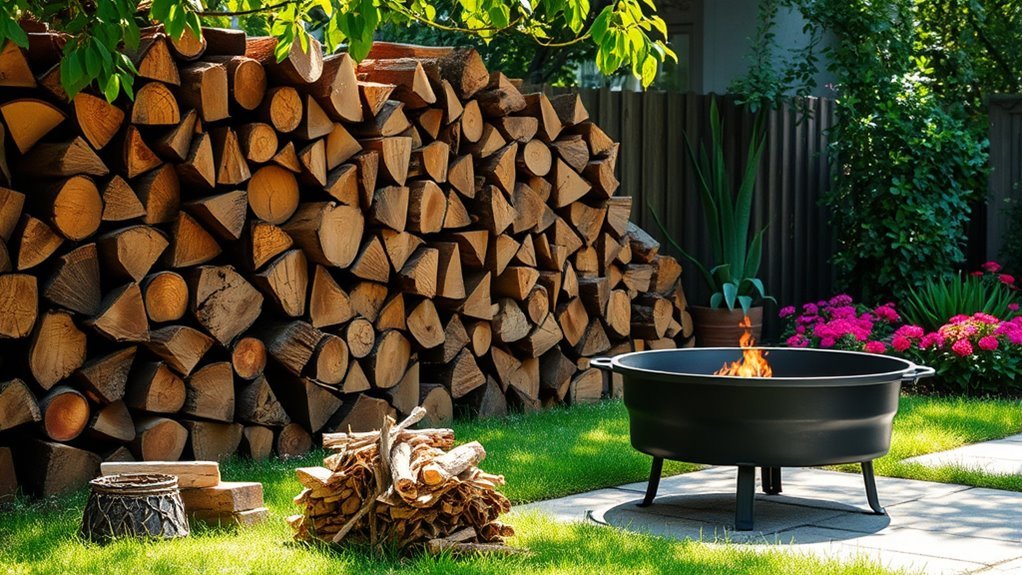
Make sure you pick dry, seasoned wood for a cleaner, safer burn.
Avoid treated or painted wood since they release harmful chemicals when burned.
Stick to natural, untreated materials to protect your health and the environment.
Choose Dry, Seasoned Wood
Although it might be tempting to use any wood you find, choosing dry, seasoned wood is essential for a safe and efficient garden fire. Fresh or green wood contains moisture that causes excessive smoke, making your fire harder to control and less enjoyable.
Dry wood ignites quickly, burns hotter, and produces less creosote buildup, reducing fire hazards.
You can tell if wood is seasoned if it’s grayish, cracked at the ends, and sounds hollow when tapped. Ideally, wood should be stored in a dry, well-ventilated area for at least six months.
By selecting properly seasoned wood, you’ll create a cleaner fire that’s easier to maintain and safer for you and your surroundings.
Always check moisture levels—under 20% is best for burning.
Avoid Treated Or Painted Wood
Since burning treated or painted wood releases harmful chemicals, you should never use it for your garden fire. These woods often contain preservatives, paints, or stains that emit toxic fumes when burned, posing serious health risks and damaging the environment. Avoid pressure-treated lumber, plywood, and any wood with visible paint or coatings.
Even small amounts can release heavy metals and carcinogens into the air. Instead, inspect your wood carefully before burning. If you’re unsure about a piece, it’s safer to discard it through proper waste channels rather than risking exposure.
Keeping your firewood free from treated or painted wood ensures cleaner air and a safer experience for you, your family, and your neighbors. Always prioritize safety by selecting wood that won’t harm your health or the environment.
Select Natural, Untreated Materials
When you choose wood for your garden fire, opt for natural, untreated materials to keep the smoke clean and safe. Look for hardwoods like oak, maple, or ash, which burn longer and produce less smoke. Avoid softwoods such as pine or fir, as they contain resins that create more smoke and soot.
Use seasoned wood that’s been dried for at least six months; wet or green wood generates excessive smoke and creosote buildup.
Besides wood, only burn natural materials like untreated paper or dry leaves if you want to add kindling.
Never burn trash, plastics, or chemically treated items, as they release harmful toxins.
Know and Follow Local Wood Burning Rules
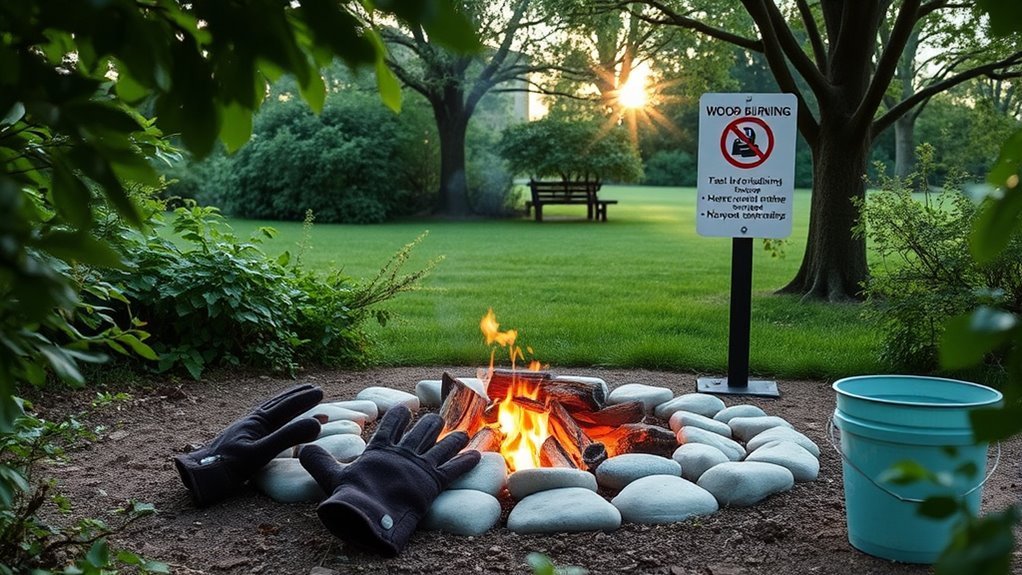
Before you light a fire, make sure you understand the local rules about wood burning in your area. Regulations vary widely and ignoring them could lead to fines or unsafe conditions. Check your city or county’s website or contact local authorities for specific guidance.
Key points to consider include:
- Permitted burning times and dates
- Restrictions on fire size and location
- Approved types of wood and materials
- Requirements for permits or notifications
Following these rules helps protect your health, neighbors, and the environment. Plus, it ensures you avoid legal trouble while enjoying your garden fire safely.
Always stay updated, as regulations can change due to weather or air quality concerns.
Knowing and adhering to local wood burning rules is essential for responsible outdoor burning.
Set Up Your Fire Pit Safely
Understanding local wood burning rules sets the foundation for creating a safe fire experience.
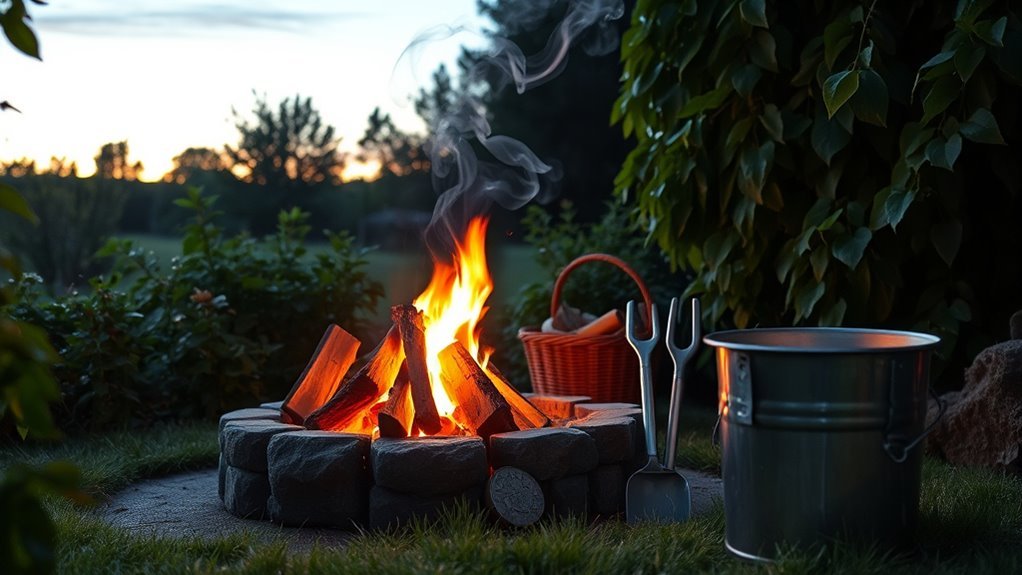
Next, you need to set up your fire pit in a secure spot. Choose a flat, clear area at least 10 feet away from structures, trees, and overhanging branches. Use a fire pit with a sturdy base and high sides to contain embers.
Surround it with non-flammable materials like gravel or stone to prevent accidental fires.
| Setup Step | Key Point |
|---|---|
| Location | 10 feet from buildings & trees |
| Fire Pit Type | Sturdy base, high sides |
| Surrounding Material | Gravel or stone |
Use Essential Tools and Safety Gear
Before lighting your fire, make sure you’re wearing protective clothing like gloves and long sleeves to keep burns at bay.
You’ll also want to have essential tools nearby, such as a fire extinguisher, water source, and a sturdy shovel.
These safety measures help you stay prepared and in control while enjoying your garden fire.
Protective Clothing Essentials
When you’re preparing to burn wood in your garden, wearing the right protective clothing is essential to keep yourself safe from sparks, heat, and ash. You want gear that resists flames and prevents burns while allowing you to move comfortably.
Choose natural fibers like cotton or wool since synthetic materials can melt and cause injury.
Don’t forget to protect your extremities and eyes.
Make sure you have:
- Long-sleeved shirts and pants made of durable, non-flammable fabric
- Heat-resistant gloves to shield your hands
- Closed-toe, sturdy boots to guard your feet
- Safety goggles to protect your eyes from flying debris
Wearing this protective clothing helps minimize risk and keeps you safe while enjoying your garden fire.
Necessary Fire Safety Tools
Although burning wood in your garden can be enjoyable, you’ll want to have the right fire safety tools on hand to prevent accidents and control the flames effectively.
First, keep a sturdy fire extinguisher nearby—make sure it’s rated for wood fires. A bucket of water or a garden hose connected to a water source is essential for quickly dousing flames if they spread.
Long-handled tongs or a poker help you safely adjust burning logs without getting too close. Heat-resistant gloves protect your hands from burns while handling hot materials.
Finally, a metal shovel or rake is useful for controlling embers and spreading out the fire securely.
Having these tools ready ensures you can manage your fire responsibly and enjoy your garden safely.
Control and Monitor Your Garden Fire
Since garden fires can quickly get out of hand, you need to stay vigilant and keep a close eye on the flames at all times. Never leave the fire unattended, and regularly check that it’s burning within a controlled area.
Keep your fire manageable by adding small amounts of wood gradually.
Be ready to adjust or extinguish the fire if the wind picks up or flames grow too large.
To control and monitor your garden fire effectively, remember to:
- Keep a water source or fire extinguisher nearby
- Maintain a safe distance from structures and plants
- Avoid burning on windy days
- Regularly assess the fire’s size and spread
Clean Up Wood Ashes Safely
How do you safely handle the ashes left behind after burning wood in your garden?
First, wait at least 24 to 48 hours to make sure the ashes have fully cooled. Never assume ashes are cold just because they look gray.
Use a metal shovel or scoop to collect the ashes and transfer them into a metal container with a tight-fitting lid. Avoid using plastic or cardboard containers, as they can catch fire if any embers remain.
Store the container away from flammable materials and your home until you’re sure the ashes are completely cold.
If you plan to use the ashes as fertilizer, double-check that the wood burned was untreated and free of chemicals.
Dispose of or recycle ashes responsibly, following local regulations to protect your garden and environment.
Frequently Asked Questions
Can Burning Wood Help Repel Insects in My Garden?
Yes, burning wood can help repel some insects because the smoke masks scents and deters pests. Just make sure you burn it safely to avoid harming plants, yourself, or your neighbors with excessive smoke or fire risks.
What Are the Environmental Impacts of Burning Wood Outdoors?
Burning wood outdoors releases smoke and pollutants, including carbon dioxide and particulates, which can harm air quality and contribute to climate change.
You should minimize burning and choose clean, dry wood to reduce environmental impact.
How Does Wood Smoke Affect Nearby Plants and Wildlife?
Wood smoke can harm nearby plants by blocking sunlight and depositing harmful chemicals on leaves. It also irritates wildlife’s respiratory systems, affecting their health and behavior.
You should minimize smoke exposure to protect your garden’s ecosystem.
Can I Use Wood Ash as Fertilizer for My Garden?
Yes, you can use wood ash as fertilizer. It’s rich in potassium and calcium but avoid overusing it since it raises soil pH.
Always test your soil first and apply ash sparingly to keep plants healthy.
What Are Alternatives to Wood Burning for Garden Warmth?
You might think wood burning’s your only option, but think again. Try electric heaters, propane patio heaters, or even thermal blankets for plants.
These safer alternatives keep your garden warm without the smoke or risk you don’t want.
Conclusion
Burning wood in your garden can be enjoyable and safe if you follow the right steps. By choosing a secure spot, using proper wood, respecting local rules, and setting up your fire pit carefully, you minimize risks. Don’t forget to stay equipped with safety gear and keep a close eye on your fire.
Afterward, clean up ashes properly. So, why take unnecessary risks when a little caution guarantees a cozy, worry-free fire every time? Following these wood burning safety tips ensures you enjoy your garden fire safely and responsibly.