How to Build Garden Steps in 3 Easy Steps
To build garden steps in three easy steps, start by planning your garden steps carefully. Measure the total height, decide on the number and size of each step, and sketch your layout. This preparation is essential for a successful project.
Next, choose durable materials like stone or wood for your garden steps. Clear any debris from the site, level the ground, and mark where each step will go. These steps ensure a solid and stable foundation.
Finally, construct your garden steps on a stable base, making sure the spacing is even. Add non-slip finishes or handrails to enhance safety. Follow these basics, and you’ll be well on your way to creating attractive, lasting garden steps—there’s more to know for a perfect finish.
Plan Out Your Garden Steps
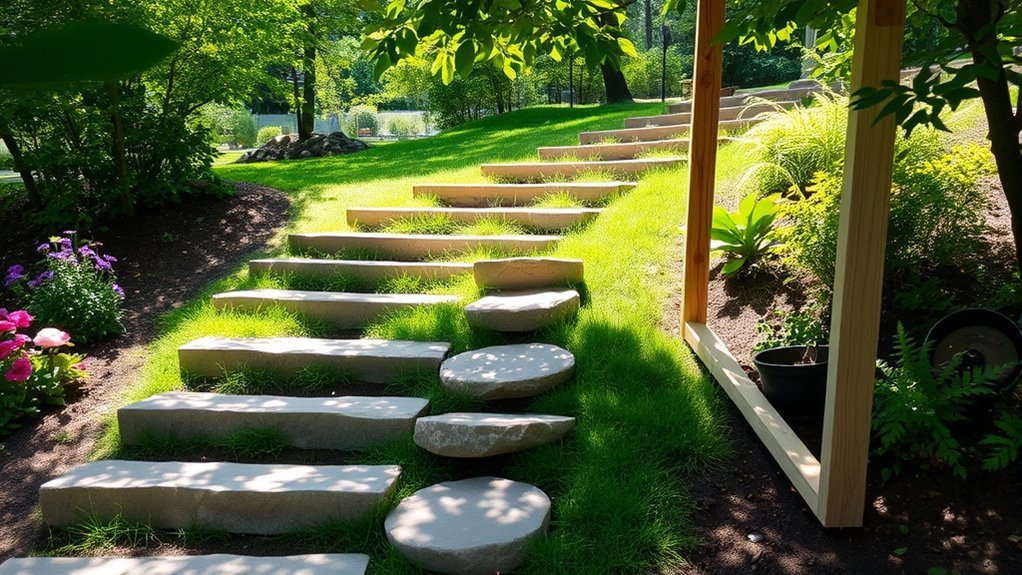
Before you start building, you’ll want to carefully plan out your garden steps to guarantee they fit your space and needs. First, measure the total height from the lower level to the upper level where the steps will go. This helps you determine how many steps you need and their height.
Carefully plan your garden steps by measuring height to determine the number and height of each step.
Next, consider the width of your steps—make sure they’re wide enough for comfortable footing but also suit your garden’s layout. Think about the slope and how the steps will blend into your landscape.
Sketch a simple diagram showing step placement and dimensions.
Taking the time to plan prevents costly mistakes and assures your steps are safe, functional, and visually appealing. Once you have a clear plan, you’re ready to move on to gathering materials and preparing your site.
Pick the Right Materials and Get Your Site Ready
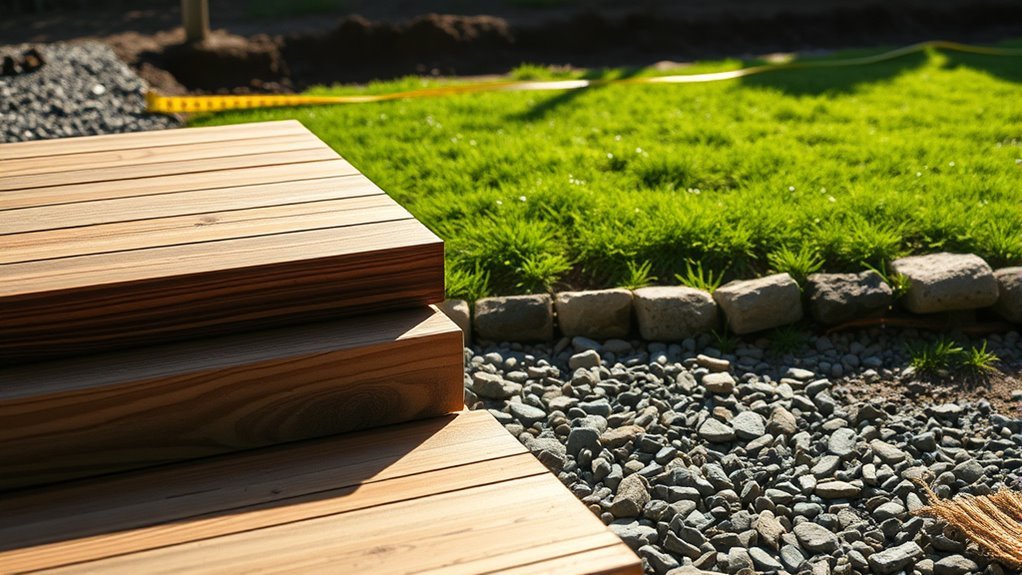
With your plan in hand, you can choose the best materials that suit both your garden’s style and the practical demands of your steps. Start by selecting durable materials like stone, wood, concrete, or brick, depending on your desired look and climate conditions.
Next, prepare your site by clearing debris and leveling the ground to guarantee stability. Follow these steps:
- Measure and mark the step locations precisely.
- Remove any grass or loose soil within the marked area.
- Compact the soil to create a firm base.
- Lay a gravel or sand layer for drainage and support.
Getting these basics right sets a solid foundation for beautiful, long-lasting garden steps.
Build Your Garden Steps and Make Them Safe
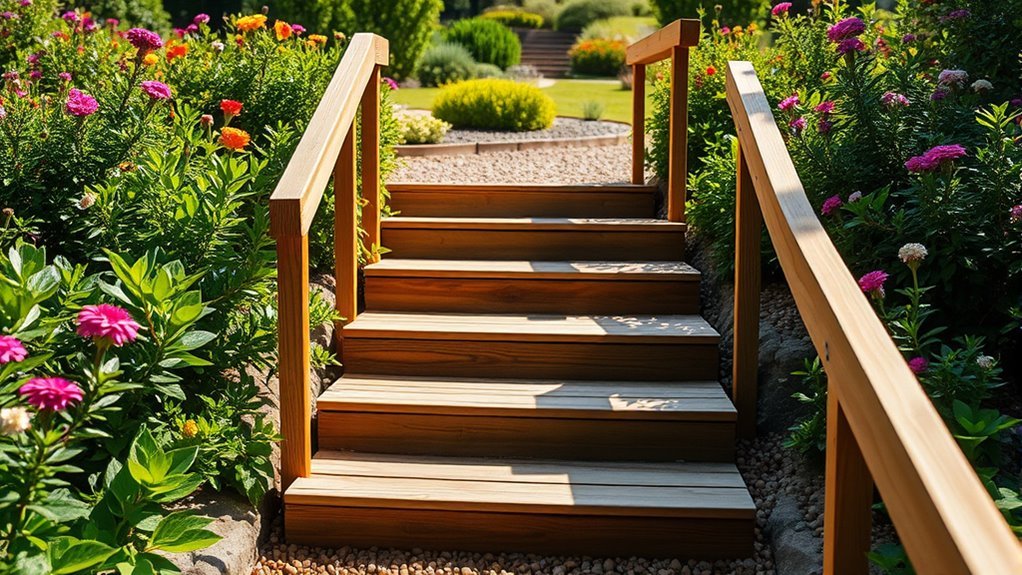
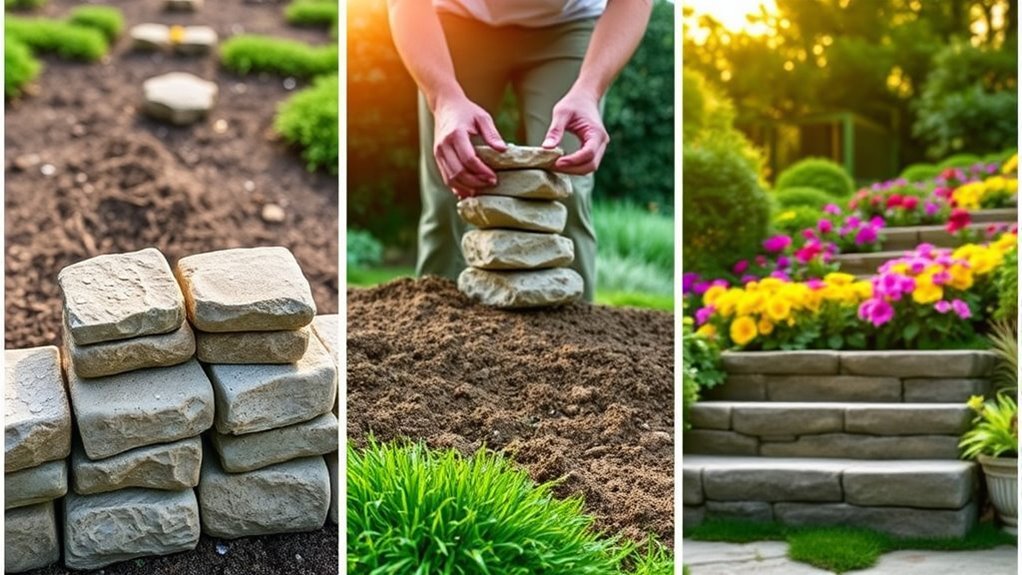
Although the groundwork is essential, building your garden steps requires careful placement and secure assembly to guarantee both durability and safety. Start by positioning each step firmly on a level base, ensuring they’re evenly spaced and aligned.
Careful placement and secure assembly are key to building durable, safe garden steps on a level, well-aligned base.
Use sturdy materials like treated wood, stone, or concrete blocks, fastening them tightly with appropriate screws or mortar.
Check each step’s stability by applying pressure before moving on. To enhance safety, add non-slip surfaces or textured finishes to prevent slipping, especially in wet conditions.
Installing handrails or side supports can provide extra security if your steps are steep or narrow.
Finally, inspect your work regularly for signs of wear or movement, making repairs promptly to keep your garden steps safe and reliable for years to come.
Frequently Asked Questions
How Long Does It Take to Build Garden Steps?
It usually takes you a day or two to build garden steps, depending on materials and your experience.
If you plan well and work steadily, you’ll finish quicker and enjoy your new, sturdy steps in no time.
What Tools Are Essential for Building Garden Steps?
You’ll need a shovel, level, tape measure, hammer, saw, and drill. Having a wheelbarrow and safety gear like gloves and goggles helps.
These tools make building garden steps easier and guarantee your work’s accurate and safe.
Can Garden Steps Be Built on a Slope?
Yes, you can build garden steps on a slope. You’ll need to level each step carefully, use retaining walls for support, and guarantee proper drainage.
This prevents erosion and keeps your steps safe and sturdy over time.
How Do I Maintain My Garden Steps?
You’ll want to keep your garden steps clean and free of debris, like a knight polishing his armor. Check for loose stones regularly, remove moss, and apply a sealant yearly to protect against weather damage and wear.
Are There Eco-Friendly Materials for Garden Steps?
Yes, you can use eco-friendly materials like reclaimed wood, natural stone, or recycled bricks for your garden steps. These options reduce waste, blend naturally with your garden, and help you create sustainable, beautiful outdoor spaces.
Conclusion
Now that you’ve planned perfectly, picked practical materials, and prepared your place, it’s time to build bold, beautiful garden steps. By being careful and consistent, you’ll create safe, sturdy steps that stand strong season after season.
Don’t forget to double-check details and add finishing touches for flawless functionality. With a little effort and enthusiasm, your garden will gleam with gorgeous, graceful steps that invite everyone to explore and enjoy your outdoor oasis.
Building garden steps is a rewarding project that enhances your landscape. Following these easy steps ensures your garden steps are both functional and attractive. Embrace the process, and watch your outdoor space transform with stunning garden steps that boost curb appeal and usability.