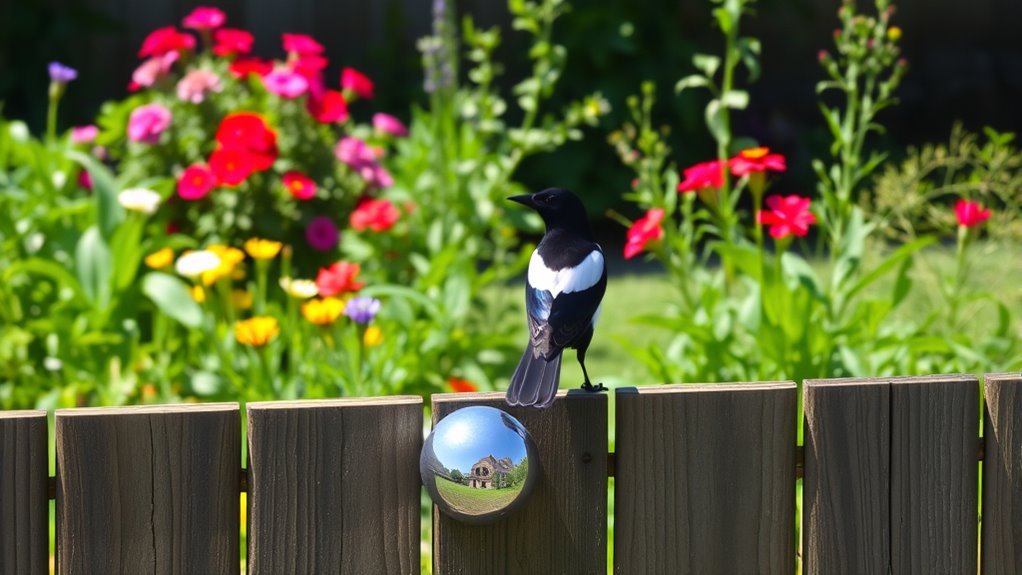
How to Get Rid of Magpies in Your Garden
To get rid of magpies in your garden, start by removing food sources like fallen fruit and securing pet food and trash bins. Controlling these attractants is key to discouraging magpies from visiting your outdoor space.
Use visual deterrents such as reflective tape and predator decoys, moving them often to keep magpies wary. Cover fruit trees and young plants with netting for protection.
If needed, set humane traps to catch and release them safely. Encouraging natural predators can also help.
Keep following for simple, effective ways to protect your garden further.
Why Magpies Can Be a Problem in Your Garden
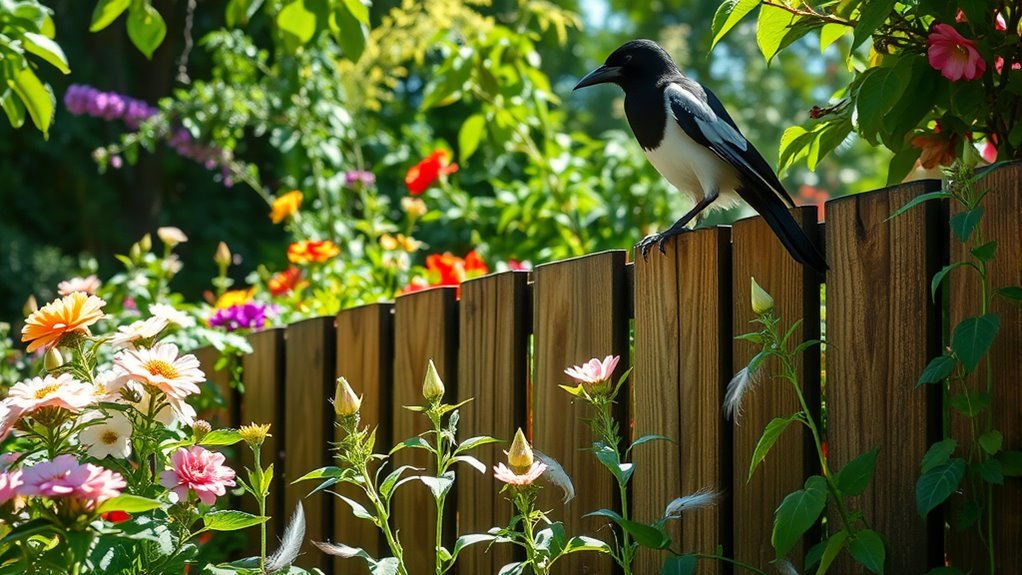
Although magpies are known for their striking appearance, they can cause several issues in your garden. You might notice them digging up freshly planted bulbs or seeds, which disrupts your carefully planned flower beds and vegetable patches.
Magpies, while striking, often disrupt gardens by digging up bulbs and seeds, affecting your plants.
They’re also notorious for scavenging bird feeders, scaring away smaller, more desirable birds.
You could find them raiding nests of other birds, which negatively impacts local wildlife. Their loud calls might become a nuisance, especially if they gather in large numbers.
Additionally, magpies sometimes take shiny garden ornaments or small tools, causing minor but frustrating losses.
If you’re trying to maintain a peaceful and thriving garden, these behaviors can quickly become problematic, requiring you to take action to protect your outdoor space.
How to Spot Early Signs of Magpie Damage
You can spot early signs of magpie damage by checking for disturbed nests and broken branches.
Keep an eye out for chewed leaves or uprooted plants in your garden.
Also, watch for leftover food scraps that magpies often leave behind.
Identifying Nest Disturbances
When magpies start disturbing nests in your garden, you’ll notice broken twigs, scattered feathers, and uneven branches around trees or shrubs. These birds often rummage through nests looking for eggs or chicks, leaving clear signs of their activity.
You might find nests partially dismantled or with missing materials, and the area beneath may be littered with debris.
Listen for increased magpie calls near nesting spots, as they become more vocal when agitated or defending territory. Pay attention to repeated disturbances in the same location, which signals persistent magpie presence.
By spotting these early signs, you can act before the damage worsens.
Keep an eye out during breeding season when nests are most vulnerable to magpie interference.
Recognizing Plant Damage
Since magpies often peck at plants while searching for insects or building materials, you’ll notice early signs of damage like torn leaves, stripped bark, or broken stems.
Check your garden regularly for leaves with irregular holes or edges where magpies have been probing. Bark stripped from young trees or shrubs often appears ragged, exposing the inner wood.
Broken stems or branches might indicate magpies collecting twigs or nesting material. You may also spot small piles of plant debris below damaged areas.
Pay close attention to new growth, as magpies tend to target tender shoots.
Catching these signs early lets you take action before the damage worsens, preserving your garden’s health and appearance. Keep an eye out, especially during breeding season when magpie activity increases.
Noticing Food Scraps
Besides plant damage, another clear sign that magpies have been frequenting your garden is the presence of food scraps. These birds often leave behind remnants of their meals, which can help you identify their visits early.
You’ll notice bits of bread crusts, torn fruit pieces, or discarded insect shells scattered around. Spotting these scraps lets you act before damage worsens. Keep an eye on areas where you feed pets or compost piles, as magpies are attracted to these spots.
| Food Scrap Type | Common Location | What It Indicates |
|---|---|---|
| Bread Crusts | Near pet feeding area | Magpies searching for easy food |
| Fruit Pieces | Under fruit trees | Feeding on fallen or ripe fruits |
| Insect Shells | Garden beds | Hunting insects in soil |
Recognizing these signs helps you manage magpie activity effectively.
Why Feeding Magpies in Your Garden Encourages Unwanted Visits
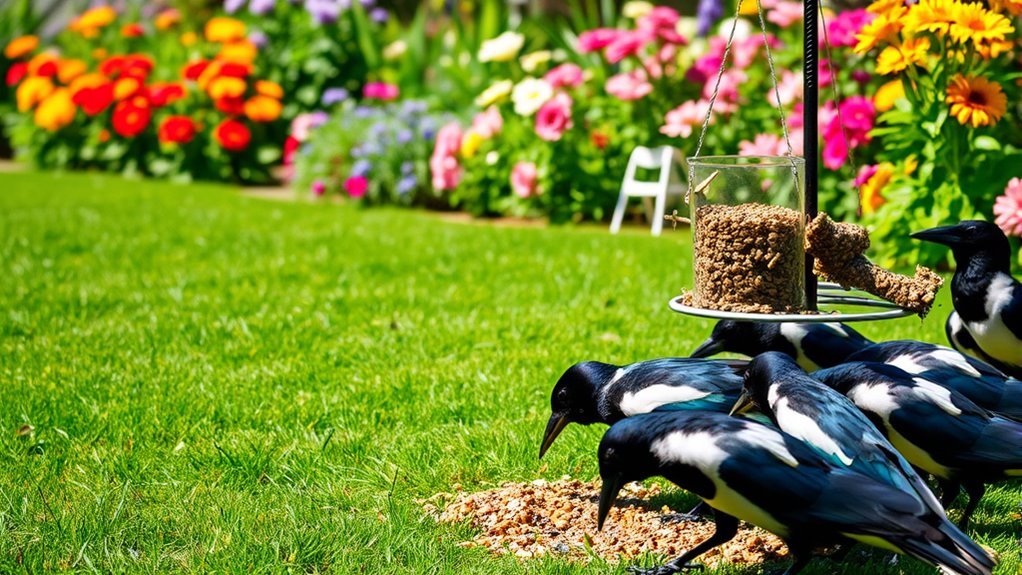
Although magpies can be charming to watch, feeding them in your garden often leads to frequent and persistent visits that quickly become a nuisance. When you provide food, magpies learn to associate your garden with an easy meal. This encourages them to return regularly, sometimes in larger numbers.
Over time, they may start to dominate your outdoor space, scaring off other birds and even becoming aggressive if they expect food but don’t get it. Additionally, feeding magpies can disrupt their natural foraging habits, making them more reliant on your garden than on natural food sources.
If you want to avoid constant interruptions and the potential for aggressive behavior, it’s best not to feed magpies in your garden.
How to Make Your Garden Less Attractive to Magpies
If you want to keep magpies away, you need to make your garden less inviting to them. Start by removing easy food sources: secure your trash bins with tight lids and avoid leaving pet food outside. Keep fallen fruit or seeds cleaned up, as these attract magpies.
Trim dense shrubs or trees where magpies like to perch and nest, reducing their shelter options. Avoid bird feeders that attract larger birds, as magpies often follow them. You can also cover compost heaps with netting to prevent scavenging.
Finally, keep your garden tidy; magpies prefer cluttered areas where they can find food or hide. By making these changes, you’ll discourage magpies from frequenting your garden without harming them.
How to Use Visual Deterrents to Keep Magpies Away
When you want to keep magpies away without causing them harm, visual deterrents can be very effective. You can use reflective objects like old CDs, aluminum foil strips, or shiny tape hung around your garden. These create flashes of light that magpies find unsettling.
Another option is to place predator decoys, such as plastic owls or snakes, near areas magpies frequent. Be sure to move these decoys occasionally so the birds don’t get used to them.
You might also try hanging wind chimes or pinwheels that move in the breeze, disrupting the magpies’ sense of safety.
How to Use Sounds to Deter Magpies Effectively
You can use specific sounds like distress calls or predator noises to keep magpies at bay.
Timing and frequency matter, so play these sounds during peak magpie activity without overdoing it.
Place speakers strategically around your garden to maximize coverage and effectiveness.
Effective Sound Types
How can sounds help keep magpies away from your garden? Certain noises trigger magpies’ natural wariness, making your space less inviting. Sharp, sudden sounds like clapping, banging metal, or air horns startle them effectively.
Using recordings of predator calls—such as hawks or owls—also works well because magpies associate these sounds with danger.
Ultrasonic devices claim to deter birds, but their success varies, so stick to audible sounds that reliably catch their attention.
Avoid continuous noise that might annoy you or harm other wildlife. Instead, choose sounds that are abrupt and unpredictable, keeping magpies on edge without creating a constant disturbance.
Timing And Frequency
Although using the right sounds is important, their timing and frequency play a crucial role in keeping magpies away. You’ll want to play deterrent sounds during peak magpie activity, typically early morning and late afternoon. This targets the times when they’re most likely to visit your garden.
Avoid continuous noise, as magpies quickly get used to it. Instead, use intermittent bursts of sound—brief sessions lasting 10 to 15 minutes every hour or two work best. Changing the timing occasionally prevents the birds from adapting.
Also, ramp up sound frequency during breeding season when magpies become more aggressive and territorial. By thoughtfully timing and spacing out your sound deterrents, you’ll create an unpredictable environment, discouraging magpies from settling in your garden without causing constant noise disturbance.
Sound Placement Tips
When placing sound deterrents around your garden, consider locations where magpies are most likely to perch or gather. Position speakers near trees, fences, or garden sheds where these birds frequently rest.
Make certain the sound covers a wide area without being too close to your home to avoid disturbing you.
Vary the placement regularly to prevent magpies from becoming accustomed to the noise. Use directional speakers aimed at hotspots for better effectiveness.
Combining sound deterrents with visual ones near these areas increases your chances of keeping magpies away.
Also, guarantee your sound devices are weatherproof and securely mounted to withstand outdoor conditions.
How to Secure Your Food and Plants From Magpie Raids
Since magpies are clever and persistent, you’ll need to take proactive steps to protect your food and plants from their raids. Start by covering fruit trees and berry bushes with bird netting to block access. Use mesh or garden fleece to shield young plants and seedlings.
Store pet food and birdseed indoors or in sealed containers to avoid attracting magpies. Keep compost bins securely closed, and promptly clean up fallen fruit or food scraps.
You can also use reflective tape or garden spinners near vulnerable areas; the movement and light can deter magpies.
Regularly inspect your garden for weak spots in coverings or containers and fix them immediately. By staying vigilant and securing your garden effectively, you’ll considerably reduce magpie damage without harming the birds.
How to Use Safe and Humane Traps for Magpies
You’ll want to pick traps designed to catch magpies without harm, like cage traps. Make sure to set them in safe spots where pets and kids won’t get hurt.
Once you catch a magpie, check the trap often and release the bird quickly back into the wild.
Choosing Humane Trap Types
Although magpies can be persistent, choosing humane traps lets you manage them without causing harm. When selecting traps, focus on options designed to capture birds safely and minimize stress.
Here are four humane trap types to ponder:
- Cage traps – These allow you to catch magpies alive without injury.
- Drop traps – Simple and effective, they trap birds when triggered.
- Baited live traps – Use food to lure magpies into a safe holding area.
- Soft net traps – Capture birds gently without causing damage.
Each trap type offers a non-lethal way to control magpie presence. Make sure to check traps frequently to release birds promptly and reduce distress.
This approach respects wildlife while protecting your garden.
Setting Traps Safely
When setting traps for magpies, handle them with care to guarantee the process stays safe and humane. First, choose a stable, flat surface to place your trap to prevent tipping. Make sure the trap is clean and free from any harmful residues.
Use gloves when handling traps to avoid transferring your scent, which might scare magpies away. Set traps according to the manufacturer’s instructions to ensure they work properly and don’t injure the birds.
Position the trap in a shaded area to keep captured magpies cool and reduce stress. Avoid placing traps near children or pets to maintain safety.
Finally, regularly check traps to minimize the time any magpie spends inside, guaranteeing a calm and humane experience.
Monitoring and Releasing Magpies
After setting traps carefully, your attention shifts to monitoring and releasing the magpies safely. Check the traps frequently—at least twice a day—to reduce stress and avoid harm. When you catch a magpie, wear gloves to handle it gently and cover the trap with a cloth to calm the bird.
Follow these steps for humane release:
- Transport the magpie at least 5 miles away from your garden to prevent return.
- Choose a safe, open area with natural shelter for release.
- Open the trap slowly, allowing the bird to exit calmly.
- Avoid handling the bird more than necessary to minimize stress.
How to Encourage Safe Natural Predators of Magpies in Your Garden
Because magpies are often wary of natural predators, you can reduce their presence by attracting safe ones to your garden. Encourage birds of prey like hawks or owls by installing perches and nesting boxes in tall trees or secluded spots. These predators keep magpie numbers in check without harming your garden’s balance.
You can also attract predatory mammals such as foxes by creating natural hiding places with brush piles or dense shrubs. Providing water sources and minimizing pesticide use supports a healthy ecosystem, making your garden more appealing to these animals.
When to Call Professionals for Magpie Control
If magpies persistently damage your garden despite your efforts, you should consider calling professionals for magpie control. Experts bring experience and tools that can effectively manage the problem when DIY methods fail.
When magpies keep damaging your garden despite your efforts, professional control is the effective next step.
You should call professionals if:
- Magpies return quickly after removal attempts.
- Their behavior becomes aggressive or poses safety risks.
- Damage to plants or property escalates beyond what you can handle.
- Legal restrictions require licensed intervention for control methods.
Professionals assess the situation, use humane and legal techniques, and provide lasting solutions.
Don’t hesitate to reach out when magpie issues overwhelm your control measures—getting expert help prevents further harm to your garden and ensures the problem is managed responsibly.
Frequently Asked Questions
What Time of Year Are Magpies Most Active in Gardens?
Magpies are most active in your garden during spring and early summer when they’re nesting and feeding their young.
You’ll notice increased activity as they gather food and defend their territory around this time.
Can Magpies Carry Diseases Harmful to Humans or Pets?
Yes, magpies can carry diseases like salmonella and avian influenza that might harm you or your pets.
You should avoid direct contact and keep pets away from their droppings to reduce any health risks.
Do Magpies Have Natural Nesting Preferences I Should Know About?
Magpies prefer nesting high in trees or tall shrubs, often 10-30 feet above ground. You’ll find they choose sturdy branches, creating domed nests that protect their young from predators and harsh weather.
These nests are carefully constructed to provide safety and shelter. The height and design help keep the young magpies secure from many threats.
Are Magpies Protected by Law From Removal or Harm?
Yes, magpies are protected by law in many areas, so you can’t harm or remove them without permission.
You’ll need to check local regulations and may require a license to control or relocate them legally.
What Plants Can Help Distract Magpies From My Garden?
Why not plant sunflowers or lavender to distract magpies? You’ll attract their attention away from your garden, giving you space to enjoy your plants without constant bird visits.
You’ll keep your garden thriving peacefully.
Conclusion
Dealing with magpies can feel overwhelming, but with the right steps, you can reclaim your garden. For example, Sarah noticed her vegetable patch was constantly raided. By installing reflective tape and securing her compost, she saw fewer magpies in just weeks.
Remember, consistent action and humane methods work best. If the problem persists, don’t hesitate to call in professionals. Your peaceful, magpie-free garden is just around the corner!
To get rid of magpies in your garden effectively, focus on deterrent techniques and maintain a tidy outdoor space. With patience and the right approach, you can enjoy a magpie-free garden once again.