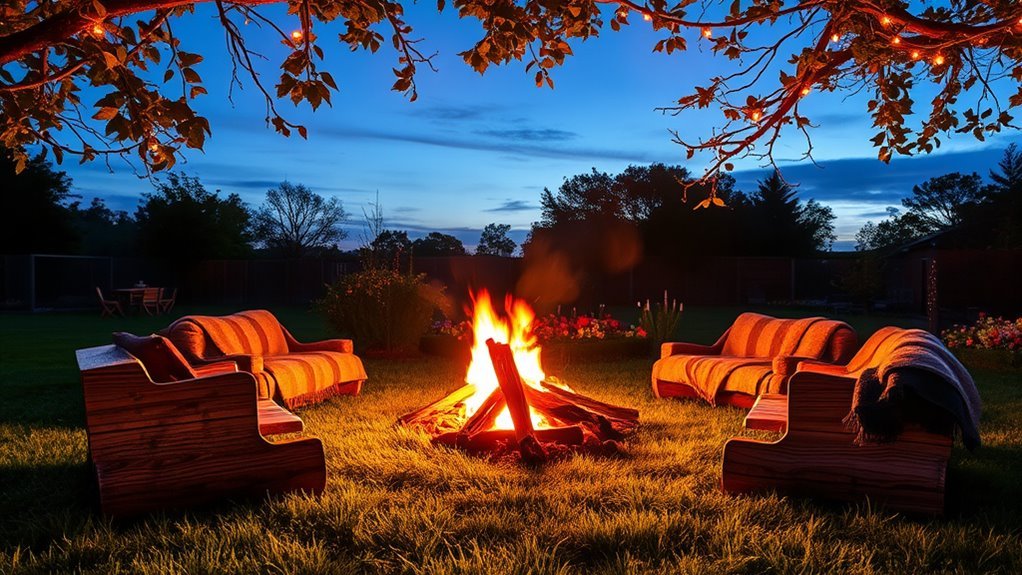
Can I Have a Bonfire in My Garden?
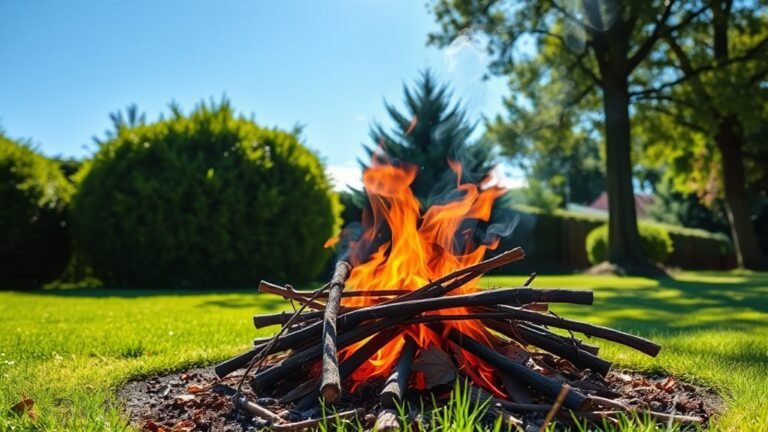
You can have a bonfire in your garden, but you’ll need to follow local rules and safety measures to ensure a safe experience. Make sure you choose a safe spot away from buildings, use only untreated, natural wood, and avoid burning prohibited materials like plastics.
Check if you need permits or must notify neighbors before starting your bonfire. Always keep fire safety gear nearby to handle any unexpected situations.
Proper timing and fully extinguishing the fire are essential for safety. Keep going to discover how to enjoy your bonfire safely and responsibly.
Is It Legal to Have a Garden Bonfire?
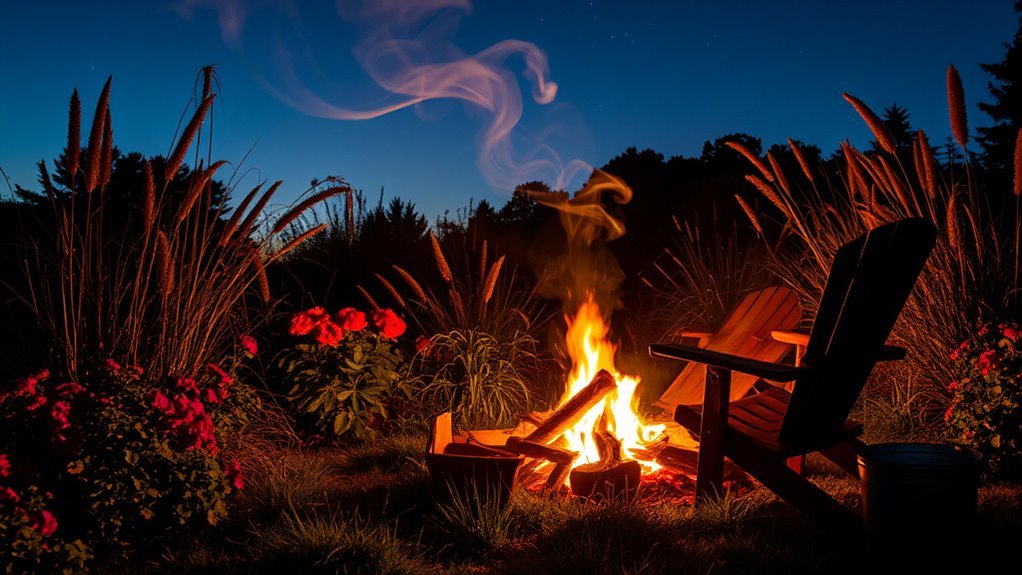
Wondering if you can legally have a bonfire in your garden? Generally, having a small bonfire on your private property isn’t illegal, but it depends on several factors.
You’re allowed to burn garden waste, like branches and leaves, as long as you follow safety guidelines and avoid causing a nuisance to neighbors.
Burn garden waste like branches and leaves responsibly, following safety rules and respecting your neighbors.
However, you can’t just light any fire whenever you want; some materials are prohibited from burning due to health and safety reasons. It’s also important to guarantee your bonfire doesn’t produce excessive smoke or danger.
While there’s no blanket ban, you must take responsibility for controlling the fire and preventing accidents.
Keep in mind that if your bonfire causes harm or complaints, you could face penalties.
Local Rules You Should Know About Garden Bonfires
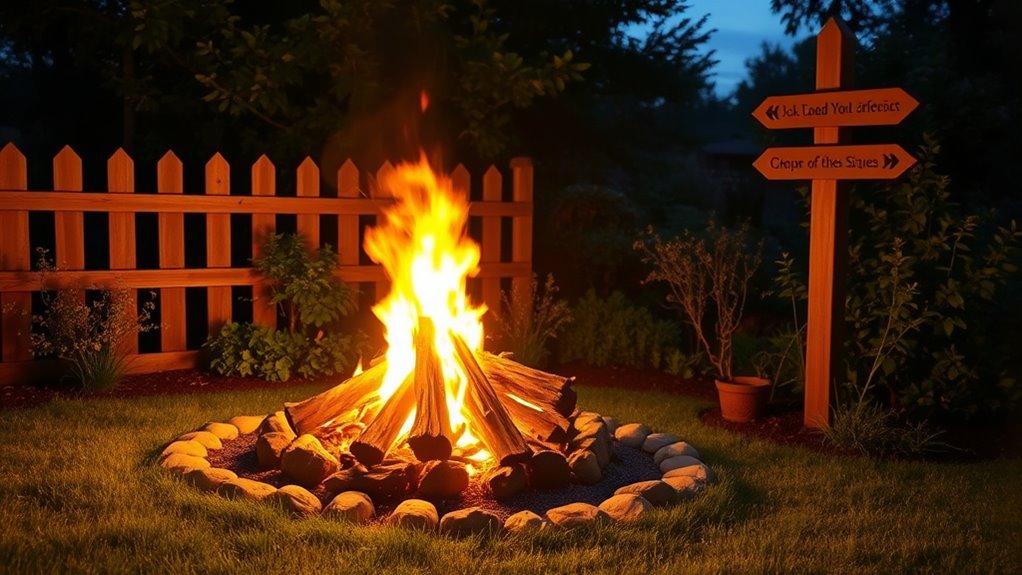
While having a garden bonfire is generally allowed, you need to be aware of specific local rules that can affect when and how you can burn waste. Many councils restrict bonfires during certain hours or on specific days to reduce nuisance to neighbors.
You might’ve to avoid burning materials like plastics, rubber, or treated wood, as these can release harmful fumes and violate local regulations.
Some areas require you to notify neighbors in advance or even obtain a permit before lighting your fire. Additionally, if you live in a smoke control zone, you might be prohibited from lighting a bonfire altogether.
Make sure to check your local council’s website or contact them directly to understand the rules that apply in your area before you light up.
Choosing the Right Spot for Your Garden Bonfire
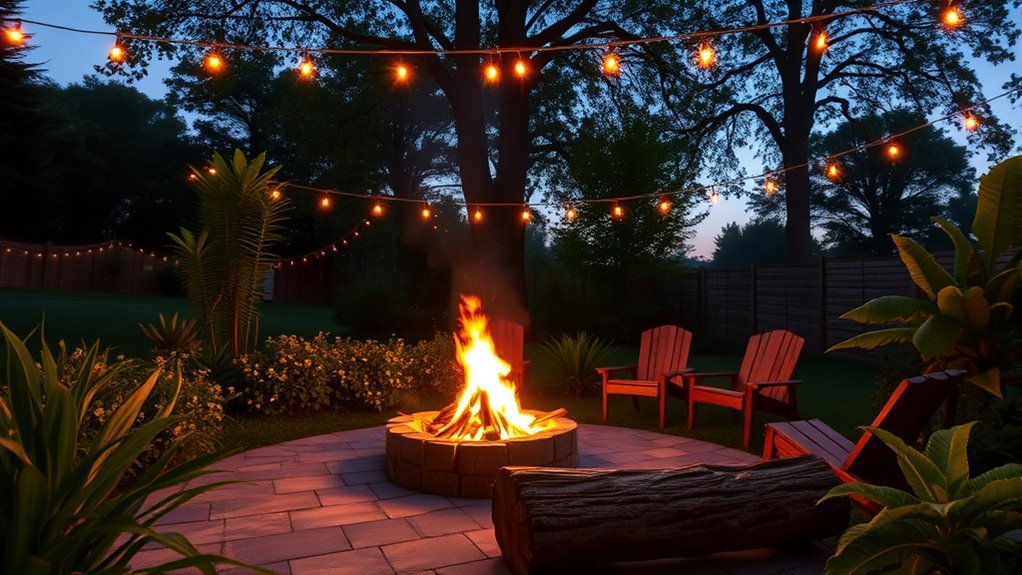
You’ll want to pick a spot that’s safely far from your house and any other structures to prevent accidents.
Check that the ground is level and made of non-flammable material like gravel or bare soil.
Avoid placing your bonfire near dry grass or overhanging branches to keep things safe.
Safe Distance From Structures
Before setting up your garden bonfire, make sure you place it far enough from buildings, fences, and other structures to prevent accidental fires. Keeping a safe distance reduces the risk of sparks igniting nearby materials and guarantees everyone stays safe.
Here are key guidelines to follow:
- Keep your bonfire at least 10 feet away from any buildings or wooden fences.
- Avoid placing the fire near overhanging branches or dry shrubbery that could catch fire.
- Ensure there’s plenty of open space around the fire pit to allow smoke to dissipate safely and prevent heat damage.
Ground Surface Considerations
Since the ground surface directly affects safety and fire control, you need to choose a spot that’s stable, non-flammable, and clear of debris for your garden bonfire. Avoid dry grass, leaves, or wooden decks, as these can easily catch fire.
Concrete, gravel, or bare soil are ideal surfaces because they minimize the risk of spreading flames. Make sure the area is level to prevent logs or fire pits from tipping over.
Remove any flammable materials within a three-foot radius and check for overhanging branches that could ignite.
If your garden has uneven ground, consider leveling it or placing a proper fireproof base.
Taking these steps guarantees your bonfire stays contained and safe, letting you enjoy the warmth without worry.
Safe and Legal Materials to Burn in Your Bonfire
You’ll want to stick to approved wood types like untreated timber or natural logs for your bonfire.
Avoid burning anything treated with chemicals, painted wood, or household waste, as these can release harmful fumes.
Knowing what materials are safe and legal helps keep your fire enjoyable and safe for everyone.
Approved Wood Types
Which types of wood can you safely and legally burn in your garden bonfire? To keep your fire safe and eco-friendly, you’ll want to stick to approved wood types that burn cleanly and don’t release harmful chemicals.
Here are some good options:
- Seasoned hardwoods like oak, ash, and beech — they burn longer and produce less smoke.
- Untreated softwoods such as pine or spruce — these light easily but burn faster.
- Garden waste wood from pruned branches or fallen limbs — as long as it’s untreated and free of chemicals.
Avoid any wood that’s painted, treated, or contaminated. Burning the right wood helps you enjoy your bonfire responsibly while protecting your health and the environment.
Prohibited Materials to Avoid
Although burning wood in your garden bonfire can be enjoyable, you must avoid certain materials that pose health risks or violate local regulations. Burning prohibited items releases harmful toxins and creates excessive smoke, which can affect your health and disturb neighbors.
Stay clear of these materials to keep your bonfire safe and legal.
| Prohibited Material | Reason to Avoid | Legal Status |
|---|---|---|
| Painted wood | Releases toxic chemicals | Illegal in many areas |
| Plastics | Emits harmful fumes | Strictly banned |
| Treated wood | Contains hazardous agents | Often prohibited |
Stick to natural, untreated wood to enjoy your bonfire safely and responsibly.
How to Build and Light a Garden Bonfire Safely
Before you start building your garden bonfire, gather dry, seasoned wood and clear the area of any flammable materials to prevent accidents.
Lay a foundation with larger logs arranged in a square or teepee shape for good airflow.
Place kindling and smaller twigs in the center to help ignite the fire quickly.
When lighting, use matches or a lighter to ignite the kindling—never use accelerants like petrol.
Keep these tips in mind:
- Build your fire at least 3 meters away from buildings and trees.
- Avoid creating a large bonfire; keep it manageable and under control.
- Always have a bucket of water or hose nearby for emergencies.
Fire Safety Gear You Need Nearby
Once you’ve safely built and lit your garden bonfire, make certain you have the right fire safety gear within reach. Keep a bucket of water or a garden hose nearby to quickly douse any stray flames. A fire extinguisher rated for wood fires is a smart addition for emergencies.
Have a fire blanket on hand to smother small fires or wrap around someone if their clothing catches fire. Keep a shovel or rake close to control the fire’s edges or to spread out embers.
Wearing heat-resistant gloves protects your hands when handling logs or adjusting the fire.
Ultimately, confirm your phone is charged and nearby to call for help if the fire gets out of control. Being prepared keeps your bonfire safe and enjoyable.
Managing Smoke to Avoid Nuisance to Neighbors
How you manage the smoke from your garden bonfire can make all the difference in keeping good relations with your neighbors. You want to minimize the smoke drifting into their space, which means being mindful about what and how you burn.
Start by choosing dry, seasoned wood because wet or green wood creates more smoke.
Also, avoid burning household waste or materials that produce strong odors or toxic fumes.
To keep smoke under control, try these tips:
- Position your bonfire away from neighbors’ windows and outdoor areas.
- Light the fire gradually to ensure it burns cleanly, reducing thick smoke.
- Use a fire pit or ring to contain the fire and improve airflow, helping smoke rise straight up instead of spreading.
Best Times for a Garden Bonfire
Managing smoke carefully helps keep your neighbors happy, but timing your garden bonfire right can make a big difference too. Aim to light your fire during early evenings when the air tends to be calmer and cooler, which helps the smoke rise and disperse more effectively.
Avoid windy days, as gusts can blow smoke toward neighboring properties, causing irritation.
Also, consider the season—spring and autumn evenings often provide the best conditions with less humidity and moderate temperatures.
Check local regulations, as some areas restrict bonfires during dry spells or certain times of day to reduce fire risks.
How to Extinguish Your Garden Bonfire Properly
Before you leave your garden bonfire, make sure you put it out completely to prevent accidents and unwanted smoke. Start by spreading out the ashes and embers with a stick or shovel to help them cool faster.
Always fully extinguish your garden bonfire by spreading ashes to cool, preventing accidents and smoke.
Then, follow these steps to extinguish the fire properly:
- Slowly pour water over the fire, ensuring you soak all embers and not just the red ones.
- Stir the wet ashes with a stick to expose any remaining hot spots and add more water as needed.
- Feel the area carefully with your hand (without touching directly) to check for heat; repeat until everything is cool to the touch.
Taking these precautions will keep your garden safe and your neighborhood happy.
Frequently Asked Questions
Can I Invite Guests to My Garden Bonfire During a Lockdown?
You can’t invite guests to your garden bonfire during a lockdown if restrictions prohibit gatherings. Always check current local government rules first, as regulations change frequently.
Following them helps keep everyone safe and avoids fines.
What Are Eco-Friendly Alternatives to Traditional Bonfires?
You can light a lantern of hope with eco-friendly alternatives like solar-powered fairy lights, biodegradable candles, or a fire pit burning sustainably sourced wood.
These choices honor nature’s dance without leaving smoky footprints behind.
How Do Garden Bonfires Affect Local Wildlife?
You’ll disturb local wildlife by causing noise, smoke, and heat, which can drive animals away or disrupt their habitats.
To protect them, keep fires small, avoid sensitive areas, and pick times when animals are less active.
Can I Use a Bonfire to Dispose of Garden Waste Legally?
You generally can’t legally use bonfires to dispose of garden waste due to local regulations and pollution concerns.
Instead, you should check your council’s rules and consider composting or using designated green waste collections for disposal.
What Insurance Considerations Apply to Garden Bonfires?
When it comes to garden bonfires, don’t play with fire insurance-wise. You’ll want to check if your policy covers accidental fire damage.
Notify your insurer beforehand, so you’re not caught off guard if smoke causes trouble.
Conclusion
Before you light that first spark, remember this: having a garden bonfire isn’t just about flames and fun—it’s about knowing the rules, staying safe, and respecting your neighbors. If you skip any step, the cozy night you imagined could quickly turn into a problem you didn’t expect.
So, are you ready to enjoy your bonfire the right way? Follow these tips closely, and your garden fire will glow safely and happily all night long. Always prioritize safety and local regulations to ensure your bonfire is a pleasant experience for everyone involved.