How Do I Stop Cats Pooping in My Garden?
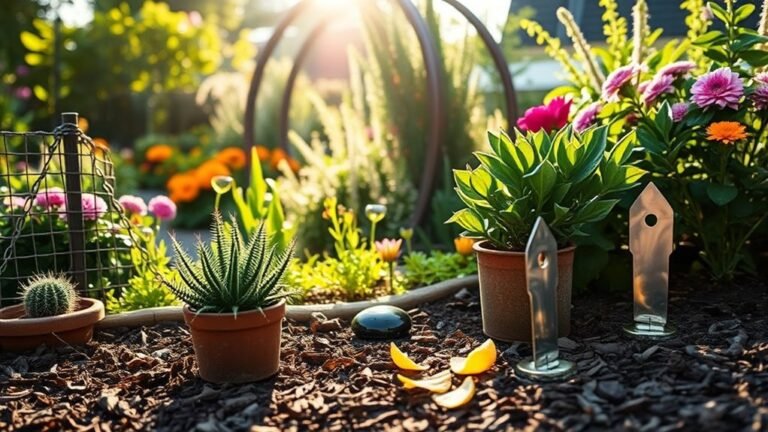
You can stop cats pooping in your garden by making it less inviting to them. Using natural repellents like citrus peels or lavender helps keep cats away. Setting up physical barriers, such as chicken wire or fencing, can block their access effectively.
Keep your garden clean by removing food scraps and securing trash bins. Adding dense plants or mulch can discourage cats from digging and using your garden as a toilet. If cats keep coming back, combining these methods works best.
Keep exploring to discover more effective ways to protect your garden from unwanted cat visits.
Why Cats Choose Gardens to Poop
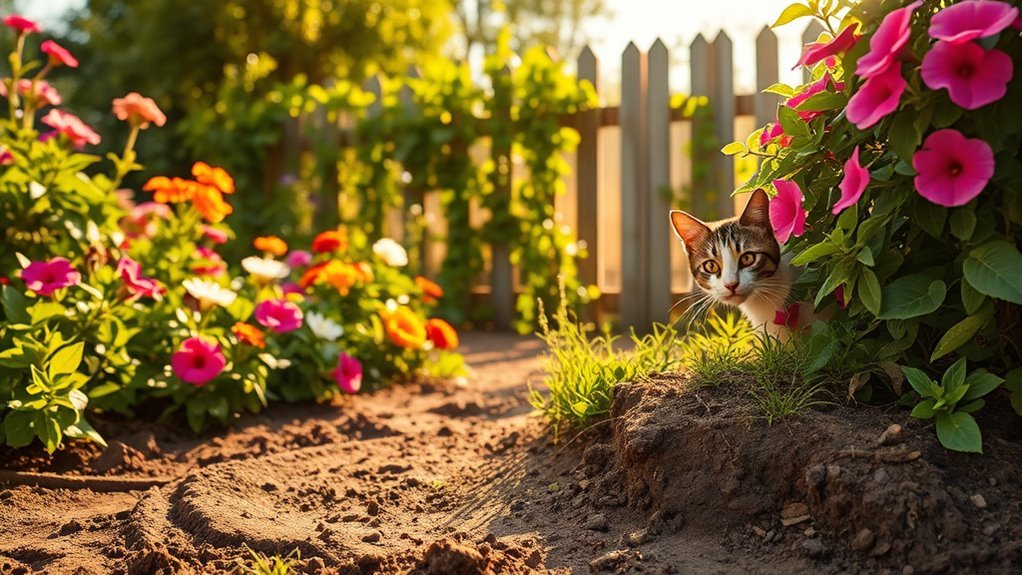
Why do cats keep choosing your garden as their bathroom? It’s simple: your garden offers the perfect spot for them to dig and cover their waste. Cats are instinctively drawn to soft soil or mulch, which makes your flower beds or vegetable patches irresistible.
Cats are naturally attracted to soft soil and mulch, making your garden the ideal bathroom spot for them.
They prefer quiet, undisturbed areas to do their business, and your garden likely provides that privacy. Additionally, cats mark their territory by pooping, so your garden becomes a prime location if neighboring cats frequent the area.
The scent of previous visits encourages them to come back. You might also find that your garden’s warmth and loose dirt feel comfortable beneath their paws.
Understanding these reasons helps you realize why your garden becomes a go-to spot for cats to relieve themselves.
How to Spot Where Cats Are Visiting Your Garden
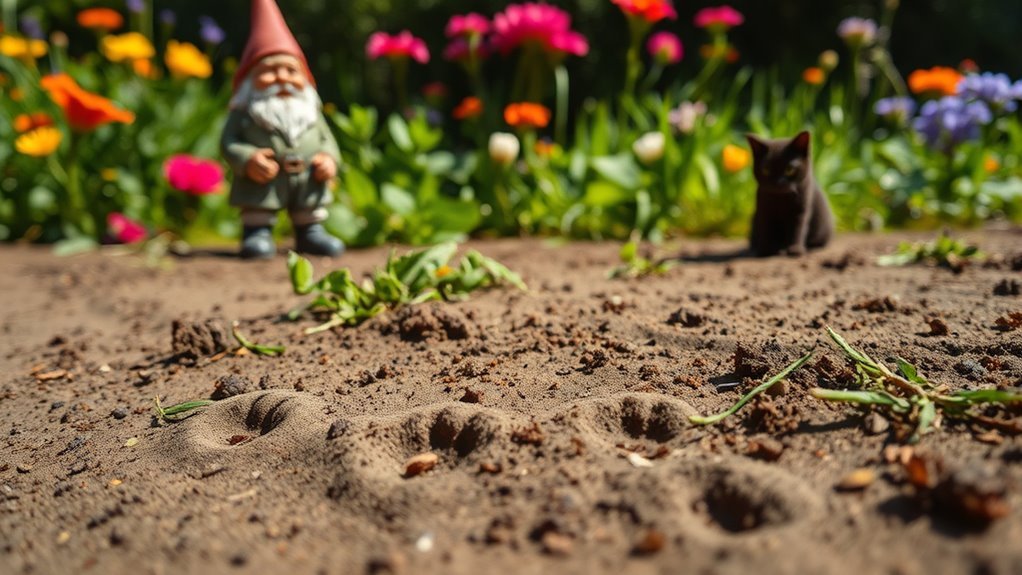
You can tell cats have been visiting your garden by spotting their droppings, which are usually small and tubular.
Keep an eye out for patches of disturbed or soft soil where they’ve been digging. Noticing these signs early helps you target the problem areas quickly.
Identifying Cat Droppings
Although cat droppings can sometimes be mistaken for other animal waste, you can usually identify them by their size, shape, and smell. When you want to spot where cats are visiting your garden, look closely at these signs:
- Size and Shape: Cat droppings are typically about 1-2 inches long, tubular, and tapered at the ends.
- Texture: Fresh droppings are firm but slightly soft, not crumbly or hard.
- Smell: They’ve a strong, pungent odor due to the cat’s carnivorous diet.
- Location: Cats prefer quiet, sheltered spots, often near plants or under bushes.
Noticing Disturbed Soil
When cats visit your garden, they often leave more than just droppings behind—disturbed soil is a clear sign of their presence. You’ll notice patches where the earth looks freshly dug or uneven, sometimes in small, circular spots.
Cats scratch the ground to cover their waste, so these disrupted areas often appear near plants, flower beds, or soft soil.
Pay close attention to loose soil clumps or small holes that weren’t there before. If you spot these signs regularly in specific spots, it’s a good indicator cats are using your garden as a litter box.
Quick Ways to Keep Cats Out of Your Garden
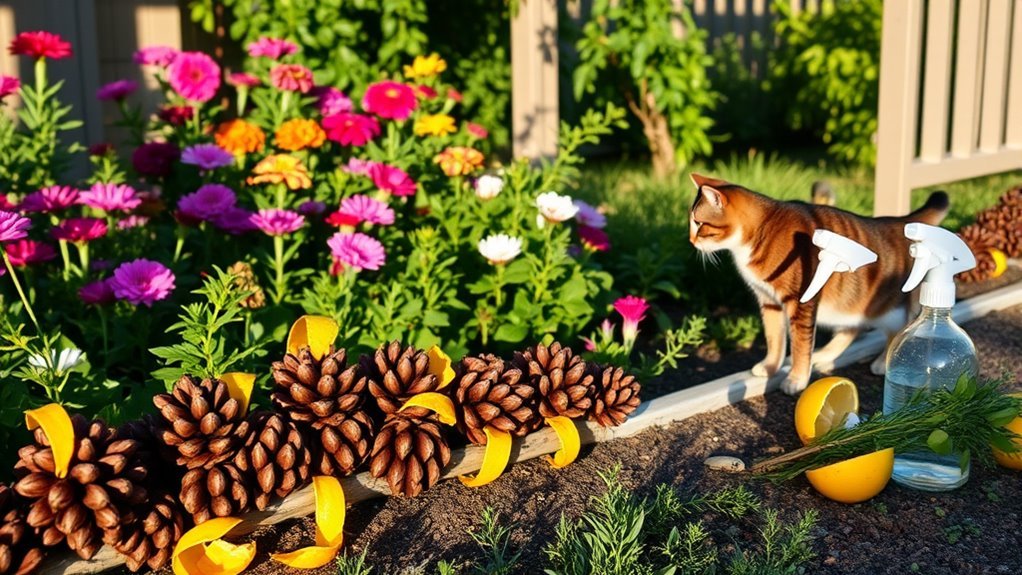
You can try natural cat repellents like citrus peels or coffee grounds to make your garden less inviting.
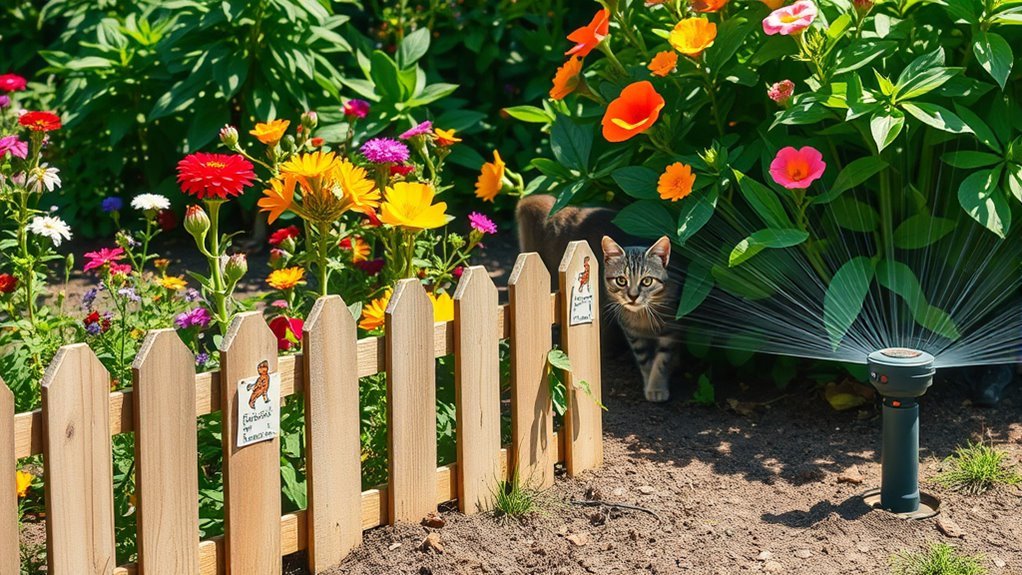
Setting up physical barriers, such as chicken wire or garden fencing, helps keep cats out effectively.
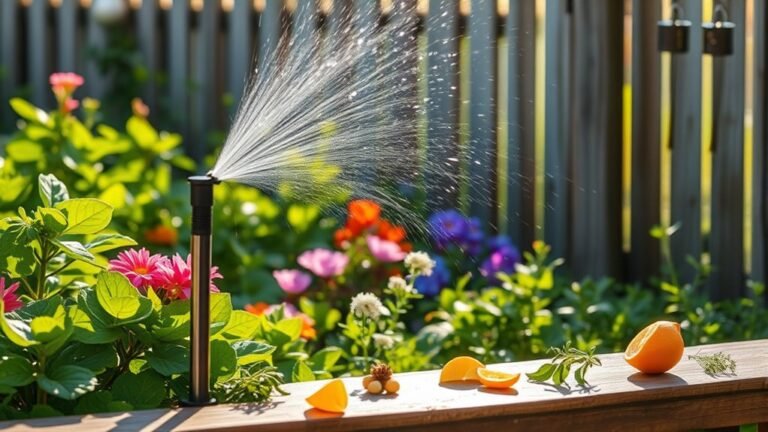
Motion-activated sprinklers also work well by startling cats when they enter your garden.
Natural Cat Repellents
If cats keep visiting your garden, using natural repellents can quickly discourage them without causing harm. You can try these simple methods to keep cats away:
- Sprinkle citrus peels around your plants; cats dislike the smell of oranges, lemons, and limes.
- Plant herbs like lavender, rosemary, or rue, which naturally repel cats with their scent.
- Use coffee grounds by spreading them in your garden beds; cats avoid the strong aroma.
- Mix vinegar with water in a spray bottle and lightly mist areas where cats frequent—this deters them without damaging plants.
These natural options are safe for your garden and pets, offering an effective way to keep cats from pooping where you don’t want them.
Physical Garden Barriers
Although natural repellents can help, installing physical barriers offers a more immediate and reliable way to keep cats out of your garden. You can block entry points or make the area uncomfortable for cats, stopping them from pooping where they shouldn’t.
Consider fencing, chicken wire, or garden cloches to protect vulnerable spots. Below is a quick guide to effective barriers:
| Barrier Type | Key Benefit |
|---|---|
| Fencing | Blocks access completely |
| Chicken Wire | Covers soil, deters digging |
| Plant Spikes | Creates uncomfortable surface |
| Garden Cloches | Protects specific plants |
Motion-Activated Sprinklers
When cats approach your garden, motion-activated sprinklers startle them with a sudden burst of water, effectively deterring unwanted visits. These devices sense movement and spray water instantly, making your garden less attractive to prowling cats.
Here’s why you should consider them:
- Humane Deterrent: They don’t harm cats but make your garden uncomfortable for them.
- Energy Efficient: They only activate when needed, saving water and power.
- Easy Installation: Most models are simple to set up and adjust.
- Versatile Use: You can place them anywhere cats frequent, covering flower beds or vegetable patches.
Natural Scents and Plants That Deter Cats
Because cats rely heavily on their sense of smell, you can use natural scents and plants to keep them away from your garden. Certain smells are unpleasant to cats, so planting or placing these around your garden acts as a gentle deterrent.
You don’t have to harm the cats; just make your garden less inviting for them.
Here are some natural options to contemplate:
| Natural Scent/Plant | Effect on Cats |
|---|---|
| Lavender | Strong scent cats dislike |
| Rue | Repels with bitter smell |
| Rosemary | Aromatic, deters cats |
| Citrus Peels | Cats avoid citrus fragrances |
Try planting or scattering these scents strategically to protect your garden without chemicals.
Building a Cat Toilet Away From Your Garden
Natural scents and plants can discourage cats from visiting your garden, but sometimes they need a designated spot for their bathroom needs. Building a cat toilet away from your garden helps redirect their habits and keeps your plants safe.
Here’s how you can set one up effectively:
- Choose a quiet, shaded area where cats feel comfortable and safe.
- Fill a shallow tray with sand or loose soil, mimicking their natural digging preference.
- Add a bit of used cat litter to attract them to the new spot.
- Maintain cleanliness by regularly scooping waste and refreshing the soil to keep the area inviting.
Common Mistakes to Avoid When Keeping Cats Out
Although keeping cats out of your garden can be challenging, avoiding common mistakes will make your efforts more effective. Don’t rely solely on one method; cats quickly adapt.
Avoid using harmful chemicals that can hurt pets or wildlife. Also, don’t leave food or water sources accessible, as they attract cats. Remember, inconsistent barriers or gaps let cats sneak in.
Here’s a quick guide to common pitfalls:
| Mistake | Why It Fails | What To Do Instead |
|---|---|---|
| Single deterrent | Cats adapt quickly | Combine methods |
| Harmful chemicals | Unsafe for animals and plants | Use natural repellents |
| Leaving food out | Attracts cats | Remove attractants |
Long-Term Tips for Maintaining a Cat-Free Garden
To keep cats out of your garden for good, you’ll need consistent effort and a combination of strategies. Here are four long-term tips to help maintain a cat-free space:
- Use natural repellents – Regularly apply citrus peels, coffee grounds, or commercial cat repellents to keep cats away.
- Create physical barriers – Install chicken wire or garden fencing to block access to favored spots.
- Plant cat-deterring plants – Grow lavender, rosemary, or rue, which cats tend to avoid.
- Keep your garden clean – Remove waste promptly and avoid leaving food scraps that might attract cats.
What to Do If Cats Keep Returning
If cats keep returning despite your efforts, it’s important to reassess your approach and identify what might be attracting them. Check for food sources, shelter spots, or soft soil areas they prefer.
You might need to combine deterrents or change their placement. Sometimes, persistent cats require a stronger or more creative strategy.
| Problem | Possible Cause | Solution |
|---|---|---|
| Cats keep returning | Food scraps in garden | Remove food, secure bins |
| Attracted to shelter | Dense bushes or shade | Trim bushes, block access |
| Soft soil preferred | Recent digging or planting | Use mulch or chicken wire |
| Ineffective deterrents | Wrong placement | Try ultrasonic devices or motion sprinklers |
| Territorial cats | Neighbor’s cats | Talk to neighbors, consider humane traps |
Adjust your tactics based on these insights for lasting results.
Frequently Asked Questions
Can Certain Cat Breeds Be Trained to Avoid Gardens?
Certain cat breeds can be trained, but success depends more on individual personality than breed. You’ll need patience, consistent boundaries, and positive reinforcement to teach your cat to avoid your garden effectively.
Training requires understanding your cat’s unique behavior and preferences. Some cats may respond quickly, while others need more time and encouragement.
Consistency is key in reinforcing the desired behavior. With time and effort, you can create a garden-friendly environment that your cat respects.
Are Ultrasonic Cat Repellents Safe for Children and Pets?
Ultrasonic cat repellents are generally safe for children and pets, but they can be a mixed bag. You’ll want to check specific models since some might bother sensitive ears or small animals nearby.
It’s important to monitor how your children and pets react when the device is in use. Some pets may be more sensitive to the ultrasonic sounds than others. Always follow the manufacturer’s guidelines for safe usage.
How Does Cat Behavior Change With Seasons Regarding Garden Visits?
You’ll notice cats visit gardens more in spring and fall when they’re mating or hunting.
In colder months, they tend to stay indoors or seek sheltered spots, so garden visits usually decrease during winter.
Can Feeding Cats Away From My Garden Reduce Pooping?
Yes, you can reduce garden pooping by feeding cats elsewhere, by providing comfort elsewhere, by offering attention elsewhere.
Cats often mark where they find food, so redirect their meals, and you redirect their visits effectively.
Do Indoor Cats Ever Poop Outside in Gardens?
Indoor cats rarely poop outside in gardens since they use litter boxes. However, if stressed or unwell, they might.
You can prevent this by keeping their litter box clean and addressing any health or behavioral issues promptly.
Conclusion
You can stop cats pooping in your garden by understanding why they come, spotting their favorite spots, and using quick deterrents. You can plant natural scents, build a cat toilet elsewhere, and avoid common mistakes.
You can stay consistent, stay patient, and stay proactive. By doing these things, you’ll protect your garden, keep it clean, and enjoy your outdoor space without unwanted visitors coming back again and again.
Implementing these strategies is key to stopping cats pooping in your garden and maintaining a beautiful, pest-free yard.