When Can a Puppy Go in the Garden Step by Step
You can start taking your puppy to the garden once their vaccination shots begin around 6-8 weeks old. This is an important step in when a puppy can go in the garden safely. Begin with short, supervised sessions near 5-10 minutes to keep them comfortable and safe.
Make sure the garden is free from hazards like chemicals, sharp tools, and toxic plants. Use treats and praise to encourage positive outdoor experiences, gradually increasing time outside.
Keeping this routine helps your puppy adjust well. With more guidance, you’ll create a happy, confident garden explorer.
When Can My Puppy Safely Explore the Garden?
Before you let your puppy explore the garden, make sure they’ve had their initial vaccinations to protect against common diseases. Once your puppy reaches about 8 weeks old and has started their vaccine schedule, you can begin short, supervised visits outside. Keep those first outings brief to avoid overwhelming them.
Choose a safe, enclosed area free from hazards like sharp tools or toxic plants. Always watch your puppy closely to prevent them from eating anything harmful.
Gradually increase the time they spend outdoors as they grow more comfortable and confident.
How Puppy Vaccinations Affect Outdoor Safety
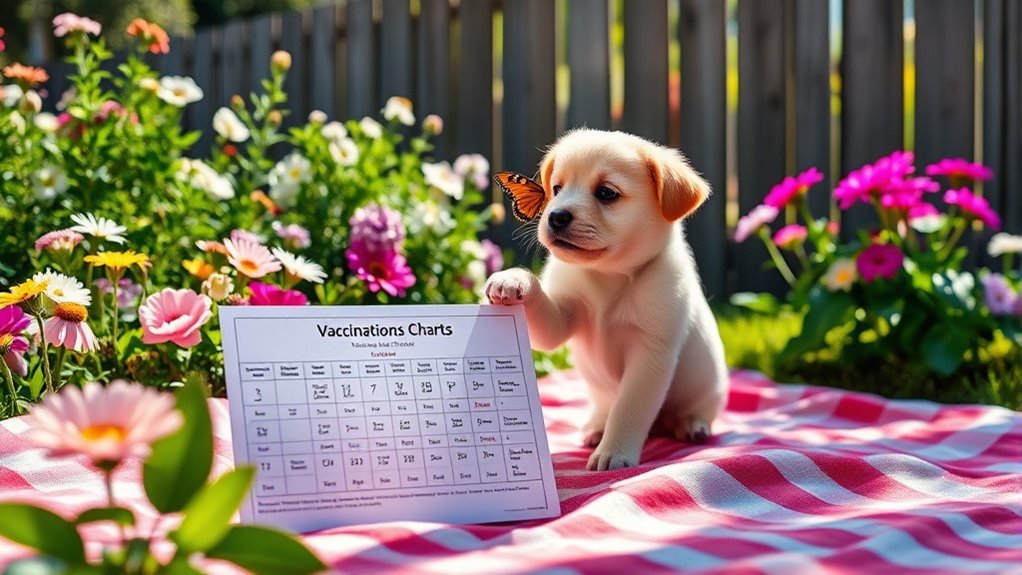
You’ll want to follow your puppy’s vaccination schedule closely before letting them explore outside. Vaccines protect your puppy from common diseases they might encounter in the garden.
Staying up to date guarantees your pup stays safe while enjoying outdoor play.
Vaccination Schedule Importance
Although puppies are enthusiastic to explore the outdoors, their vaccination schedule plays a crucial role in keeping them safe during these early adventures. Following the right vaccination timeline ensures your puppy builds immunity before exposure to garden germs and pests. Skipping or delaying shots can leave them vulnerable to serious illnesses.
Here’s a quick look at a typical vaccination schedule and its importance:
| Vaccination Stage | Purpose |
|---|---|
| 6-8 weeks | First core vaccines start |
| 10-12 weeks | Boosts immunity |
| 14-16 weeks | Final core vaccines |
| 12-16 months | Annual booster |
| Every year thereafter | Maintains protection |
Stick to this schedule to confidently let your puppy enjoy outside time safely.
Disease Prevention Outdoors
Because your puppy’s immune system is still developing, vaccinations play an essential role in protecting them from diseases they might encounter outdoors. When you take your puppy into the garden, they’re exposed to bacteria, viruses, and parasites that could cause serious health issues.
Maintaining the recommended vaccination schedule guarantees your puppy develops immunity against common threats like parvovirus, distemper, and rabies.
To maximize outdoor safety, focus on these key vaccination benefits:
- Preventing contagious diseases spread by other animals
- Reducing the risk of severe infections from common outdoor pathogens
- Protecting your puppy’s health during early exploratory phases
Getting Your Garden Ready for Your Puppy
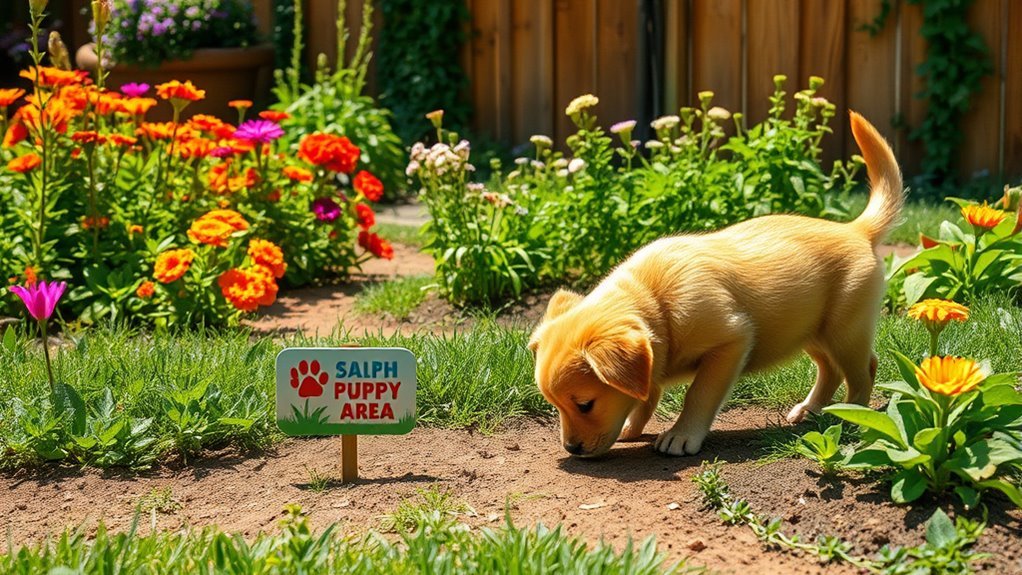
Before letting your puppy explore, make sure your garden is safe by removing harmful plants and securing any hazards.
Choose puppy-friendly plants that won’t cause irritation or poisoning if chewed.
Taking these steps helps create a safe space where your puppy can enjoy the outdoors comfortably.
Garden Safety Precautions
When you’re preparing your garden for a new puppy, taking safety precautions is essential to protect both your pet and your plants. Start by creating a secure boundary to prevent your puppy from wandering into unsafe areas. Remove any sharp tools, chemicals, or fertilizers that could harm your curious pup.
Also, check your garden for small objects or debris that might pose choking hazards.
To make your garden safe and puppy-friendly, consider these steps:
- Install sturdy fencing or barriers around flower beds and ponds.
- Store gardening supplies out of reach and lock them away.
- Regularly inspect the garden for hazards like broken pots or thorny plants.
Puppy-Friendly Plant Choices
Although your garden might be full of vibrant plants, you’ll want to choose puppy-friendly varieties to keep your furry friend safe. Avoid toxic plants like lilies, azaleas, and foxgloves, which can cause serious health issues if ingested.
Instead, opt for non-toxic options such as sunflowers, marigolds, and snapdragons that brighten your garden without risking your puppy’s health. Herbs like basil, thyme, and rosemary are also safe and can add delightful scents.
When selecting plants, consider those that are sturdy and less likely to be easily uprooted or chewed.
Step-by-Step Guide to Introducing Your Puppy Outside
Since your puppy is enthusiastic to explore the world beyond the door, you’ll want to introduce them to the garden carefully and gradually. Start by choosing a calm time when the garden is quiet, minimizing distractions. Keep your puppy on a leash to guarantee safety while they get familiar with new sights and smells.
Encourage exploration with gentle praise and treats, reinforcing positive experiences.
Here’s a quick guide:
- Begin with short, supervised visits to the garden.
- Let your puppy sniff and explore at their own pace.
- Always monitor for potential hazards like toxic plants or sharp objects.
How Long Should Puppy Garden Sessions Last?
After your puppy gets comfortable exploring the garden, it’s important to manage how long these sessions last. Start with short outings, around 5 to 10 minutes, to prevent overwhelming your puppy or exposing them to the elements for too long.
Gradually increase the duration as your puppy adjusts, aiming for 15 to 20 minutes once they seem relaxed and engaged.
Keep sessions frequent but brief, especially in the beginning, to build positive associations with the garden. Always watch for signs of tiredness or restlessness and end the session before your puppy becomes uncomfortable.
By controlling the length of garden time, you help your puppy develop confidence outdoors while keeping them safe and happy.
This careful pacing sets a solid foundation for enjoyable and stress-free garden visits.
How to Tell If Your Puppy Is Comfortable Outdoors
How can you tell if your puppy feels comfortable outdoors? Watch for signs that show your puppy is relaxed and happy in the garden. A comfortable puppy will explore confidently, tail wagging and ears perked without showing fear or anxiety.
You might notice your puppy happily sniffing around or playing with toys.
Look for these key indicators:
- Body language: A loose, wagging tail and relaxed posture mean your puppy is at ease.
- Vocal cues: Soft whining or barking might indicate discomfort, while silence or playful sounds suggest contentment.
- Engagement: Your puppy should show curiosity, moving around and interacting with the environment.
If your puppy shows these signs, you can feel confident they’re comfortable outdoors.
Protecting Your Puppy From Garden Hazards
Once your puppy feels at ease exploring the garden, it’s important to keep a close eye on potential dangers that could harm them. Check the area for toxic plants like lilies, azaleas, or daffodils, and remove or block access to these.
Secure any tools, fertilizers, or pesticides out of reach, as ingestion can be harmful.
Make sure fences or gates are sturdy to prevent escapes. Watch out for sharp objects or holes where your puppy might get injured.
Keep an eye on water features like ponds or pools to avoid accidental drowning.
Ultimately, supervise your puppy closely during garden time to quickly intervene if they start chewing on harmful substances or digging dangerously.
Taking these steps helps ensure your puppy stays safe while enjoying the outdoors.
Using Garden Time to Help Potty Training and Social Skills
While your puppy explores the garden, you can turn this time into a valuable opportunity for potty training and building social skills. Use consistent routines to encourage your puppy to relieve themselves in designated spots, reinforcing good habits.
Transform garden time into a chance for potty training and social skill development with consistent routines.
Socialize your puppy by introducing them to new sights, sounds, and gentle interactions with people or other pets in a controlled environment. This helps reduce anxiety and builds confidence.
Focus on:
- Establishing a consistent potty schedule during garden visits
- Encouraging calm, positive interactions with visitors or other pets
- Rewarding desired behaviors immediately to reinforce learning
Frequently Asked Questions
What Are the Best Toys for Outdoor Puppy Play?
You’ll want durable chew toys, fetch balls, and tug ropes made for puppies. Interactive toys that engage their senses and weather-resistant materials work best outdoors.
Avoid small parts to keep your puppy safe during playtime.
How to Prevent Fleas and Ticks in the Garden?
You can prevent fleas and ticks by regularly treating your puppy with vet-recommended products, keeping the garden tidy, mowing the lawn, and removing debris.
Using natural repellents like cedar chips or diatomaceous earth in outdoor areas can also help reduce these pests.
Can Puppies Eat Plants Found in the Garden?
You shouldn’t let your puppy eat garden plants because many can be toxic. Always check which plants are safe, remove harmful ones, and supervise your puppy to prevent accidental ingestion that could cause serious health issues.
What Is the Ideal Garden Temperature for Puppies?
You’ll find the ideal garden temperature for puppies is between 65°F and 75°F.
Coincidentally, that’s just right for you too! Avoid extremes to keep your pup safe, comfortable, and happy while exploring outdoors.
How to Clean My Puppy After Garden Playtime?
You’ll want to gently brush off dirt, then wipe your puppy with a damp cloth or pet-safe wipes.
If they’re muddy, give a quick lukewarm bath, dry them thoroughly, and praise their good behavior!
Conclusion
Now that you know when and how to introduce your puppy to the garden, you’re ready to create unforgettable outdoor adventures together!
Remember, patience is key—rushing can turn your garden into a puppy jungle gym of chaos. Keep sessions short, watch for signs of discomfort, and protect your pup from hazards.
With the right steps, your garden will become the happiest, safest place on earth for your furry friend to explore and grow. By following these guidelines on when can a puppy go in the garden, you ensure a positive and safe experience every time.