How You Can Legally Put a Static Caravan in Your Garden
To legally put a static caravan in your garden, start by checking local planning rules, as size, location, and usage may be restricted. Understanding these regulations is essential to ensure your caravan placement complies with the law. You’ll likely need planning permission, especially if you plan to use the caravan for long-term living.
Choose a flat, accessible spot away from flood risks. Prepare a stable base to support the caravan properly and meet safety standards for utilities and anchoring. Don’t forget to register and insure your caravan to protect your investment.
Regular maintenance is also important to keep your caravan safe and functional. Keep going to discover how to navigate each step smoothly.
Know Local Rules for Static Caravan Placement
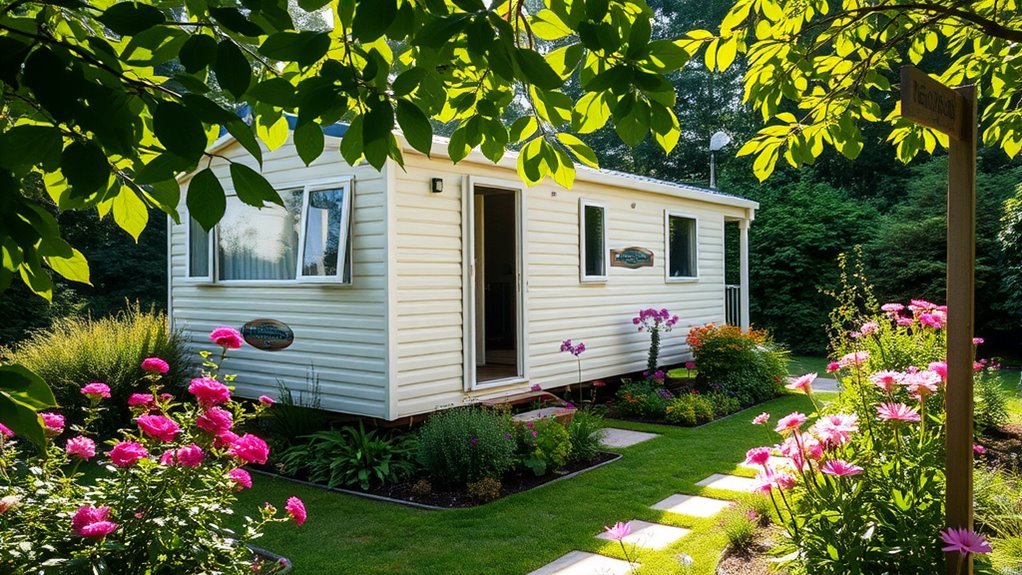
Before placing a static caravan in your garden, you need to check your local planning regulations carefully. Every council has its own rules about where and how static caravans can be positioned. You’ll want to find out if there are restrictions related to caravan size, distance from boundaries, or the type of land where you plan to install it.
Sometimes, certain areas have conservation or environmental protections that affect placement. Also, consider access for delivery and any impact on neighbors.
Local rules might also dictate whether the caravan can be used year-round or only seasonally.
Do You Need Planning Permission for a Static Caravan?
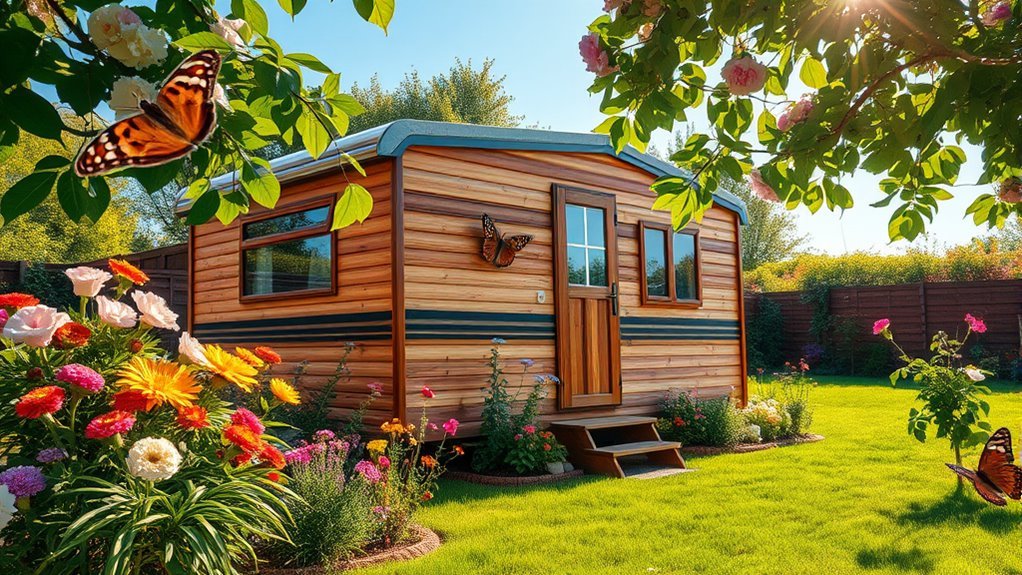
Although rules vary by location, you usually need planning permission to place a static caravan in your garden, especially if you intend to use it as a permanent living space. Local planning authorities generally consider a static caravan as a building or structure, so placing one without permission can lead to enforcement action.
Temporary use, such as for holidays, might be allowed under certain conditions, but long-term residential use typically requires approval. Before you install a caravan, check with your local council’s planning department to understand their specific requirements and any restrictions.
Applying for permission involves submitting detailed plans and may take several weeks. Getting approval upfront helps you avoid fines or being forced to remove the caravan later, ensuring you stay within the law.
Choose and Prepare the Right Spot in Your Garden
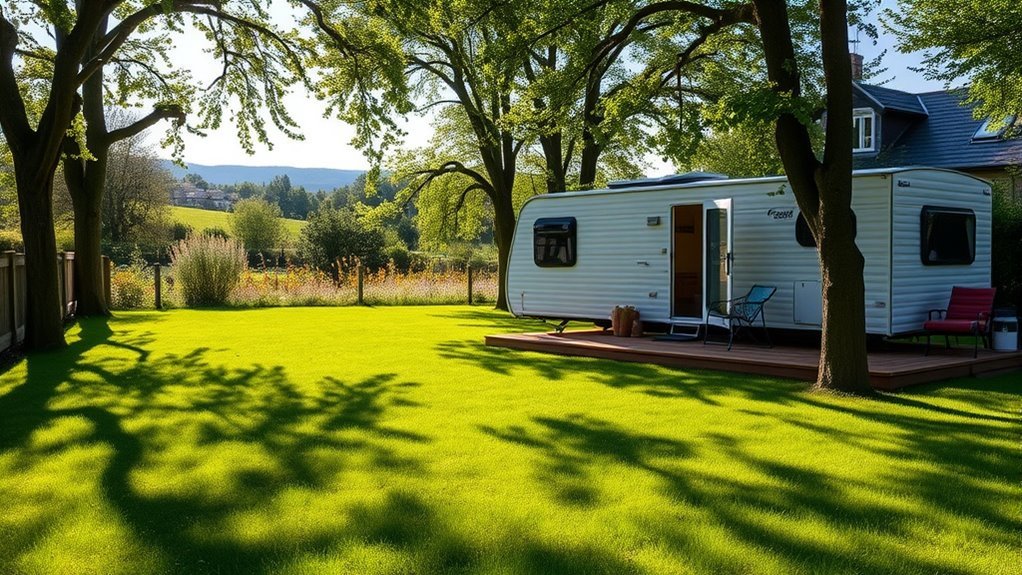
Once you’ve secured planning permission, the next step is to choose the ideal spot for your static caravan in your garden. Look for a flat, level area that’s easily accessible but won’t obstruct pathways or views. Avoid places prone to flooding or poor drainage.
Consider proximity to your home for convenience without compromising privacy. Clear the area of debris, plants, or obstacles, making certain the ground is firm and stable. You might need to lay a base like concrete or compacted gravel to support the caravan’s weight and prevent sinking.
Make sure the spot complies with any local regulations about distance from boundaries or structures. Taking time to select and prepare the right location guarantees your caravan sits securely and blends well with your garden’s layout.
Meet Safety and Utility Requirements for Your Static Caravan
To guarantee your static caravan is safe and functional, you’ll need to meet specific safety and utility standards. Ensuring proper connections and compliance protects you from hazards and keeps everything running smoothly.
Start by checking that electrical installations follow local codes and are done by a certified electrician.
Next, confirm your caravan’s gas appliances are safely installed and regularly serviced to prevent leaks.
Water supply and drainage must be connected correctly to avoid contamination or flooding.
Finally, make sure your caravan’s structure and anchoring meet wind resistance and stability requirements.
Here’s a quick checklist to guide you:
- Electrical systems installed by a qualified professional
- Gas appliances checked and maintained regularly
- Proper water supply and waste drainage connections
- Secure anchoring and structural safety compliance
Register and Insure Your Static Caravan Properly
After ensuring your static caravan meets safety and utility standards, the next step is to register and insure it properly. You’ll need to check local regulations, as some areas require you to register your caravan with the local council or a designated authority. This helps confirm your caravan is accounted for legally and prevents any future disputes.
Next, secure insurance that covers both the structure and your belongings inside. Look for policies tailored to static caravans, including protection against theft, fire, and weather damage.
Don’t forget liability coverage in case someone gets injured on your caravan site.
Maintain Your Static Caravan to Stay Within Legal Limits
Although placing a static caravan in your garden is legal with the right permissions, you must maintain it properly to stay compliant. Neglecting upkeep can lead to safety hazards, legal issues, or even fines. To keep your caravan within legal limits, focus on regular maintenance and inspections.
Here’s what you should do:
- Check structural integrity, including walls and roof, for damage or wear.
- Ensure all electrical and plumbing systems meet safety standards and function correctly.
- Keep the exterior clean and tidy to avoid complaints from neighbors or local authorities.
- Remove waste and manage drainage properly to prevent environmental issues.
Frequently Asked Questions
Can I Use a Static Caravan as a Full-Time Residence?
You usually can’t use a static caravan as a full-time residence without planning permission. Check local regulations and get approval first; otherwise, living there permanently might be considered illegal and could lead to enforcement action.
Are There Restrictions on the Size of the Static Caravan?
Yes, there are size restrictions on static caravans, usually limited to around 20 feet wide and 40 feet long.
You’ll need to check local planning rules, as dimensions can vary depending on your council’s regulations.
Can I Rent Out My Static Caravan to Others?
You can rent out your static caravan, but you’ll need to check local planning laws and get any necessary permissions.
Also, make sure your insurance covers rental use to avoid legal or financial issues.
How Does Placing a Static Caravan Affect My Property Value?
Placing a static caravan can either increase or decrease your property value depending on its condition, location, and local market demand.
You’ll want to take into account potential buyers’ preferences and check if it affects your property’s appeal.
What Happens if I Move My Static Caravan to a New Location?
Moving your static caravan is like turning a page in a book—it resets your legal and planning requirements. You’ll need new permissions, and local rules might differ, so check before you shift to avoid penalties or complications.
Conclusion
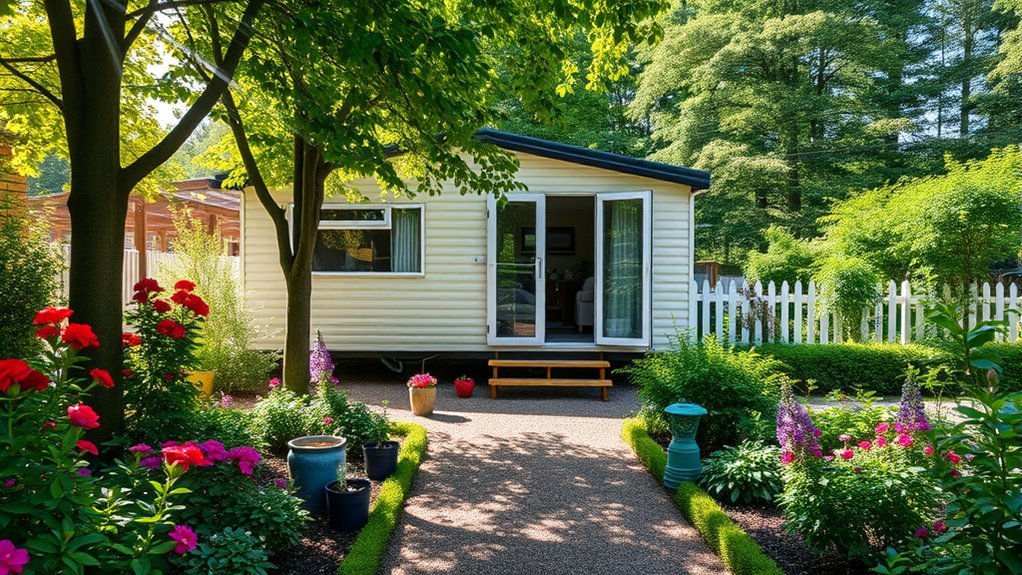
You might picture a serene garden with a cozy static caravan nestled perfectly—peaceful yet practical. But behind that calm lies a web of rules, permissions, and safety checks you can’t ignore.
By knowing local regulations, securing planning permission, preparing your space carefully, and keeping your caravan well-maintained, you turn that dream into a legal reality.
It’s the balance between freedom and responsibility that makes your garden haven both inviting and compliant. Understanding how you can legally put a static caravan in your garden ensures your setup is safe, lawful, and enjoyable.