How to Make Raised Garden Beds in 3 Easy Steps
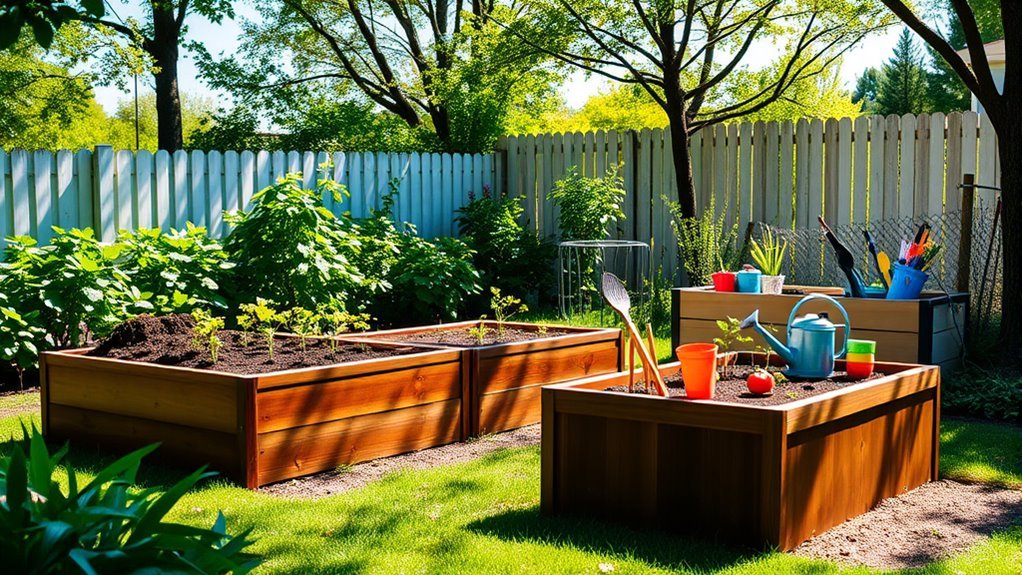
You’ll start by choosing a sunny spot with good drainage and picking rot-resistant wood like cedar for your raised garden beds frame. Raised garden beds help improve soil quality and plant health, making them a great addition to any garden.
Next, cut and assemble the lumber into a sturdy, square frame, adding braces if needed for stability. Make sure the frame is level and secure to support the soil and plants.
Finally, fill the bed with layers—coarse organic material for drainage, nutrient-rich compost, then loose garden soil—creating the perfect environment for your plants to thrive. Keep going, and you’ll discover tips to enhance your garden’s success.
Choose the Location and Materials for Your Raised Garden Bed
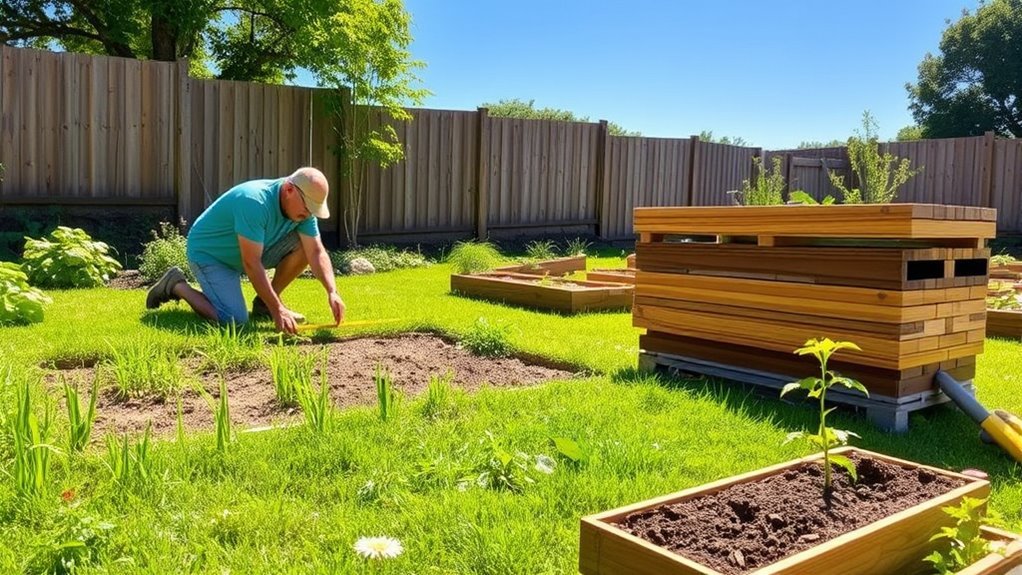
Before you build your raised garden bed, pick a location that gets at least six hours of sunlight daily and has good drainage. Avoid low spots where water might pool, and consider proximity to a water source for easy watering.
Choose a sunny, well-drained spot near water to ensure your raised garden bed thrives.
Once you’ve chosen the spot, decide on the materials. Wood is popular—cedar and redwood resist rot well. Avoid treated lumber that may leach chemicals into the soil.
You could also use bricks, concrete blocks, or recycled materials like old pallets, but make sure they’re safe for gardening.
Consider the bed’s height and dimensions based on what you want to grow and your physical comfort.
Selecting durable, safe materials and the right location sets the foundation for a thriving garden.
Build Your Raised Garden Bed Step-by-Step
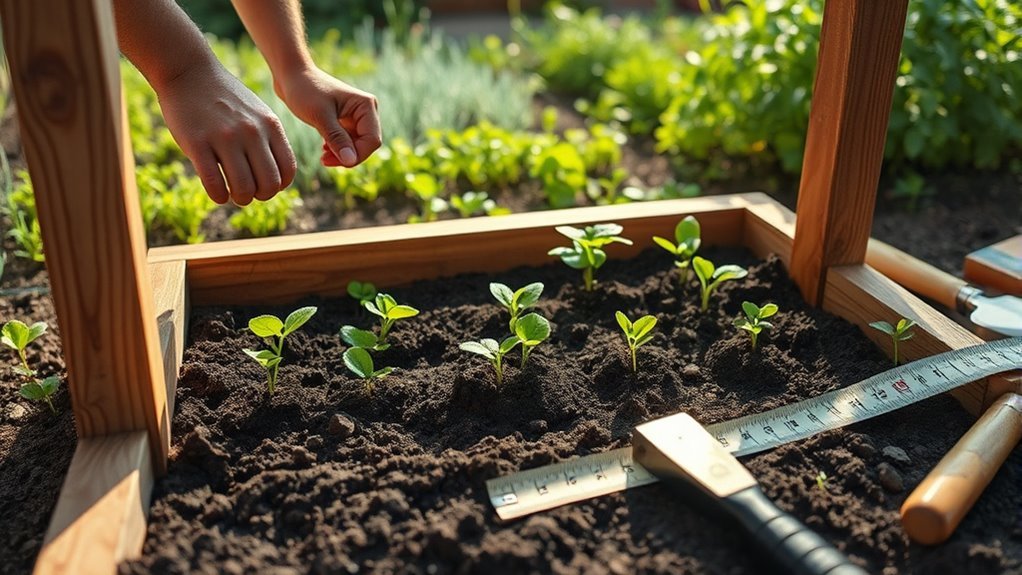
Once you’ve chosen your location and gathered materials, start by marking the outline of your raised bed on the ground. Use stakes and string to create a clear rectangular or square shape.
Next, cut your lumber to size, ensuring all pieces fit your desired dimensions.
Assemble the frame by screwing the boards together at the corners, making sure it’s square by measuring diagonals.
Once the frame is secure, place it on your marked spot.
If needed, level the ground beneath, removing any rocks or debris.
You can add corner braces for extra stability if your bed is large.
Finally, attach any additional features like legs or a trellis support before moving on.
Your raised bed frame is now ready for the next step.
Fill and Prepare Your Raised Garden Bed for Planting
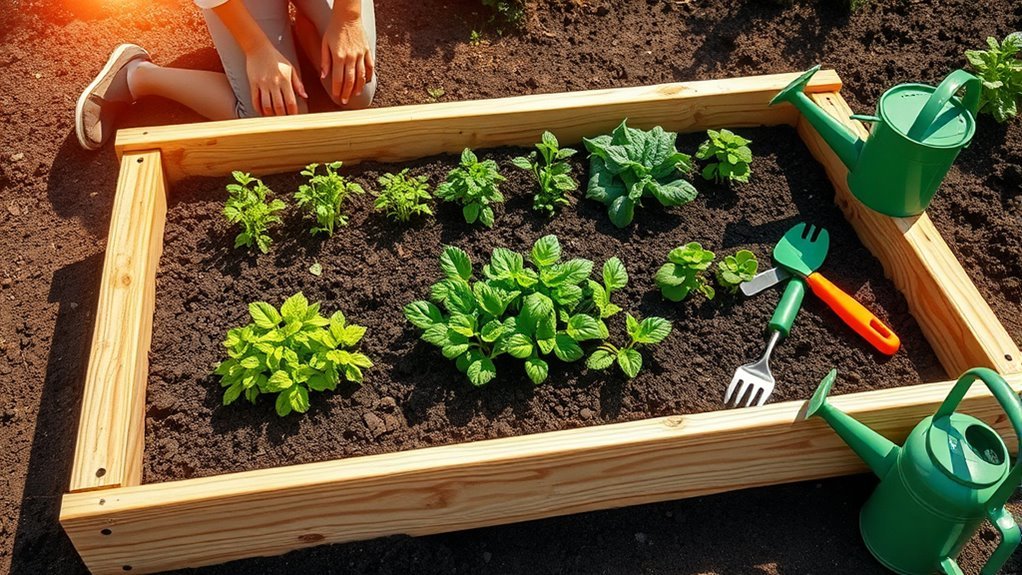
After assembling your raised bed frame, you’ll need to fill it with a nutrient-rich mix that supports healthy plant growth. Start with a base of coarse organic material like straw or small branches for drainage. Next, add a layer of compost to provide essential nutrients.
Top it off with high-quality garden soil, ensuring it’s loose and well-aerated. Mix these layers gently to create an inviting environment for roots.
As you prepare your garden bed, remember the emotional rewards of nurturing life:
| Feeling | Reason |
|---|---|
| Excitement | Watching seeds sprout |
| Satisfaction | Creating fertile soil |
| Joy | Harvesting fresh, homegrown food |
| Peace | Connecting with nature daily |
Your raised bed is now ready for planting!
Frequently Asked Questions
How Often Should I Water Plants in Raised Garden Beds?
You should water plants in raised garden beds about once a day during hot weather, but less often when it’s cooler.
Check soil moisture regularly and adjust watering to keep soil consistently damp, not soggy or dry.
What Are the Best Plants for Raised Garden Beds?
You’ll find leafy greens, tomatoes, herbs, and root vegetables thrive best in raised garden beds. They enjoy the improved drainage and soil warmth, helping you grow healthy, productive plants with less hassle and better control.
Can Raised Garden Beds Help Prevent Soil Erosion?
Think of raised beds like sturdy boats on a river—they keep soil from washing away during heavy rains. You’ll prevent erosion effectively since the beds hold soil in place, protecting your garden’s foundation and nutrients.
This containment is key to maintaining healthy, stable soil. Raised beds create a barrier that stops runoff and soil loss, even in heavy storms.
How Do I Protect Raised Beds From Pests?
You can protect your raised beds from pests by using physical barriers like mesh or row covers, applying natural repellents, encouraging beneficial insects, rotating crops, and keeping the area clean to minimize hiding spots and attract fewer pests.
What Is the Average Lifespan of a Raised Garden Bed?
Think of your raised garden bed as a sturdy ship; with proper care, it can sail smoothly for 10 to 20 years.
Using durable materials and sealing wood regularly will keep it strong against weather and pests.
Conclusion
Now, imagine the sun warming your face as you kneel beside your vibrant raised garden bed, rich soil cradling your favorite plants. With each step—choosing the perfect spot, building sturdy walls, and filling it with nourishing earth—you’re creating a thriving oasis right in your backyard.
You’ve made gardening simple, beautiful, and rewarding. So grab your tools, roll up your sleeves, and watch your garden grow into a colorful, flourishing paradise. Raised garden beds are the perfect way to boost your gardening success and enjoy fresh, healthy plants all season long.