How to Make the Most of a Good East Facing Garden
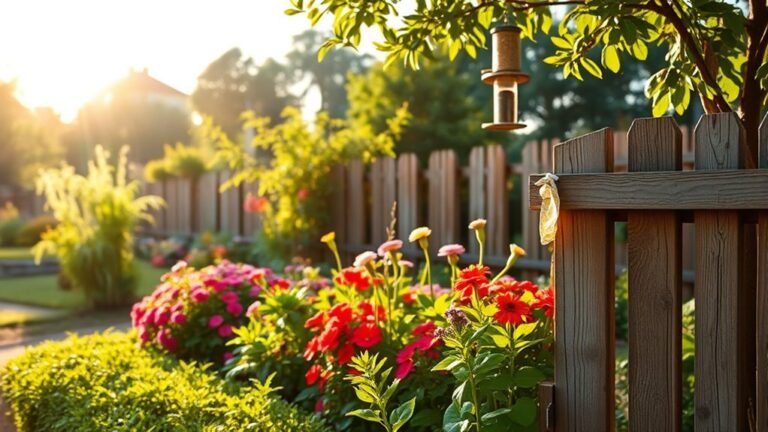
To make the most of your east-facing garden, take advantage of the gentle morning sun by choosing plants like hydrangeas, ferns, and leafy greens that thrive in cooler light. Water early to retain moisture and prevent disease, and mulch to keep soil healthy.
Arrange taller plants westward to avoid blocking sun and create cozy spots to enjoy the crisp mornings. With smart design and care, your garden will flourish beautifully—there’s plenty more to explore for thriving growth and wildlife benefits.
Why Morning Sun Benefits East-Facing Gardens
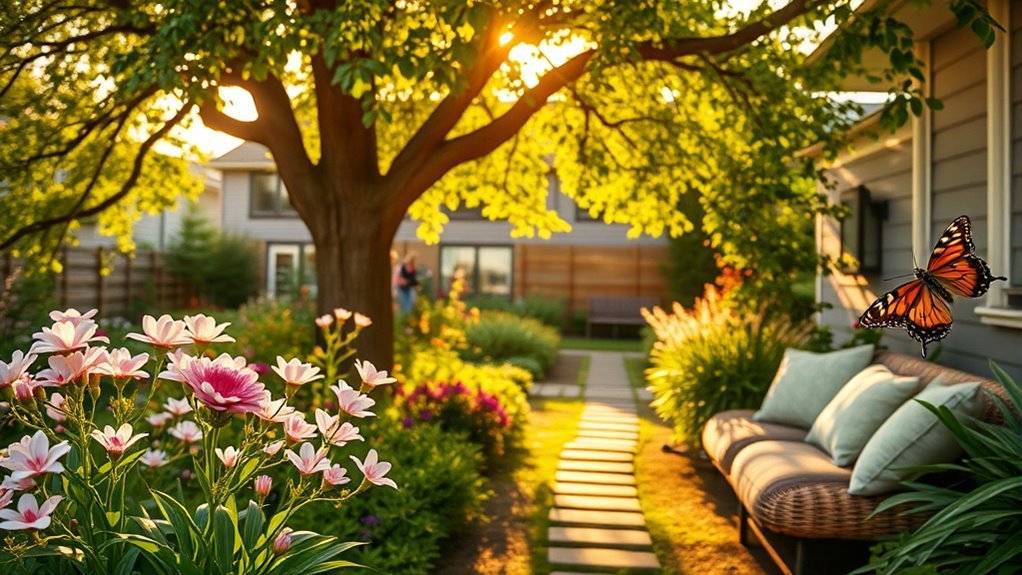
Because east-facing gardens receive sunlight early in the day, they benefit from gentle, warming rays that help plants thrive without the stress of intense afternoon heat. You’ll notice that morning sun encourages steady growth and reduces the risk of overheating, which can wilt or damage delicate plants.
This early light also helps dry dew quickly, cutting down on fungal diseases and pests that love damp conditions. Plus, the cooler temperatures in the morning mean your soil retains moisture longer, so you won’t need to water as frequently.
Best Plants That Thrive in East-Facing Gardens
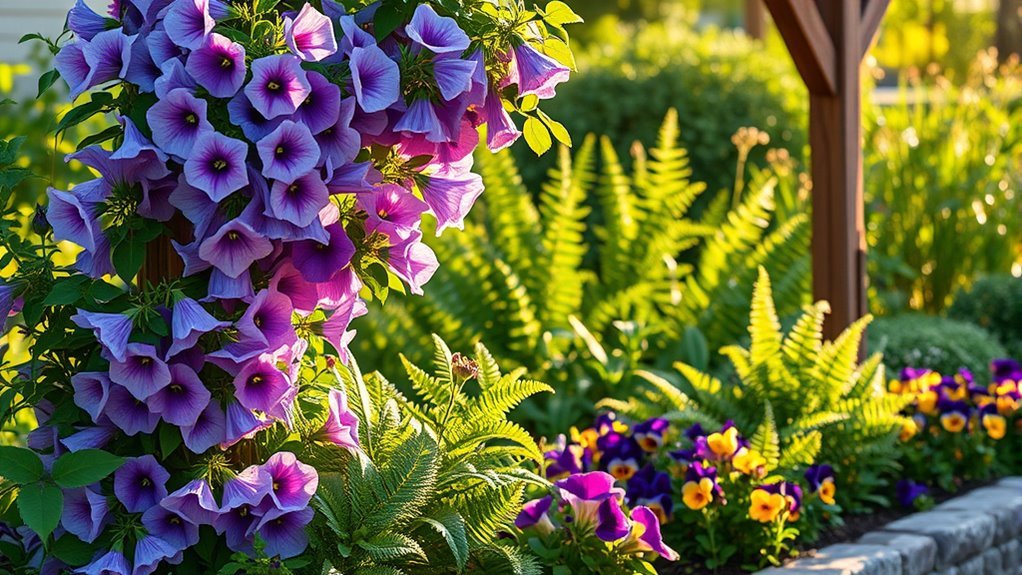
You’ll want to choose plants that love gentle morning sun and can handle some shade later in the day. East-facing gardens are perfect for many flowering varieties like hydrangeas, azaleas, and foxgloves.
Let’s explore which plants will thrive best in your garden’s unique light conditions.
Ideal Sunlight Requirements
While east-facing gardens receive gentle morning sunlight, they avoid the harsh afternoon heat, creating a unique environment that suits a variety of plants. You’ll want to choose species that thrive in partial sun, benefiting from early light but not needing intense, prolonged exposure.
Many vegetables, like lettuce and spinach, flourish here because they prefer cooler morning sun and shaded afternoons. Similarly, herbs such as parsley and cilantro do well without scorching heat.
Shade-tolerant plants like ferns and hostas also appreciate this balance, enjoying enough light to grow without drying out.
When planning your garden, consider plants that need about three to six hours of sunlight daily. This way, you’ll guarantee your garden stays vibrant, healthy, and productive in its ideal east-facing spot.
Best Flowering Varieties
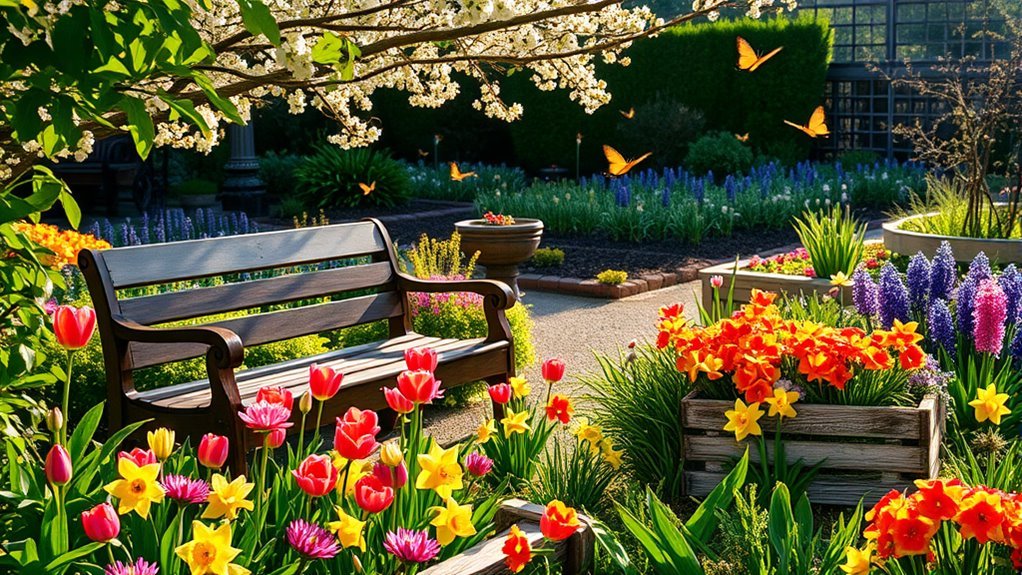
Since east-facing gardens provide gentle morning light and cooler afternoons, they create an ideal setting for many flowering plants that prefer moderate sun exposure. You’ll want to contemplate varieties like foxgloves, which thrive in partial sun and bring vertical interest with their tall spires. Columbines also do well here, offering delicate blooms that attract pollinators.
For a splash of color, plant azaleas or camellias—they flourish with morning sun and shaded afternoons. You can’t go wrong with hydrangeas either; they love the balanced light and produce stunning clusters of flowers.
Don’t forget perennial geraniums, which tolerate these conditions while providing long-lasting blooms.
Add Color With Shade-Loving Flowers in East-Facing Gardens
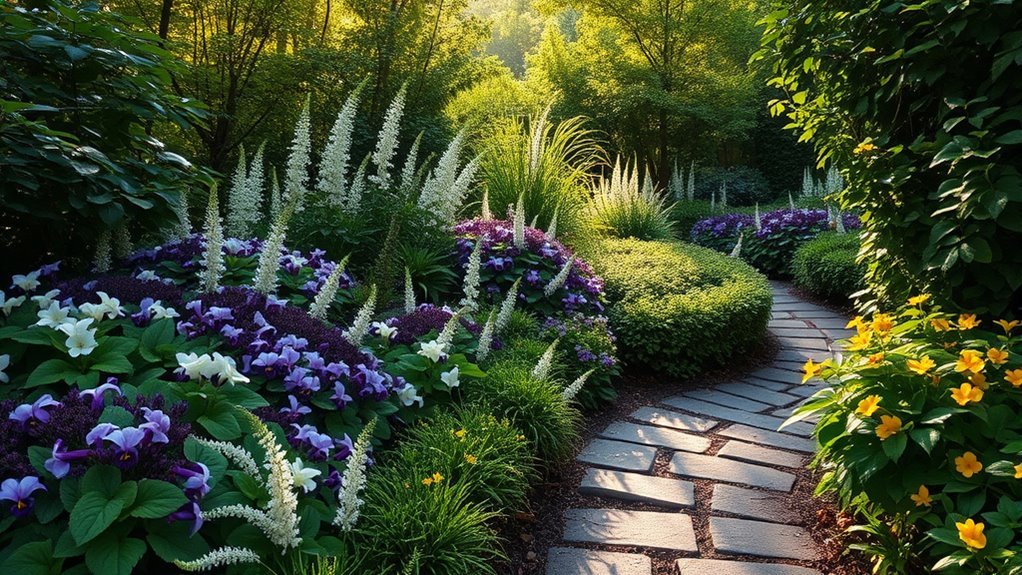
Because east-facing gardens receive gentle morning sun and afternoon shade, they create an ideal environment for shade-loving flowers to thrive. You can add vibrant color by choosing plants like hostas, astilbes, and hellebores, which flourish in these conditions. These flowers offer a variety of textures and hues, from deep purples to soft pinks, brightening your garden without harsh sunlight.
Don’t overlook ferns and impatiens—they provide lush greenery and delicate blooms perfect for shaded spots. Arrange your flowers in layers, placing taller plants at the back and shorter ones in front to maximize visual impact.
With thoughtful selection and placement, your east-facing garden will burst with color and life, making the most of its unique light conditions.
Growing Vegetables and Herbs in East-Facing Gardens
Alongside vibrant flowers, you can also grow a variety of vegetables and herbs in your east-facing garden. Since your garden gets gentle morning sun and shade in the afternoon, it’s ideal for plants that prefer cooler conditions.
Try leafy greens like spinach, lettuce, and kale—they thrive without the harsh afternoon heat.
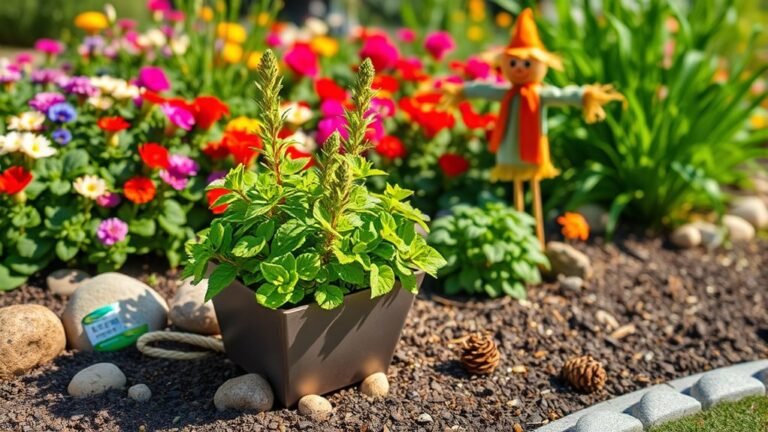
Herbs such as parsley, cilantro, chives, and mint also do well in this environment.
Root vegetables like carrots and radishes appreciate the consistent moisture and moderate light.
Make sure your soil drains well and stays fertile by adding compost regularly.
Water your plants early in the day to maximize absorption and reduce disease risk.
With proper care, your east-facing garden will yield fresh, flavorful produce throughout the growing season.
How to Design Your East-Facing Garden Layout
When planning your east-facing garden layout, consider how the morning sun and afternoon shade affect plant placement. Position sun-loving plants where they’ll soak up early light, ensuring they thrive before the shade sets in. Shade-tolerant species can go toward areas that stay cooler later in the day.
Arrange taller plants or shrubs to the west side to avoid blocking morning sun for smaller plants. Create distinct zones based on sunlight exposure, grouping plants with similar light needs together for easier care. Use pathways or low borders to separate these zones, keeping your garden organized and visually appealing.
Make the Most of Morning Light With Garden Structures
Although the morning sun in an east-facing garden is limited to a few hours, you can enhance its impact by adding garden structures that capture and reflect light. Mirrors or reflective panels placed strategically can bounce sunlight into shaded corners, brightening your space.
Light-colored trellises or pergolas amplify light by reflecting it, while also creating interesting shadows that add depth. Glass or translucent roofing on a small greenhouse or cold frame lets sunlight in while protecting plants.
You might also install raised beds near reflective surfaces to maximize exposure. By positioning these structures thoughtfully, you’ll extend the benefits of morning sun, helping plants thrive and making your garden feel warmer and more inviting right when the day begins.
Cozy Seating Areas for Cooler East-Facing Gardens
Since east-facing gardens often stay cooler in the afternoon, creating cozy seating areas helps you enjoy your outdoor space comfortably throughout the day. To make the most of your garden’s cooler climate, focus on warmth and comfort.
Here are three ways to create an inviting seating area:
- Add soft textiles like cushions and throws to keep you warm during chillier hours.
- Incorporate portable heaters or fire pits to extend your garden’s usability into the evening.
- Choose sheltered spots near walls or hedges that block chilly winds while still catching morning sun.
Watering and Caring for East-Facing Gardens
You’ll want to water your east-facing garden early in the morning to take advantage of the gentle sunlight.
Keep an eye on soil moisture to avoid overwatering, since these gardens often retain moisture longer.
Managing both timing and moisture will help your plants thrive.
Optimal Watering Times
When caring for an east-facing garden, timing your watering is key to keeping plants healthy and vibrant. Since your garden receives morning sun and afternoon shade, you’ll want to water at times that maximize absorption and minimize evaporation.
Here are three ideal watering times:
- Early morning (before 9 AM) – This lets plants soak up water before the sun intensifies, reducing moisture loss.
- Late afternoon (around 4-5 PM) – Provides hydration after the day’s heat, preparing plants for cooler evening temperatures.
- Avoid midday watering – The sun can evaporate water quickly, wasting resources and risking leaf scorch.
Soil Moisture Management
Proper watering times set the foundation, but managing soil moisture goes beyond just scheduling. You need to monitor your soil regularly to avoid overwatering or underwatering.
East-facing gardens receive morning sun, which helps dry the soil faster after watering, so check moisture levels mid-morning before watering again.
Use a moisture meter or simply insert your finger about an inch deep—if it feels dry, it’s time to water.
Mulching around plants helps retain moisture and regulate temperature, reducing evaporation.
Be mindful of your soil type: sandy soils drain quickly and need more frequent watering, while clay soils hold moisture longer.
Adjust your watering accordingly, especially during cooler or rainy days, to keep your plants healthy without wasting water.
Encouraging Wildlife in Your East-Facing Garden
Although east-facing gardens receive gentle morning sunlight, they can still become vibrant habitats for local wildlife. You can easily attract birds, bees, and butterflies by creating a welcoming environment.
Focus on three key actions:
- Plant native flowers and shrubs that bloom at different times to provide continuous nectar and shelter.
- Install a small water feature like a birdbath or shallow dish to offer fresh water for drinking and bathing.
- Add natural nesting spots such as birdhouses, bee hotels, or log piles to encourage breeding and shelter.
Seasonal Maintenance for East-Facing Gardens
You’ll want to take advantage of the gentle morning sun to keep your plants healthy throughout the year. Seasonal pruning helps control growth and boosts flowering in your east-facing garden.
Preparing the soil properly each season guarantees your garden stays vibrant and productive.
Morning Sunlight Benefits
Since east-facing gardens soak up the gentle morning sun, they provide an ideal environment for many plants to thrive without the harsh afternoon heat. This morning sunlight benefits your garden by kickstarting photosynthesis early, boosting plant growth and health.
It also reduces moisture loss, helping your soil stay hydrated longer.
To maximize these benefits, focus on:
- Plant selection: Choose sun-loving plants that flourish in morning light but tolerate shade later.
- Watering schedule: Water early to complement natural moisture retention and avoid midday evaporation.
- Pest control: Use morning inspections to spot pests when they’re less active, improving treatment success.
Seasonal Pruning Tips
Morning sunlight not only supports healthy growth but also signals the best times for pruning your east-facing garden. Early morning light helps you spot damaged or dead branches clearly, making pruning easier and more effective.
In spring, prune lightly to encourage new growth without cutting too much of the fresh shoots. Summer calls for trimming overgrown branches to maintain shape and improve air circulation.
As fall approaches, remove any diseased parts and thin out dense areas to prepare plants for winter. Avoid heavy pruning late in the season to prevent stimulating new growth that can be damaged by frost.
Soil Preparation Practices
Although east-facing gardens benefit from gentle morning sun, preparing your soil properly each season is key to supporting healthy plant growth. Start by testing your soil’s pH and nutrient levels to understand what amendments it needs.
Next, loosen the soil to improve aeration and drainage, which encourages root development.
Finally, enrich the soil with organic matter like compost or well-rotted manure to boost fertility and moisture retention.
- Test soil pH and nutrients to tailor amendments.
- Loosen soil to enhance aeration and water flow.
- Add organic matter for improved fertility and moisture.
Regularly following these soil preparation practices guarantees your east-facing garden thrives throughout the year.
Frequently Asked Questions
Can East-Facing Gardens Help Improve Home Energy Efficiency?
Yes, east-facing gardens can improve your home’s energy efficiency by capturing morning sunlight, warming your space naturally.
You’ll reduce heating costs, especially in cooler months, while enjoying pleasant, shaded afternoons that keep your home cooler.
What Are the Best Types of Mulch for East-Facing Gardens?
You’ll want organic mulches like shredded bark, compost, or straw for east-facing gardens—they retain moisture, regulate temperature, and improve soil health.
These mulches also break down slowly, giving your plants consistent nourishment and protection.
How Do East-Facing Gardens Affect Local Property Value?
You’ll find that east-facing gardens can boost property value by offering pleasant morning sunlight and cooler afternoons, appealing to buyers.
Their balanced light encourages healthy plants, making your outdoor space more attractive and increasing curb appeal effectively.
Are There Specific Pests Common to East-Facing Gardens?
You might notice pests like aphids and slugs thriving in the cooler, shaded morning conditions of east-facing gardens. Regularly check plants early, and use natural deterrents to keep these common pests under control effectively.
Can I Grow Fruit Trees Successfully in an East-Facing Garden?
You can definitely grow fruit trees in an east-facing garden. They’ll get morning sun, which helps prevent fungal diseases.
Choose varieties suited for partial sun, and make sure to water and feed them regularly for best results.
Conclusion
Think of your east-facing garden like a gentle morning hug—it greets the day with soft sunlight that nurtures growth without overwhelming heat. Just as a friend’s kind words can brighten your morning, the right plants and cozy seating make your garden a revitalizing retreat.
By choosing shade-loving flowers and herbs, you’ll create a vibrant, thriving space that welcomes wildlife and peace. Even gentle beginnings can lead to beautiful, flourishing results. Making the most of a good east-facing garden means embracing its unique light and calm atmosphere to cultivate a serene outdoor haven.