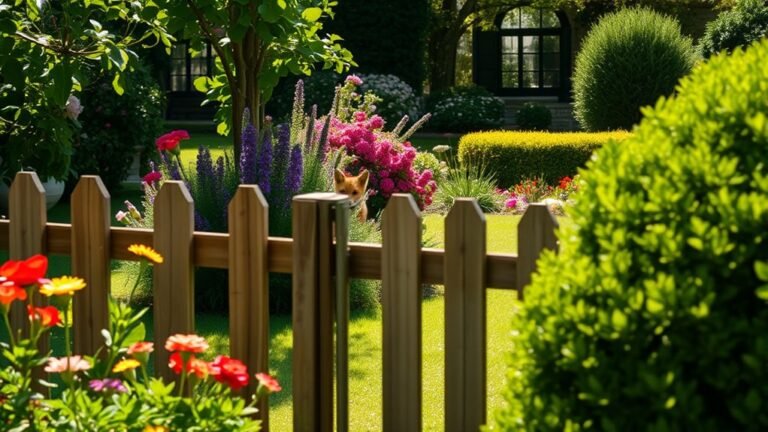
7 Effective Tips to Stop Foxes Coming Into Your Garden
You can stop foxes from invading your garden by removing food sources like pet food, fallen fruit, and unsecured trash. These are like invitations for foxes to visit. Secure trash bins, cover compost piles, and bring pets indoors or use secure enclosures to keep things under control.
Also, try modifying your garden by trimming dense shrubs and removing hiding spots. Foxes love places to hide and feel safe, so making your garden less inviting can help a lot.
Erect tall fences with buried mesh to prevent digging—that’s a great way to keep them out for good.
If you want to go a step further, try natural repellents like chili powder or citrus peels. These smells tend to discourage foxes from sticking around.
And if the visits persist despite your efforts, it might be time to consider professional help for lasting solutions.
Key Takeaways
- Remove food sources by securing trash, avoiding outdoor pet feeding, and cleaning fallen fruits and birdseed regularly. This makes your garden less attractive to foxes.
- Eliminate shelter options by trimming dense shrubs, removing wood piles, and sealing access to sheds and crawlspaces. Foxes love hiding spots, so keep those covered.
- Install fences at least 6-8 feet high with buried wire mesh and small mesh sizes to prevent fox entry and digging. A good fence is one of the best barriers you can have.
- Use scent-based deterrents like chili powder, garlic, citrus peelings, coyote urine, and motion-activated sprinklers to repel foxes. These tricks can make your garden less inviting for them.
- Seek professional wildlife control help for persistent fox problems, including humane trapping, relocation, and garden vulnerability assessments. Sometimes, you need the experts to step in.
Why Foxes Visit Your Garden and Why They Cause Problems
If you notice foxes visiting your garden, it’s usually because they’re attracted to easy food sources like pet food, fallen fruit, or unsecured trash. These food sources make your garden a convenient spot for foxes to scavenge without much effort.
Besides food, foxes also look for shelter in overgrown areas or dense shrubs where they can safely den and raise their young. Their presence isn’t just a minor nuisance; foxes can dig up plants, scatter debris, and leave unpleasant droppings behind.
This disruption can be frustrating and unsightly, and it may even put your small pets at risk. Understanding why foxes visit helps you take the right steps to keep foxes away and protect your garden effectively.
Remove Food Sources to Keep Foxes Away
Because foxes are primarily drawn to easy meals, removing food sources from your garden is the most effective way to keep them away. Start by securing trash cans with tight-fitting lids and storing them in a shed or garage to eliminate access to food scraps.
Cover compost piles with sturdy, animal-proof lids to prevent foxes from foraging. Always remove pet food bowls after feeding times and avoid leaving food outdoors.
Regularly clean up fallen fruits, birdseed, and acorns to eliminate potential snacks. Additionally, make sure small pets like rabbits and chickens are housed in secure enclosures, especially at night, to avoid attracting foxes.
Modify Your Garden to Deter Foxes
To keep foxes out, start by removing any potential shelters like wood piles or thick debris where they could hide. Trim dense shrubs and overgrown plants to eliminate cozy spots that attract them.
Remove Fox Shelter
When you modify your garden to remove fox shelters, you cut down on their hiding spots and discourage them from settling in. To remove fox shelter effectively, prune dense shrubs and clear overgrown areas where foxes might hide or den.
Close off access to crawlspaces and sheds, as these spots offer perfect refuge. Remove clutter like hollow wood piles and debris that attract foxes looking for shelter.
Bury L-shaped hardware cloth around your garden’s perimeter to prevent foxes from digging and creating new dens. Regularly check your garden for signs of fox activity and act quickly to eliminate any emerging shelter opportunities.
Trim Dense Vegetation
Although foxes are skilled at finding shelter, trimming dense vegetation in your garden can considerably reduce their hiding spots and discourage them from making your yard their home. You should regularly trim shrubs and bushes to eliminate dense thickets where foxes love to nest and hide.
Keep your garden tidy by clearing away clutter like old wood piles and overgrown plants, which can serve as potential den sites. Maintaining minimal ground cover helps keep your yard less inviting and decreases the chances of foxes feeling secure while exploring.
Scent-Based Fox Deterrents That Work
You can use natural scents like chili powder, garlic, and citrus peelings to keep foxes away from your garden.
Remember to reapply these deterrents regularly, especially after rain, to maintain their effectiveness.
Consistency is key to making sure foxes don’t get used to the smells.
Natural Scent Repellents
Three natural scent repellents stand out for keeping foxes out of your garden: chili powder mixed with garlic, citrus peelings, and coyote urine. These scent deterrents help you get rid of foxes by exploiting their dislike for strong smells.
You can sprinkle chili and garlic powder around garden borders. Or try scattering fresh orange or lemon peelings near your plants.
Another option is to place small containers of coyote urine in hidden spots. Just remember to refresh these scents regularly to keep their power strong.
Keep an eye on fox activity to see which repellent works best for you. While homemade repellents are popular, their effects can vary a lot.
Using these natural options, you’ll create an environment foxes find pretty unpleasant. That way, you can effectively keep them at bay and protect your garden.
Reapplication Importance
Natural scent repellents like chili powder, citrus peelings, and coyote urine can keep foxes at bay, but their effectiveness depends on how often you refresh them. Regular reapplication is key, especially after rain or strong winds wash away the scents.
Citrus peelings lose potency quickly, so replace them frequently. Coyote urine also needs reapplication because foxes can get used to it over time.
Place these deterrents strategically around your garden, focusing on spots foxes target most. Combining different deterrents and maintaining them consistently maximizes your success in keeping foxes away.
| Deterrent | Reapplication Frequency |
|---|---|
| Chili Powder | After heavy rain or every 3-4 days |
| Citrus Peelings | Every 2 days |
| Coyote Urine | Weekly or when scent fades |
Physical Barriers to Keep Foxes Out
Although foxes are agile and clever, you can effectively keep them out of your garden by installing strong physical barriers. These deterrent foxes methods create a tough challenge for them to overcome, protecting your plants and pets.
Focus on sturdy, well-planned structures that leave no easy access.
Consider these physical barriers:
- Erect fences at least 6 to 8 feet high to block jumping.
- Bury galvanized wire mesh at least a foot underground to prevent digging.
- Use fencing with mesh no larger than 3 inches to stop young foxes from squeezing through.
- Add electric fencing or coyote rollers on top to discourage climbing.
- Surround vulnerable areas with netting or chicken wire for extra protection.
Using these barriers will greatly reduce fox visits to your garden. Just stick with it, and you’ll notice a big difference!
Protect Your Pets and Use Dogs as Fox Deterrents
Once you’ve secured your garden with physical barriers, it’s important to think about how your pets can help keep foxes away. Larger breed dogs, like German Shepherds or Labrador Retrievers, work really well because their size and presence naturally deter foxes.
Their scent and barking send a clear message that this territory is taken, which discourages foxes from coming near. Plus, spending regular time outdoors with your dogs makes this effect even stronger. Foxes will think twice before entering your yard.
The scent and bark of your dogs signal a claimed territory, effectively deterring foxes from approaching.
Just be careful with small dogs—they might actually attract foxes since they could see them as prey. To keep your pets safe, try to keep them indoors during dawn and dusk when foxes are most active. And always watch them closely when they’re outside.
Using your dogs wisely can help create a safer space and keep those foxes from invading your garden.
When to Call Professional Fox Control Services
If foxes keep coming back to your garden no matter what you try, it might be time to call in professional fox control services. They can offer solutions that are tailored just for your situation when your usual deterrents don’t cut it.
These pros will check how bad the problem is and use safe, legal ways to take care of it. It’s a smart move to reach out if you notice things like foxes acting weird or showing signs they might be sick.
Also, if foxes keep hanging around even after you’ve tried to get rid of them, or if you need help relocating them humanely and legally, the experts can help. Worried about your pets’ safety? Or maybe you want a solid plan to keep foxes away for good? That’s when calling in the pros really makes sense.
Frequently Asked Questions
What Can I Put Down to Stop Foxes From Coming in My Garden?
You can put down citrus peelings, chili and garlic mix, or strong-smelling substances like white vinegar to deter foxes. Motion-activated sprinklers and physical barriers like tall fences also help keep them out effectively.
What Smell Do Foxes Hate the Most?
Foxes hate citrus scents the most, so you’ll want to use orange or lemon peelings around your garden. You can also try strong smells like chili, garlic, vinegar, or coyote urine to keep them away effectively.
What Happens to Foxes in October?
In October, you’ll notice foxes scavenging more to build fat, becoming territorial due to mating season, and active during dusk and dawn. Young kits start exploring independently, so you might see increased fox activity near your home.
What Are Foxes Most Afraid Of?
Imagine a sudden clap of thunder startling you—that’s what foxes fear most: loud noises. You’ll notice they bolt fast when they hear unexpected sounds, much like you’d jump at a sudden, sharp alarm.
Conclusion
You might’ve heard that foxes only visit gardens at night, but that’s not always true—foxes are opportunistic and can show up anytime if they find food or shelter.
By removing food sources, using scent deterrents, and securing your garden with barriers, you’re making your space less inviting.
Remember, a well-prepared garden keeps foxes at bay and protects your pets. If things get out of hand, don’t hesitate to call in professionals for help.
Taking these steps not only stops foxes from coming into your garden but also creates a safe environment for your family and pets. Foxes are clever, so staying vigilant and consistently using effective deterrents is key.
In the long run, maintaining a tidy garden without accessible food or shelter is the best way to keep foxes away and enjoy your outdoor space peacefully.