10 Effective Tips That Keep Cats Out of Your Garden
You can keep cats out of your garden by combining gentle, natural methods like planting strong-smelling herbs such as rosemary and lavender.
Scattering citrus peels also helps, as cats tend to avoid those scents. Setting up rough mulch or chicken wire discourages digging and keeps them away from your plants.
Use bamboo sticks to create an uncomfortable surface that cats don’t like walking on. You might also consider motion-activated sprinklers or ultrasonic repellents for added protection. These tools can be very effective without harming the cats.
Remember to regularly renew these barriers to keep them working well.
It’s also a good idea to talk with your neighbors about outdoor cats since cooperation can make a big difference.
By layering these tips, you’ll create a cat-free, thriving garden space that everyone can enjoy.
Key Takeaways
- Use physical barriers like closely spaced bamboo sticks or chicken wire to create uncomfortable surfaces that deter cats from digging. These barriers make it tricky for cats to get comfortable in your garden.
- Plant strong-smelling herbs such as rosemary, lavender, and Coleus canina near garden edges to naturally repel cats. Cats usually don’t like these scents, so it helps keep them away.
- Scatter citrus peels and rough mulch like pine cones around plants to discourage cats from entering and digging in the soil. They aren’t fans of those textures or smells, so it works well.
- Set up designated cat toilets with sand or catnip in quiet areas to redirect cat digging behavior away from garden beds. This gives cats a spot to do their thing without messing up your plants.
- Install motion-activated sprinklers or ultrasonic repellents at garden entry points to startle cats without causing harm. It’s a gentle way to keep them out without upsetting them too much.
Why Cats Invade Your Garden and How to Stop Them
Three main reasons cats invade your garden are the soft soil, their natural digging instincts, and the lure of a cozy resting spot. Cats find loose soil perfect for digging and using as a litter box, which disrupts your seeds and young plants.
Their playful and digging behavior can crush delicate growth, while cat urine harms plants by altering soil pH and burning roots. To keep cats away, you need to understand these habits and address them directly.
Avoid giving them easy access to soft soil and remove inviting resting spots. Since cat urine poses a risk to both plants and soil quality, discouraging cats before they settle is essential.
Taking proactive steps can protect your garden from damage and contamination caused by cats. It’s all about understanding what draws them in and gently steering them away.
Use Bamboo Sticks and Physical Barriers to Keep Cats Out
Understanding why cats are drawn to your garden helps you take practical steps to keep them out. One effective way is to use bamboo sticks as a physical barrier.
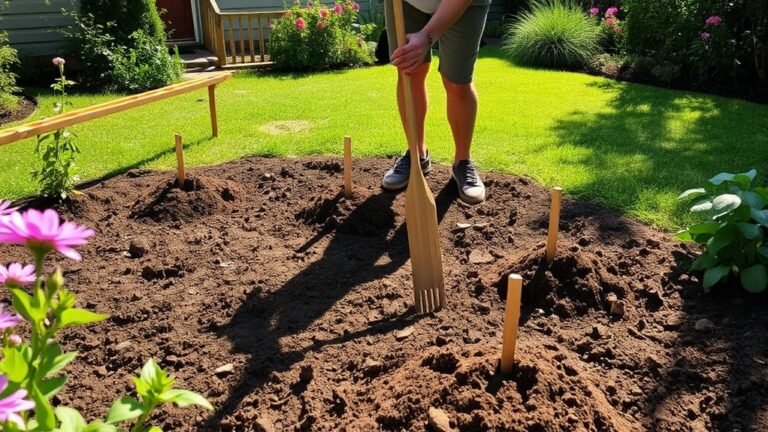
Placing about nine bamboo sticks per square foot creates an uncomfortable surface that discourages cats from entering without harming your plants. These sticks stay upright all season, making maintenance easy.
Bamboo sticks are safe for both gardeners and pets, unlike some harsher deterrents.
To maximize effectiveness, consider these tips:
- Space bamboo sticks closely to cover vulnerable areas
- Pair sticks with natural scents like citrus peels
- Check regularly to verify sticks remain upright
- Use sturdy sticks that won’t break easily
- Combine bamboo sticks with other gentle barriers to keep the cats away
This method provides a safe, long-term solution to protect your garden.
Cover Soil With Rough Mulch or Chicken Wire to Deter Cats
Covering your garden soil with rough mulch like pine cones or gravel creates an unpleasant surface that discourages cats from digging or using the area as a litter box. You can also lay chicken wire flat on the soil to deter cats, as they dislike walking on the uneven texture.
Both methods let water and sunlight nourish your plants while keeping cats away. Just make sure to secure chicken wire properly to avoid sharp edges that might harm pets or wildlife.
And don’t forget to regularly check these barriers to keep them working well throughout the season. It’s a simple way to protect your garden and enjoy a cat-free space!
Plant Strong-Smelling Herbs That Cats Avoid
Planting strong-smelling herbs like rosemary, thyme, and lavender can keep cats away while adding beauty and fragrance to your garden.
You’ll want to place these herbs strategically near areas where cats tend to visit most.
Plus, these plants offer great benefits beyond deterring cats, including culinary uses and natural pest control.
Best Herbs To Plant
When you choose strong-smelling herbs like rosemary, thyme, mint, and lavender, you’re tapping into natural scents that cats tend to avoid. These herbs serve as the best herbs to plant when you want a natural cat deterrent in your garden.
Their potent scents that cats dislike help keep unwanted feline visitors at bay. Another excellent choice is Coleus canina, known as the “scaredy cat plant,” which emits a particularly unpleasant odor for cats.
Consider adding these to your garden for effective results:
- Rosemary
- Thyme
- Mint
- Lavender
- Coleus canina
Herb Placement Strategies
Though it might seem simple, placing strong-smelling herbs like rosemary, thyme, mint, and lavender strategically around your garden can make a big difference in keeping cats away. Use herb placement strategies to create a dense border of these strong-smelling herbs around garden beds, forming a natural barrier cats avoid.
Don’t forget to intersperse these herbs among your vegetables and flowers to boost both aesthetics and cat deterrence. Including the scaredy cat plant, Coleus canina, adds another layer of protection with its unique feline-repelling odor.
Regularly trimming and maintaining these herbs keeps their scents potent, maximizing their effectiveness. By combining these herb placement strategies, you’ll create a garden that’s both beautiful and off-limits to unwanted feline visitors.
Benefits Beyond Cat Deterrence
Because strong-smelling herbs like rosemary, thyme, mint, and lavender repel cats, you get more than just a feline-free garden when you include them. These aromatic herbs offer numerous benefits beyond cat deterrence, enriching your garden’s health and utility.
Planting strong-smelling herbs not only keeps cats at bay but also boosts your garden’s biodiversity and visual appeal. Plus, regularly harvesting these herbs enhances their scent, strengthening their cat-repelling power.
Here’s what you gain by growing aromatic herbs with benefits beyond cat deterrence:
- Fresh, flavorful ingredients for cooking
- Natural pest control by attracting beneficial insects
- Improved soil quality through companion planting
- Enhanced garden aesthetics with varied textures and colors
- A healthier, more vibrant garden ecosystem overall
Incorporate these herbs for a garden that’s both practical and protected. It’s a win-win!
Scatter Citrus Peels and Place Natural Obstacles Around Your Garden
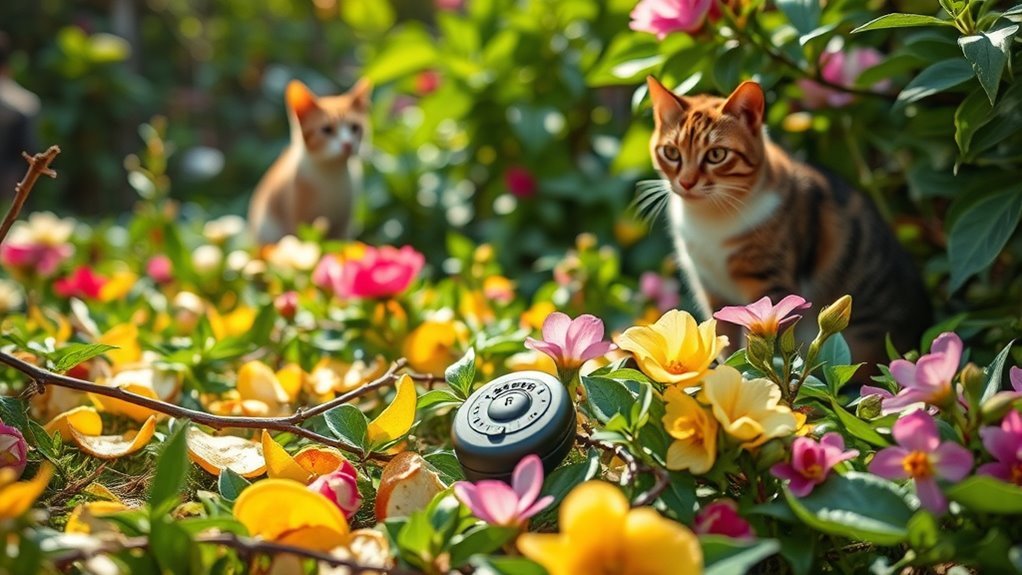
If you want to keep cats away without harsh chemicals, scatter citrus peels like those from oranges, lemons, or limes around your garden. Cats dislike the scent of citrus peels because of limonene, a natural compound recognized by the EPA as a safe cat repellent.
To keep it working, just replace the peels regularly since their scent fades over time. Along with citrus peels, try placing natural obstacles like pine cones, branches, or rough mulch around your garden beds.
These create an uncomfortable surface that discourages cats from digging or resting there. When you combine these two methods, you give your garden a stronger defense.
It makes the space less inviting for wandering cats. Using citrus peels and natural obstacles is a simple, eco-friendly way to keep cats away and protect your plants effectively.
Set Up an Alternate Cat Toilet to Redirect Their Behavior
You can set up a designated litter area filled with sand or cat-friendly soil mixed with catnip to attract cats away from your garden. Keep this spot clean and well-maintained to encourage regular use and manage waste effectively.
Placing it away from your main garden and using barriers can help redirect their behavior more reliably. This way, your cats have their own space, and your garden stays safe. It’s all about giving them a better option!
Designated Litter Area
One effective way to keep cats out of your garden is to create a designated litter area filled with sand or catnip. This personal litter spot redirects their behavior, making your garden less appealing.
Choose a secluded location and add natural materials cats prefer. For larger gardens, set up multiple designated litter areas to increase success.
Monitor how cats respond and adjust as needed to keep cats away effectively.
- Fill a quiet corner with sand or catnip for the designated litter area
- Use one or more personal litter spots depending on garden size
- Observe cat usage and relocate if necessary
- Encourage cats to prefer this toilet over garden beds
- Keep the area inviting by managing waste regularly (maintenance discussed later)
This method modifies cat habits and protects your garden effortlessly.
Maintenance And Cleaning
Maintain your designated cat toilet regularly to keep it inviting and effective. Proper maintenance and cleaning are essential to prevent odors and waste buildup, which could discourage cats from using the area.
Scoop out waste daily and completely refresh the sand or catnip regularly to maintain freshness. For larger gardens, consider setting up multiple designated cat toilets to better redirect feline traffic.
Keep an eye on your cat’s behavior and adjust the location of these areas as needed to maximize usage. Surrounding the designated cat toilet with natural barriers, like low fencing or plants, also encourages cats to use it instead of your garden.
Consistent cleaning and attentive maintenance guarantee your alternate cat toilet remains an attractive and practical solution to protect your garden from unwanted visits. It really makes a difference!
Behavior Modification Tips
Although cats are naturally curious and independent, you can guide their behavior by providing an alternate toilet area filled with sand or catnip. This behavior modification helps keep cats from using your garden as their bathroom.
To make this effective, set up a designated cat toilet area that meets their needs and encourages consistent use.
- Choose a secluded spot to give cats privacy and safety.
- Fill the area with sand or catnip to attract them.
- Maintain the toilet regularly by cleaning to manage waste and odors.
- Use treats or toys nearby to positively reinforce the preferred behavior.
- Provide multiple designated areas if you have several cats or a large garden.
Install Motion-Activated Sprinklers and Ultrasonic Repellents
When you install motion-activated sprinklers and ultrasonic repellents, you create an effective barrier that discourages cats from entering your garden. Motion-activated sprinklers detect movement and spray a quick burst of water, startling cats without harming them or your plants.
Ultrasonic repellents emit high-frequency sounds that humans can’t hear but irritate cats, making your garden an uncomfortable place for them. You can place these devices near entry points to maximize coverage and effectiveness.
Combining both motion-activated sprinklers and ultrasonic repellents offers a multi-layered defense, greatly increasing your chances to keep cats away. Plus, these deterrents require little maintenance and integrate seamlessly into your garden without disrupting plant growth or aesthetics.
Communicate With Neighbors About Outdoor Cats and Solutions
Using motion-activated sprinklers and ultrasonic repellents can help reduce the number of cats in your garden. But for lasting results, it really helps to work with your neighbors.
To manage unwelcome cats effectively, it’s important to communicate openly and look for solutions together. You can start by talking about how outdoor cats affect your garden and local wildlife.
Try proposing humane strategies like trap-neuter-return (TNR) programs. Sharing your experiences can also help build a better understanding of responsible pet care.
Encourage everyone to keep the area clean by removing food sources that attract cats. Another idea is to suggest designated cat-friendly zones to keep cats away from your plants.
Keep Your Deterrents Fresh for Lasting Success
To keep cats away effectively, you need to update your deterrents regularly. Citrus peels lose their potency quickly, so replace them every few weeks to maintain their strong scent.
Similarly, swap out herbs like mint and lavender to keep their smell sharp and unappealing to cats. After rain or watering, natural deterrents such as vinegar or essential oil sprays need updating to stay effective.
Don’t forget physical barriers—replace bamboo sticks or similar items at least once a season to guarantee they remain upright and functional. Keeping your deterrents current prevents cats from getting used to them, helping you protect your garden consistently.
Combine Multiple Methods for Long-Term Cat-Free Gardens
You’ll get the best results by layering different deterrents, like physical barriers and scent repellents, to keep cats away.
Stay consistent and adjust your methods as needed to maintain a cat-free garden over time.
Combining strategies helps create an environment that cats won’t want to enter.
Layered Deterrent Strategies
Although no single method guarantees a cat-free garden, combining multiple deterrents greatly boosts your chances of success. By layering your strategies, you create an environment that’s uncomfortable for cats while allowing your plants to grow undisturbed.
Mix physical barriers with sensory deterrents to keep cats at bay effectively. It’s all about making your garden less inviting in different ways.
Try these layered deterrent strategies:
- Use chicken wire or netting alongside citrus peels or essential oils.
- Employ motion-activated sprinklers paired with ultrasonic noise repellents.
- Scatter rough mulch and pine cones combined with bamboo sticks in garden beds.
Also, rotate scent deterrents regularly to prevent cats from adapting. Keep an eye on cat behavior and adjust your tactics accordingly.
This multi-layered approach really strengthens your garden’s defense. It helps ensure long-term protection against cats, giving you peace of mind.
Consistency And Adaptation
When you consistently apply and adjust multiple deterrent methods, your garden stays better protected against persistent cats. Combining scent repellents like citrus peels with physical barriers such as chicken wire creates a stronger defense.
Consistency matters—regularly replace scents and maintain barriers to keep deterrents effective. Pay attention to where cats enter your garden and adapt your approach accordingly.
Target these spots with natural deterrents like strong-smelling herbs or bamboo sticks. Seasonal changes also call for adjustments; for instance, boost scent repellents during warmer months when cats are more active.
Frequently Asked Questions
What Is the 3-3-3 Rule for Cats?
The 3-3-3 rule means your cat takes three days to adjust, three weeks to settle in, and three months to fully adapt to a new home. You’ll need patience and care throughout this period to help them feel secure.
What Will Repel Cats From Your Garden?
Keep cats at bay by using citrus peels, planting strong-smelling herbs, setting up physical barriers, or installing motion-activated sprinklers. These tricks will make your garden a fortress cats won’t want to cross, no ifs or buts.
What Smell Do Cats Absolutely Hate?
Cats absolutely hate citrus smells like lemon, lime, and orange peels. You’ll also find they dislike strong scents from herbs like rosemary, thyme, and lavender. Using these smells can help you keep cats away effectively.
What Is a Silent Killer for Cats?
Antifreeze is a silent killer for cats because it contains ethylene glycol, which causes kidney failure even in tiny amounts. You should keep antifreeze away from your garden and clean spills immediately to protect your feline friends.
Conclusion
So, if you love cats but hate their garden escapades, you’re in luck—you can have your feline friends and keep your plants intact, too. Just scatter citrus peels, plant herbs they avoid, and maybe install a sprinkler or two.
After all, nothing says “welcome” quite like a surprise soak or a prickly path, right? With a bit of effort and irony, you’ll enjoy a thriving garden and cats that respect your green space—mostly.
Keeping cats out of your garden doesn’t have to be a battle. By using simple, effective tips like natural repellents and clever barriers, you’ll protect your plants without harming the animals you adore. With patience and these smart strategies, your garden will flourish, and those curious cats will learn to stay away. It’s all about balance—loving cats while maintaining a beautiful, cat-free garden space.